


AFTER 150 YEARS, AMERICA GETS ITS FIRST SLAVERY MUSEUM
|
Posted By: Siebra Muhammad on September 07, 2015
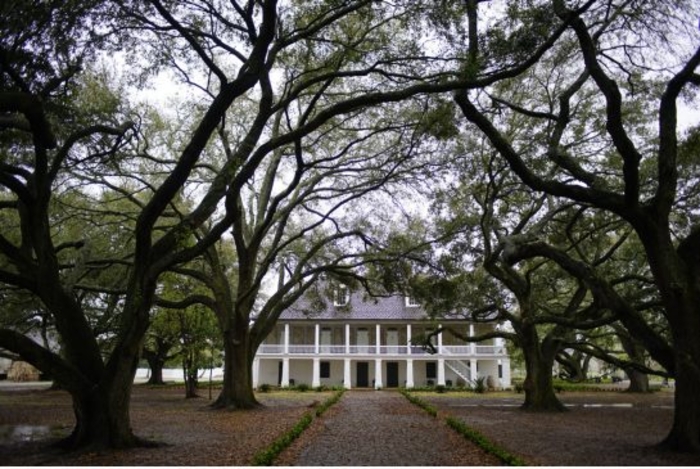
A former indigo and sugar farm, the antebellum Whitney Plantation near New Orleans was once home to more than 350 slaves. It is now a museum devoted to explaining the slave trade. The United States is home to more than 35,000 museums that explore the nation’s culture and history. Restored plantations that commemorate the Old South are popular among them, celebrated as “bastions of a genteel culture” (in the words of an official New Orleans website) and monuments to the rural beauty of a bygone era. Many have been romanticized as tourist attractions and wedding venues. But none were dedicated to telling the story of the people who sustained them — slaves. In fact, the United States did not have a single museum devoted entirely to slavery until December, when I opened the first one. It’s housed at the Whitney Plantation, near New Orleans, a former indigo and sugar farm that I had purchased 15 years earlier. The 100 hectares on the Mississippi River had been largely neglected since the 1970s, and they were at first nothing more than an investment to me. But as I researched the property’s history, it became clear that this was not going to be one of my usual real estate projects. More than 350 individuals had been enslaved on that land before 1865. That realization began my education on the history of the Atlantic slave trade, from its origins in the 1400s through the lives of the people who worked on the Whitney Plantation. As a lifelong Southerner, I realized there had been a glaring omission in my education about the nation’s history and that I was not alone in my ignorance. While everyone knows that slavery existed in America, for many people, the details are sorely lacking. For instance, many Americans do not realize that religious institutions supported slavery. From a papal order in 1452 permitting the king of Portugal to keep Africans in “perpetual slavery” to the published lectures of an American Protestant doctor of divinity in the 1850s justifying slavery as an appropriate form of government, religious institutions were complicit in this atrocity. Likewise, many do not fully understand the economic impact of slavery on the developing U.S. economy. Beyond the obvious fortunes made by slave traders, cotton planters and sugar cane farmers, the web of people who profited from the labour of enslaved Africans and their descendants stretched from New Orleans to New England. In the North as well as the South, lawyers and notaries created documents for the sale, lease and manumission of slaves; insurance companies wrote policies on slaves and slaving voyages; and Northern shipyards built vessels to transport slaves and plantation cotton. New England textile mills used cotton picked by slaves, and New York manufacturers produced what was called “Negro clothing.” In the 1850s, the I.M. Singer Co. in New York advertised a “new, improved sewing machine especially adapted to the making up of Negro clothing.” New England distilleries manufactured rum from molasses produced on Louisiana sugar plantations. That cheap rum was used as currency in West Africa to purchase people. Every region of the United States and every arena of American prosperity owes a debt to the forced labour of African slaves. Our textbooks and museums have largely ignored or underplayed how tragically integral slavery was to the nation’s development. Students have not been taught that slave labour produced America’s wealth, while the enslaved were denied the most basic education, preventing them and their descendants from enjoying access to and participation in America’s affluence. Without knowledge about how slavery worked and how crushing the experience was — for those who endured it and for their descendants — it’s impossible to lift the lingering weight of that institution. Every generation of Americans since 1865 has been burdened by the repercussions of slavery, through the unequal education and limited political and economic opportunities available to black Americans. That not one of America’s 35,000 museums had been dedicated solely to the facts and experiences of slavery is an egregious national failure. The 9/11 museum in New York opened just 10 years after that tragedy. There are museums commemorating the Confederacy and antebellum life in Virginia, South Carolina, Louisiana and most other Southern states. The United States has more Holocaust museums than Israel, Germany and Poland combined. The country found the money and the will to build the $168-million Holocaust Memorial Museum just blocks from the U.S. Capitol — a building constructed largely by slaves in the 18th and 19th centuries. But 150 years after emancipation, our nation hasn’t seen fit to create a national institution to teach the facts and honour the victims of our own national tragedy. Elements of our slavery history are documented in African-American history museums and will be part of the first national museum of African-American culture, set to open in Washington next year. But the assumption that slavery relates only to African-American history is an injustice. I decided that the Whitney Plantation would be used to honour the individuals whose work had made it a profitable operation in the 1800s and to acknowledge the contribution that millions of forced labourers made to our nation. The plantation presents the facts of slavery through the words of those who experienced it. As escaped slave John Little reportedly said, “’Tisn’t he who has stood and looked on, that can tell you what slavery is — ’tis he who has endured.” To that end, the Federal Writers’ Project, created under the New Deal in 1935, interviewed thousands of the last surviving former slaves about their experiences. Their first-hand accounts are the basis of the history shared at the Whitney Plantation through memorials, statues, slave cabins and artwork. By providing a meaningful and accurate education about slavery, the Whitney Plantation hopes to begin righting some of the wrongs of our history. But America needs to do much more. By building monuments and museums to almost every event of note in U.S. history while neglecting slavery, we have failed to acknowledge the most significant event in our history. We have devalued the contributions of millions of enslaved people to our national heritage. America cannot rewrite its history, but that doesn’t mean we should ignore it. John J. Cummings is a retired trial lawyer and the owner of the Whitney Plantation. If you enjoyed this article, Join HBCU CONNECT today for similar content and opportunities via email! |
 |
Siebra Muhammad
A Registration Clerk/Specialist, New Orleans Public Schools Other College... class of 2001 Member Since November 2008 |
 |
Why true peace begins when we see each other as human beingsPhoto: People of different races, cultures, and backgrounds standing together in unity, symbolizing shared humanity, mutual respect, and the pursuit of lasting peace.
Every generation dreams of ...more
Joel Savage • 22 Views • November 16th, 2026 |
 |
Beyond Formula One: Lewis Hamilton speaks for Gaza's forgotten childrenPhoto: Lewis Hamilton meets Palestinian children evacuated from Gaza during a humanitarian visit in Egypt. Photo: Courtesy of 1News.az
Lewis Hamilton is known as one of the greatest Formula One ...more
Joel Savage • 79 Views • November 14th, 2026 |
 |
Why quality sleep is essential for a healthy lifePhoto: A peaceful bedroom scene showing a person enjoying restful sleep in a comfortable bed, highlighting the importance of quality sleep for overall health and well-being.
Sleep is one of the m ...more
Joel Savage • 102 Views • November 13th, 2026 |
 |
Why Listening Matters More Than TalkingPhoto: A woman listens intently as a man speaks — the simple act at the heart of real communication.
Most people think communication is about talking. It isn't. The real skill, the one that builds ...more
Lione Rose • 186 Views • November 12th, 2026 |
 |
The Charming European Villages Struggling To SurvivePhoto: A picturesque European village with stone houses, narrow cobblestone streets, colorful flower boxes, and a small church tower, reflecting the charm, history, and challenges of preserving rural ...more
Joel Savage • 119 Views • November 12th, 2026 |
 |
Divorce in America in 2009 – What’s love got to do, got to do with it?
Join Brother Marcus and the cast and the crew of the Brother Marcus Show live this Sunday evening on February 1, 2009 @ 8:00 p.m. for another hot topic in our community! “Divorce in America in 2009 ...more
Brother Marcus! • 75,817,038 Views • January 27th, 2009 |
 |
VISINE ALERT!!!Seemingly innocent medication such as Visine eyedrops are used by people to concoct a mixture with similar effects as a date-rape drug.
When mixed with alcohol and taken orally, the eyedrops can l ...more
Siebra Muhammad • 123,113 Views • May 23rd, 2009 |
 |
"Chain Hang Low" check out the real meaning of the Lyrics!Recently there is a new artist out of Saint Louis that goes by the name JIBBS. Jibbs debut single "Chain hang low" has a history that most people are not aware of. The particular nursery rhyme that th ...more
Tyhesha Judge-Fogle • 82,235 Views • November 9th, 2006 |
 |
HBCU Marketplace Gifts: Divine 9 Premium Fraternity / Sorority Playing CardsVendor: Charles Jones
Item Price: $20.00
Price Includes Shipping: Yes - Shipping Included
Item Description:
Pantheon Series - Divine 9 - Premium Playing Cards (choose Gold Series or Silve ...more
Hija Chang • 65,118 Views • December 2nd, 2018 |
 |
Black College Student Sentenced to 12 Years in Prison for Kissing a White GirlAlbert N. Wilson, a former University of Kansas student, has been sentenced to 12 years in prison and a lifetime of probation after being convicted by an all-white jury of raping a white teen girl. Bu ...more
Roger Gates • 57,779 Views • June 4th, 2020 |


