





HBCU Leaders Weigh In on NAACP's Call for Black Athletes to Choose Black Colleges
|
NOTICE: This content is in pending
status and not visible to those without the url...
|
|
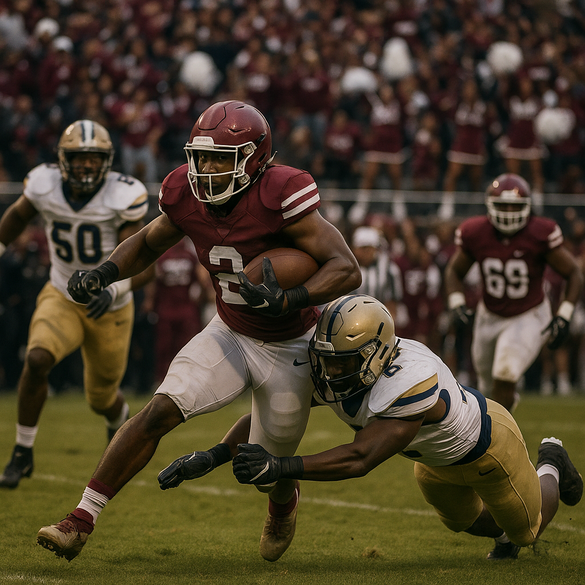
Posted By: Will Moss on May 23, 2026 The NAACP's new "Out Of Bounds" campaign is calling on Black student-athletes to consider HBCUs over flagship public universities in eight states targeted for policies that civil rights advocates say weaken Black voting representation. The push has sparked frank conversations among HBCU athletics leaders about opportunity, investment, and what it would truly take to shift the recruiting landscape. The campaign, announced this week following a U.S. Supreme Court decision that struck down Louisiana's congressional map as an unconstitutional racial gerrymander, targets public institutions in South Carolina, Georgia, Mississippi, Louisiana, Texas, Florida, Tennessee and Alabama. "The NAACP will not watch the same institutions that depend on Black athletic prowess to fill their stadiums and their bank accounts remain silent while their states strip Black communities of their voice," NAACP CEO and president Derrick Johnson said in the organization's statement. Key Takeaway: The campaign asks Black athletes to withhold commitments from targeted programs, fans to redirect spending to HBCUs, and current athletes to use their platforms to elevate voting rights issues. The Investment Gap RealityPrairie View A&M football coach Tremaine Jackson, who led the Panthers to a SWAC championship in 2025, welcomed the conversation but said meaningful change requires more than asking athletes to sacrifice. "I think it's good that we teach our young people the influence and the power that their decisions have. But don't ask those kids to make that kind of sacrifice if you're not willing to invest in the places you're asking them to go," Jackson told HBCU Sports. Jackson pointed to stark financial realities facing recruits. According to federal data cited by Inside Higher Ed, 16 of the country's 19 historically Black land-grant universities were underfunded by their states by $13 billion between 1987 and 2020. The NIL era has widened that gap further. Jackson noted that elite recruits often choose between six-figure deals at major programs and far smaller opportunities at HBCUs. During Prairie View's recent NCAA Tournament run, Panthers men's basketball coach Byron Smith revealed that "We're not paying one player on our team." "If LSU is offering $275,000 and an HBCU can offer a fraction of that, it's hard to expect an 18-year-old—and their family—to turn that down," Jackson said. Jackson also suggested many recruits are disconnected from the political issues driving the campaign. "A lot of kids we recruit aren't even registered to vote," he said. "If it's not in front of them every day, they're not focused on gerrymandering or legislation. They're focused on their immediate future." Alabama State's PerspectiveDr. Jason Cable, athletics director at Alabama State, sees the moment as an opportunity to elevate the HBCU experience while acknowledging his institution's deep roots in social movements. "HBCUs have always been a focal point in movements involving African-American rights. That connection isn't new," Cable said, noting Alabama State's role in the Civil Rights Movement and the Montgomery Bus Boycott. Cable pushed back on negative perceptions about HBCU facilities. Alabama State opened a $62 million football stadium in 2012 and boasts a $7 million weight room among its athletic facilities. "We don't have horrible facilities. That's a false narrative. Our resources may be smaller in scale, but that doesn't mean the experience is less than," Cable said. Rather than leaning into political messaging on the recruiting trail, Cable said Alabama State will stay focused on its core value proposition. "We approach it the same way—we believe what we offer is enough," he said. The campaign draws on recent history of athlete activism. In 2015, Black players on the Missouri football team threatened to stop participating until university system president Tim Wolfe resigned over how he handled reported racial incidents on campus. Former Mississippi State running back Kylin Hill said he wouldn't play for the Bulldogs until the state flag was changed. Whether this moment translates into a sustained movement toward HBCUs may ultimately depend on who acts first. As Jackson put it: "If lawmakers believe in this, then go first. Invest real money into HBCU athletics—facilities, staffing, nutrition, NIL—so these schools can match the experience. Then the kids will come." Originally reported by HBCU Sports. If you enjoyed this article, Join HBCU CONNECT today for similar content and opportunities via email! |
 |
Will Moss
Founder & CEO, HBCU CONNECT, LLC Hampton University class of 1995 Member Since June 1999 |

 |
Pittsburgh, Reading, and Scranton will host 'Fan Zones' for soccer fans to enjoy 2026 FIFA World Cup eventsThe Fan Zones will amplify and complement Philadelphia’s 39-day FIFA Fan Festival at Lemon Hill Park — extending the World Cup’s energy and economic impact across PA
Author: Keith Schweigert (FOX ...more
Hija Chang • 208 Views • May 8th, 2026 |
 |
Oura Q&A with Professional Wide Receiver Odell Beckham Jr.Q: How does a bad night of sleep make you feel?
A: “I think when I get bad sleep, my day just doesn’t go smoothly. You wake up feeling groggy. You feel like you’re always trying to find your groove ...more
Hija Chang • 204 Views • May 7th, 2026 |


