







How Slavery Really Ended in America (Part I)
|
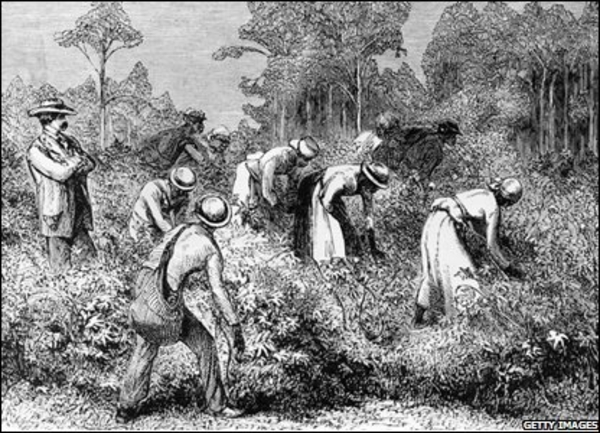
Posted By: Reginald Culpepper on April 07, 2011 On May 23, 1861, little more than a month into the Civil War, three young black men rowed across the James River in Virginia and claimed asylum in a Union-held citadel. Fort Monroe, Va., a fishhook-shaped spit of land near the mouth of the Chesapeake Bay, had been a military post since the time of the first Jamestown settlers. This spot where the slaves took refuge was also, by remarkable coincidence, the spot where slavery first took root, one summer day in 1619, when a Dutch ship landed with some 20 African captives for the fledgling Virginia Colony. Two and half centuries later, in the first spring of the Civil War, Fort Monroe was a lonely Union redoubt in the heart of newly Confederate territory. Its defenders stood on constant guard. Frigates and armed steamers crowded the nearby waters known as Hampton Roads, one of the world’s great natural harbors. Perspiring squads of soldiers hauled giant columbiad cannons from the fort’s wharf up to its stone parapets. Yet history would come to Fort Monroe not amid the thunder of guns and the clash of fleets, but stealthily, under cover of darkness, in a stolen boat. Frank Baker, Shepard Mallory and James Townsend were field hands who — like hundreds of other local slaves — had been pressed into service by the Confederates, compelled to build an artillery emplacement amid the dunes across the harbor. They labored beneath the banner of the 115th Virginia Militia, a blue flag bearing a motto in golden letters: “Give me liberty or give me death.” After a week or so of this, they learned some deeply unsettling news. Their master, a rebel colonel named Charles Mallory, was planning to send them even farther from home, to help build fortifications in North Carolina. That was when the three slaves decided to leave the Confederacy and try their luck, just across the water, with the Union. It cannot have been an easy decision for the men. What kind of treatment would they meet with at the fort? If the federal officers sent them back, would they be punished as runaways — perhaps even as traitors? But they took their chances. Rowing toward the wharf that night in May, they hailed a guard and were admitted to the fort. The next morning they were summoned to see the commanding general. The fugitives could not have taken this as an encouraging sign. Having lived their whole lives near the fort, they probably knew many of its peacetime officers by sight, but the man who awaited them behind a cluttered desk was someone whose face they had never seen. Worse still, as far as faces went, his was not — to put it mildly — a pleasant one. It was the face of a man whom many people, in the years ahead, would call a brute, a beast, a cold-blooded murderer. It was a face that could easily make you believe such things: a low, balding forehead, slack jowls and a tight, mean little mouth beneath a drooping mustache. It would have seemed a face of almost animal-like stupidity had it not been for the eyes. These glittered shrewdly, almost hidden amid crinkled folds of flesh. One of them had an odd sideways cast, as if its owner were always considering something else besides the thing in front of him. These were the eyes that now surveyed Baker, Mallory and Townsend. The general began asking them questions: Who was their master? Was he a rebel or a Union man? Were they field hands or house servants? Did they have families? Why had they run away? Could they tell him anything about the Confederate fortifications they had been working on? Their response to this last question — that the battery was still far from completion — seemed to please him. At last he dismissed the three brusquely, offering no indication of their fate. Maj. Gen. Benjamin Franklin Butler arrived at the fort only a day ahead of the fugitive slaves, greeted at the esplanade by a 13-gun salute. That morning, Butler sat down to compose an important initial report. When an adjutant interrupted to inform him of the fugitives, Butler set down his pen. The War Department could wait. The three ragged black men waiting outside were a more pressing matter. Butler was no abolitionist, but the three slaves presented a problem. True, the laws of the United States were clear: all fugitives must be returned to their masters. The founding fathers enshrined this in the Constitution; Congress reinforced it in 1850 with the Fugitive Slave Act; and it was still the law of the land — including, as far as the federal government was concerned, within the so-called Confederate states. The war had done nothing to change it. Most important, noninterference with slavery was the very cornerstone of the Union’s war policy. President Abraham Lincoln had begun his inaugural address by making this clear, pointedly and repeatedly. “I have no purpose, directly or indirectly, to interfere with the institution of slavery in the states where it exists,” the president said. “I believe I have no lawful right to do so, and I have no inclination to do so.” Yet to Fort Monroe’s new commander, the fugitives who turned up at his own front gate seemed like a novel case. The enemy had been deploying them to construct a battery aimed directly at his fort — and no doubt would put them straight back to work if recaptured, with time off only for a sound beating. They had just offered him some highly useful military intelligence. And Virginia, as of 12 or so hours ago, was officially in rebellion against the federal government, having just ratified the secession ordinance passed a month before. Butler had not invited the fugitives in or engineered their escape, but here they were, literally at his doorstep: a conundrum with political and military implications, at the very least. He could not have known — not yet — that his response that day might change the course of the national drama that was then just beginning. Yet it was not the first time, nor would it be the last, that an unanticipated bureaucratic dilemma would force the hand of history. Despite his rank, General Butler had been a professional soldier barely four weeks. In private life, back in Massachusetts, he was a lawyer, and a very successful one — although he grew up poor, the swamp Yankee son of a widow who kept a boardinghouse in Lowell, the textile-mill town. Unable to attract clients through social connections or charm, he became an expert quibbler: a man who knew every loose thread in the great tangled skein of common law and who could unravel an opponent’s entire case with the gentlest of tugs. By his early 40s, he had also built a successful career as a state legislator and harbored larger political ambitions. A fellow officer once called Butler “less like a major general than like a politician who is coaxing for votes.” Race-baiting was red meat to many of his working-class constituents in Lowell, and he had always been glad to toss morsels in their direction. But after barely 24 hours at Fort Monroe, the new commander had already sized up his new constituency. The garrison was made up predominantly of eager volunteers from New England, many with antislavery sympathies. How was Butler to win the confidence — or even obedience — of such men if his first act as their commander was to send three poor blacks back into bondage? Butler’s features may have been brutish and his manners coarse, but inwardly, he nursed the outsize vanity of certain physically ugly men — vanity often manifest in a craving for approval and adulation. He also possessed a sympathetic, even occasionally sentimental, heart. Still . . . sentiment was a fine thing; so was the admiration of one’s subordinates. Ultimately, though, his duty was to his commander in chief. With a few strokes of his pen, Lincoln had made Butler a major general; the president could just as easily unmake him, sending him back to Lowell in disgrace — and with another stroke, for that matter, send the blacks back to their master as slaves. Whatever Butler’s decision on the three fugitives’ fate, he would have to reach it quickly. He had barely picked up his pen to finally begin that report before an adjutant interrupted with another message: a rebel officer, under flag of truce, had approached the causeway of Fort Monroe. The Virginians wanted their slaves back. Waiting before the front gate was a man on horseback: Maj. John Baytop Cary of the 115th. With his silver gray whiskers and haughtily tilted chin, he appeared every inch the Southern cavalier. Butler, also on horseback, went out to meet him. The men rode, side by side, off federal property and into rebel Virginia. They must have seemed an odd pair: the dumpy Yankee, unaccustomed to the saddle, slouching along like a sack of potatoes; the trim, upright Virginian, in perfect control of himself and his mount. This article is adapted from “1861: The Civil War Awakening,” by Adam Goodheart as posted by The New York Times Part 2 - Click Here Part 3 - Click Here If you enjoyed this article, Join HBCU CONNECT today for similar content and opportunities via email! |
 |
Reginald Culpepper
President, Fulfillment and Web Services, HBCUCONNECT Clark Atlanta University class of 1998 Member Since September 2000 |
Comments
 |
Good article. Slaveru still exist, but in a different format. Until Africans-Americans look to and ownsand take control of our finances; own sport teams, business, manufacture products,and etc then slavery will truly end. Willie White Friday, May 6th 2011 at 7:28AM |
 |
NOw, that is interesting, a truce started to return slaves, very interesting in deed. Lol (smile)
Thursday, April 10th 2014 at 6:47PM |
More From This Author
Latest Blogs
 |
In a Smarr Car in a Kia in a Youtube Nightcap video in a wedding reception ITS A FATHERS MONTH THINGLeave it to the fellas
Maybe
Ocho Cinco how about a live Auction of your Collectibles live from thee Tender Box cigar lounge
Grab a gift that brings vibes machismo cuban tradition
https://eigh ...more
Hija Chang • 100 Views • May 22nd, 2026 |
 |
Reviewing the 2026 Acura MDX Type S SH-AWD AdvanceThe 2026 Acura MDX Type S SH-AWD stands out in the three-row luxury SUV segment. While others in the class focus on luxury, the Acura MDX has become a practical family vehicle with great performance. ...more
Randi Payton • 139 Views • May 21st, 2026 |
 |
Dominican Republic: The Caribbean Island of rhythm, resilience, and beautyThe Dominican Republic is more than a Caribbean destination; it is a living heartbeat. It is a place where rhythm is not just heard but felt, where resilience is woven into the soul of the people, and ...more
Joel Savage • 141 Views • May 21st, 2026 |
 |
The Myth of LinkedIn: Why Most Creators Never Strike GoldPhoto: A journalist looking at a laptop screen showing a LinkedIn warning message about leaving the platform, symbolizing restricted traffic flow.
Many professionals, for years, believed that joi ...more
Joel Savage • 169 Views • May 20th, 2026 |
 |
African Pygmies: Ancient forest tribes fighting for survival todayPhoto: A small forest‑dwelling family in a Central African rainforest.
The Pygmy peoples of Central Africa, for thousands of years, have lived deep within the vast rainforests of the Congo Ba ...more
Joel Savage • 158 Views • May 20th, 2026 |
Popular Blogs
 |
Divorce in America in 2009 – What’s love got to do, got to do with it?
Join Brother Marcus and the cast and the crew of the Brother Marcus Show live this Sunday evening on February 1, 2009 @ 8:00 p.m. for another hot topic in our community! “Divorce in America in 2009 ...more
Brother Marcus! • 71,395,636 Views • January 27th, 2009 |
 |
VISINE ALERT!!!Seemingly innocent medication such as Visine eyedrops are used by people to concoct a mixture with similar effects as a date-rape drug.
When mixed with alcohol and taken orally, the eyedrops can l ...more
Siebra Muhammad • 119,745 Views • May 23rd, 2009 |
 |
"Chain Hang Low" check out the real meaning of the Lyrics!Recently there is a new artist out of Saint Louis that goes by the name JIBBS. Jibbs debut single "Chain hang low" has a history that most people are not aware of. The particular nursery rhyme that th ...more
Tyhesha Judge-Fogle • 78,302 Views • November 9th, 2006 |
 |
HBCU Marketplace Gifts: Divine 9 Premium Fraternity / Sorority Playing CardsVendor: Charles Jones
Item Price: $20.00
Price Includes Shipping: Yes - Shipping Included
Item Description:
Pantheon Series - Divine 9 - Premium Playing Cards (choose Gold Series or Silve ...more
Hija Chang • 62,982 Views • December 2nd, 2018 |


