




How Slavery Really Ended in America (Part 2)
|
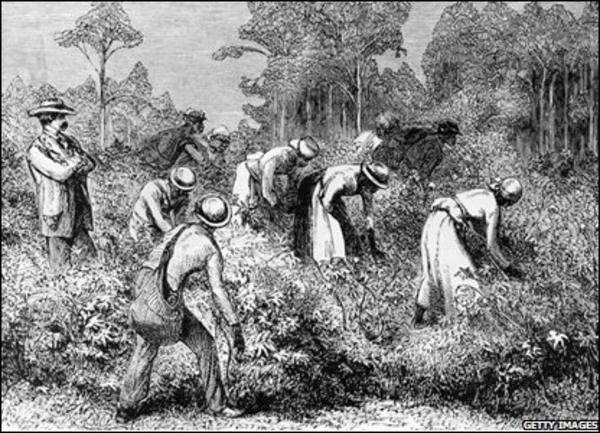
Posted By: Reginald Culpepper on April 07, 2011 Cary got down to business. “I am informed,” he said, “that three Negroes belonging to Colonel Mallory have escaped within your lines. I am Colonel Mallory’s agent and have charge of his property. What do you mean to do with those Negroes?” “I intend to hold them,” Butler said. “Do you mean, then, to set aside your constitutional obligation to return them?” Even the dour Butler must have found it hard to suppress a smile. This was, of course, a question he had expected. And he had prepared what he thought was a fairly clever answer. “I mean to take Virginia at her word,” he said. “I am under no constitutional obligations to a foreign country, which Virginia now claims to be.” “But you say we cannot secede,” Cary retorted, “and so you cannot consistently detain the Negroes.” “But you say you have seceded,” Butler said, “so you cannot consistently claim them. I shall hold these Negroes as contraband of war, since they are engaged in the construction of your battery and are claimed as your property.” Ever the diligent litigator, Butler had been reading up on his military law. In time of war, he knew, a commander had a right to seize any enemy property that was being used for hostile purposes. The three fugitive slaves, before their escape, were helping build a Confederate gun emplacement. Very well, then — if the Southerners insisted on treating blacks as property, this Yankee lawyer would treat them as property, too. Legally speaking, he had as much justification to confiscate Baker, Mallory and Townsend as to intercept a shipment of muskets or swords. Cary, frustrated, rode back to the Confederate lines. Butler, for his part, returned to Fort Monroe feeling rather pleased with himself. Still, he knew that vanquishing the rebel officer was only a minor victory, and perhaps a momentary one if his superiors in Washington frowned on what he had done. The following day, a Saturday, Butler picked up his pen and resumed his twice-interrupted dispatch to Washington. Certain questions had arisen, he began, “of very considerable importance both in a military and political aspect, and which I beg leave to herewith submit.” But before this missive reached its destination, matters would become even more complicated. On Sunday morning, eight more fugitives turned up at Union lines outside the fort. On Monday, there were 47 — and not just young men now, but women, old people, entire families. There was a mother with a 3-month-old infant in her arms. There was an aged slave who had been born in the year of America’s independence. By Wednesday, a Massachusetts soldier would write home: “Slaves are brought in here hourly.” “What’s to Be Done With the Blacks?” asked a headline in The Chicago Tribune. That was the question now facing the Lincoln administration. Within days after the three fugitive slaves crossed the river, their exploits — and their fate — were being discussed throughout the nation. At first the newspapers played it more or less as a comic sketch in a minstrel show: a Yankee shyster outwits a drawling Southern aristocrat. But Lincoln saw things in a more serious light. The president realized he might now be forced to make a signal verdict about matters he previously tried to avoid: slavery, race and emancipation. Lincoln and his cabinet gathered to address Butler’s decision — and ended up punting. While reminding Butler that “the business you are sent upon . . . is war, not emancipation,” they left the general to decide what to do with fugitive slaves — including whether or not to continue declaring them contraband of war. Unfortunately, no detailed account of the deliberations survives. But a letter from one cabinet secretary, Montgomery Blair, suggests they were driven by a motive as common in Washington then as it is now: “a desire to escape responsibility for acting at all at this time.” By that point, the administration had already received a second dispatch from Butler, describing the influx of women and children. With this in mind, Blair — a member of a slaveholding Maryland family — suggested one pragmatic “modification” to Butler’s policy. “You can . . . take your pick of the lot and let the rest go so as not to be required to feed unproductive laborers or indeed any that you do not require,” he urged. As to the slaves’ eventual fate, Blair wrote, of course no one was suggesting that they be set free. Perhaps at the end of the war, those who belonged to men convicted of treason could be legally confiscated and sent off to Haiti or Central America. (The New York Herald, meanwhile, proposed that the federal government should wait until the war ended and sell all the slaves back to their owners, at half-price, to finance its cost.) Yet Butler realized what Blair did not: events were unfolding far too quickly for any of that. Despite the counsels from Washington, Butler was not turning away “unproductive” fugitives. He replied: “If I take the able-bodied only, the young must die. If I take the mother, must I not take the child?” By early June, some 500 fugitives were within the Union lines at Fort Monroe. “Stampede Among the Negroes in Virginia,” proclaimed Frank Leslie’s Illustrated Newspaper, with a double-page spread of dramatic woodcuts showing black men, women and children crossing a creek under a full moon, then being welcomed heartily into the fort by General Butler himself (or rather, by the artist’s trimmer, handsomer version of him). One correspondent estimated that “this species of property under Gen. Butler’s protection [is] worth $500,000, at a fair average of $1,000 apiece in the Southern human flesh market.” Journalists throughout the Union quipped relentlessly about the “shipments of contraband goods” or, in the words of The Times, “contraband property having legs to run away with, and intelligence to guide its flight” — until, within a week or two after Butler’s initial decision, the fugitives had a new name: contrabands. It was a perfectly composed bit of slang, a minor triumph of Yankee ingenuity. Were these blacks people or property? Free or slave? Such questions were, as yet, unanswerable — for answering them would have raised a host of other questions that few white Americans were ready to address. Contrabands let the speaker or writer off the hook by letting the escapees be all those things at once. “Never was a word so speedily adopted by so many people in so short a time,” one Union officer wrote. Within a few weeks, the average Northern newspaper reader could scan, without blinking, a sentence like this one: “Several contrabands came into the camp of the First Connecticut Regiment today.” As routine as the usage soon became, however, a hint of Butler’s joke remained, a slight edge of nervous laughter. A touch of racist derision, too: William Lloyd Garrison’s abolitionist newspaper, The Liberator, carped, justly enough, that it was offensive to speak of human beings that way. Yet in its very absurdity, reflecting the Alice-in-Wonderland legal reasoning behind Butler’s decision, the term also mocked the absurdity of slavery — and the willful stupidity of federal laws that, for nearly a century, had acknowledged no meaningful difference between a bushel of corn and a human being with dark skin. Eventually, even black leaders adopted it. Back at Monroe — dubbed “the freedom fort” — fugitives continued arriving daily. Each morning, dozens lined up to pitch in with manual labor. Soon they seemed almost like members of the garrison. A Times correspondent wrote: “Their shovels and their other implements of labor, they handle and carry as soldiers do their guns. . . . I have no doubt they would make fair or even excellent soldiers.” Moreover, as the garrison’s medical chief remarked, “they are the pleasantest faces to be seen at the post.” Many of the Union soldiers had never really spoken with a black person before; the Vermont farmboys had perhaps never even seen one before leaving home. Now they were conversing with actual men and women who had been (and perhaps still were) slaves: people who had previously figured only as a political abstraction. Some fugitives shared horrific accounts; one man described “bucking,” a practice in which a slave, before being beaten, had his wrists and ankles tied and slipped over a wooden stake. Almost all spoke of loved ones sold away; the most chilling thing was that they said it matter-of-factly, as if their wives or children had simply died. Perhaps most surprising of all — for Northerners accustomed to Southern tales of contentedly dependent slaves — was this, in the words of one soldier: “There is a universal desire among the slaves to be free. . . . Even old men and women, with crooked backs, who could hardly walk or see, shared the same feeling.” General Butler grew ever more adamant in the defense of “his” contrabands, to a degree that must have shocked his old associates. By July, he began pressing the Lincoln administration to admit that the contrabands were not really contraband: that they had become free. Indeed, that they were — in a legal sense — no longer things but people: “Have they not by their master’s acts, and the state of war, assumed the condition, which we hold to be the normal one, of those made in God’s image? . . . I confess that my own mind is compelled by this reasoning to look upon them as men and women.” It would take another 14 months - and tens of thousands more Union casualties - before the Lincoln administration was ready to endorse such a view. This article is adapted from “1861: The Civil War Awakening,” by Adam Goodheart as posted by The New York Times Part 1 - Click Here Part 3 - Click Here If you enjoyed this article, Join HBCU CONNECT today for similar content and opportunities via email! |
 |
Reginald Culpepper
President, Fulfillment and Web Services, HBCUCONNECT Clark Atlanta University class of 1998 Member Since September 2000 |
Comments
More From This Author
| Honda USA Foundation Launches Drive the Legacy Fund to Evolve Support for Historically Black Colleges and Universities |
Latest Blogs
 |
Food beyond flavor: The ethics, sensory science, and psychology we live byA thoughtfully arranged meal representing sustainability, sensory experience, and emotional comfort.
Introduction
Food is no longer just nourishment; it reflects our ethics, our biology, and ...more
Joel Savage • 46 Views • September 20th, 2026 |
 |
Why unhappy people treat others badly: The hidden psychology of painA photo of a lonely woman with an inner emotional struggle.
In life, one of the most confusing human experiences is encountering people who treat others harshly for no clear reason. You greet the ...more
Joel Savage • 69 Views • September 19th, 2026 |
 |
Your Trusted Wholesale Cabinetry Distributor in NC | Linecraft CabinetrySuccessful cabinetry projects rarely depend on one decision made at the showroom or job site. They are built through a series of choices involving product selection, specifications, purchasing, schedu ...more
LineCraft Cabinetry • 80 Views • September 18th, 2026 |
 |
Why Africa Has Never Won a World Cup: Deep Analysis & SolutionsPhoto: A scene of African footballers competing intensely against European players with determination and pursuit of World Cup glory.
African football has carried a paradox for decades. The con ...more
Joel Savage • 85 Views • September 18th, 2026 |
 |
My blog, Juskosave, has reached 25 million views today!I’m deeply grateful to every reader from every corner of the world who made this possible.
Your support, shares, and belief in independent journalism have built this global success.
Thank you from t ...more
Joel Savage • 92 Views • September 17th, 2026 |
Popular Blogs
 |
Divorce in America in 2009 – What’s love got to do, got to do with it?
Join Brother Marcus and the cast and the crew of the Brother Marcus Show live this Sunday evening on February 1, 2009 @ 8:00 p.m. for another hot topic in our community! “Divorce in America in 2009 ...more
Brother Marcus! • 75,421,949 Views • January 27th, 2009 |
 |
VISINE ALERT!!!Seemingly innocent medication such as Visine eyedrops are used by people to concoct a mixture with similar effects as a date-rape drug.
When mixed with alcohol and taken orally, the eyedrops can l ...more
Siebra Muhammad • 122,447 Views • May 23rd, 2009 |
 |
"Chain Hang Low" check out the real meaning of the Lyrics!Recently there is a new artist out of Saint Louis that goes by the name JIBBS. Jibbs debut single "Chain hang low" has a history that most people are not aware of. The particular nursery rhyme that th ...more
Tyhesha Judge-Fogle • 81,171 Views • November 9th, 2006 |
 |
HBCU Marketplace Gifts: Divine 9 Premium Fraternity / Sorority Playing CardsVendor: Charles Jones
Item Price: $20.00
Price Includes Shipping: Yes - Shipping Included
Item Description:
Pantheon Series - Divine 9 - Premium Playing Cards (choose Gold Series or Silve ...more
Hija Chang • 64,465 Views • December 2nd, 2018 |


