


Homer G Phillips
|
|
|
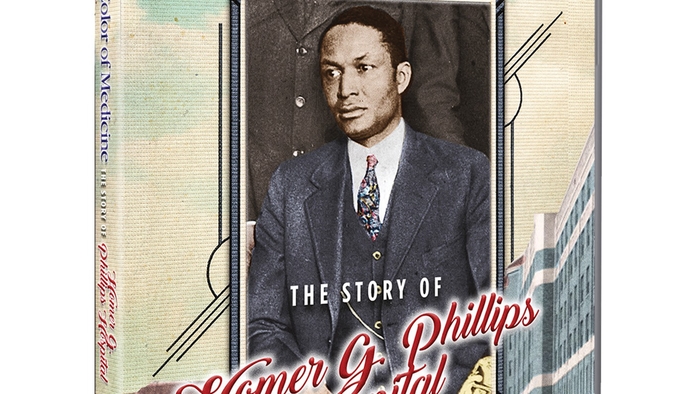
Posted By: Nea Simone on February 19, 2021 PROFESSION: The Color of Medicine; The Story of Homer G Phillips Hospital is an eye opening, historic documentary, that illustrates the value and impact of the HBCU on Black History at a time when the placement of black medical students graduating from Howard University and Meharry Medical College were met by closed doors for internships and residency. The documentary offers a firsthand account of what it was like to be a part of the history of the Â"GÂ". Dr. Earle U Robinson, Jr ushers the viewer through the corridors of time and takes you on an intimate journey into the trials and tribulations of the Homer G Phillips hospital history and legacy. Dr. Robinson states, Â"I have lived 87 years and have an eye and ear for the scenes and sounds and the humor and pathos that have intersected my life. I am a retired physician and I want to make certain people have the opportunity to learn about such a monumental part in history. The best times IÂ've had in my life were the years I spent at Homer G. PhillipsÂ...Everything about the Â"GÂ" was Black. Â- Earle U. Robinson Jr., MD Due to an inability to get even adequate medical care, Atty Homer G Phillips had the vision to build an all-Black Hospital in St. Louis, Missouri. A graduate of Howard University Law School, who was also the roommate of poet Paul Laurence Dunbar; Homer G Phillips became a prominent attorney and activist who used his cache to improve the quality of life of more than 70,000 black residents. In 1923 Attorney Homer G Phillips led the bond issue for $1 million to open an all-black hospital. However, the city fathers diverted the monies for other purposes like street lighting and sidewalk installation. Although he was murdered six years before the hospital was built, his determination laid the groundwork and on February 22, 1937 the hospital was formally opened. Homer G. Phillips Hospital came into being as the result of a 23-year struggle that began in 1914 to build a medical facility staffed by black doctors, black nurses, black technicians, and black administrator. It was a period when the health care of the city's black citizens was criminally neglected by city elected officials. The neighborhood known as The Ville had a hospital reflective of its community that provided quality healthcare to its residents. In less than a decade, Homer G. Phillips Hospital ranked in the upper third of the ten largest general hospitals in the country and gained a national reputation for treatment of the acutely injured. The all-black staff made innovative contributions for the treatment of gunshot wounds, burns, and ulcers as well as techniques for intravenous protein feeding. In addition to providing a fully accredited training program for interns, residents and schools of nursing, the hospital established schools for x-ray technicians, laboratory technicians, and medical record library service. For a period of 20 years, 75 percent of all black doctors in the country interned at Homer G. Phillips Hospital. By the early 1950s, Homer G. Phillips Hospital offered advanced training to certified foreign doctors, which helped ease the staff of shortages and gave an opportunity to these physician doctors who were denied training in other hospitals due to race or creed. Ironically in 1955 before the civil rights movement, despite restrictive covenants and segregation, St. Louis Mayor Raymond Tucker issued an order that patients of any race, color, or creed living in the western part of the city must be admitted to the hospital, thereby ensuring Homer G. Phillips was no longer an exclusively black institution. By 1961, it had trained the largest number of black doctors and nurses in the world. Dr. Earle U Robinson, Sr (pictured below) was one of the founding physicians, his son Dr. Earle U Robinson, Jr would follow in his footsteps. Despite decades of accolades and achievements a dramatic closure took place in August 1979 after an approved militarized siege that lasted for more than 20 days resulting in riots and protests. From the time Homer G. Phillips Hospital was dedicated in 1937 until it closed in 1979, the black community was preoccupied with the fight to keep the doors open. Efforts to close the facility were led by numerous white politicians, the two medical schools of Washington and St. Louis universities, the publishers and editors of the two daily newspapers, and downtown financial leaders. These forces constituted a serious and continuous agitating catalyst for closure. More importantly, the hospital's closure invited disparate actors to ponder the meaning of "progress:" racial progress, modernization of regional health facilities, an urban utopian vision for St. Louis's future. The extreme length taken to undermine a thriving institution primarily due to its achievements and the demographic it served, underscores the message that continues to persist. What we learn is that Medicine has a price and a color. If you enjoyed this article, Join HBCU CONNECT today for similar content and opportunities via email! |
 |
Nea Simone
Author/Founder, Bespoke Media Marketing Texas Southern University class of 1984 Member Since February 2003 |
Comments
More From This Author
| Summer of Violence - A Gripping New Film About the Harrowing Impact of Gun Violence, In Theaters 9/27 |
Latest Famous HBCU Alumni
 |
Crispus Attucks: American Revolutionary Hero?Crispus Attucks is a name that twenty-first century American schoolchildren usually learn in their introduction to the American Revolution and its heroes. Attucks—a man of African and Native American ...more
Hija Chang • 162 Views • July 25th, 2026 |
 |
On International Chess Day, Celebrating Maurice Ashley – The First African American Chess GrandmasterContent Artist: Shourjyani Chatterjee
Maurice Ashley became the first Black chess Grandmaster in 1999.
He coached young players from Harlem and became a globally recognised chess commentator.
...more
Hija Chang • 131 Views • July 24th, 2026 |
 |
How Dr. Samuel Lee Kountz, Jr. revolutionized kidney transplantsBorn in Lexa, Arkansas in 1930, Dr. Kountz had to work hard and overcome several obstacles to reach his goal of becoming a doctor. Despite failing the entrance exam at his first attempt applying for c ...more
Hija Chang • 158 Views • July 20th, 2026 |
 |
Join NOH8 Campaign on Instagramnoh8campaign
"When we say 'no' to hate, we can say 'yes' to love and equality." - @TarajiPHenson #NOH8
Join NOH8 Campaign on Instagram
www.instagram.com/noh8campaign ...more
Hija Chang • 219 Views • July 3rd, 2026 |
 |
Any pirates on Hampton's campus looking like Long John SilveRGet signed up to travel with all our *****reasons for thee seasons*****
Melanin at Sea *****Melanin at Sea Group Cruise 5.0*****
www.blackcruiseweek.com/melaninatsea.html
One Voyage 2026 *****Par ...more
Hija Chang • 241 Views • July 1st, 2026 |
Popular Famous HBCU Alumni
 |
Della Miles takes Michelle Obama to the stage in "Obama the Musical"When Della Miles was a student at Prairie View A&M University in Texas, everyone new she would be a brighter star one day having been selected Miss PVAMU and 4th Runner-up to Miss Texas/America 1984. ...more
Frederick Roberts • 90,955 Views • April 11th, 2010 |
 |
Oprah WinfreyOprah Winfrey, the multi media mogul, has garnered international appeal for her talk show. As the first Black woman billionaire in world history, Winfrey has overtaken EBay CEO, Meg Whitman, as the ri ...more
Reginald Culpepper • 39,291 Views • September 30th, 2005 |
 |
Kerry D. ChandlerKerry D. Chandler, a San Diego, CA native, is the Executive Vice President of Human Resources at the National Basketball Association responsible for leading the league's global human resources strateg ...more
Ryan Rogers • 34,596 Views • May 3rd, 2011 |

 |
Rick Ross - Yep Another HBCU AlumnusWilliam Leonard Roberts II (born January 28, 1976), better known by his stage name Rick Ross, is an American rapper. Ross founded the record label Maybach Music Group. He was born in Coahoma County, M ...more
Reginald Culpepper • 33,240 Views • September 1st, 2010 |


