


SC State Researchers Led by Dr. Waltena Simpson Look at Oil Clean-Up Solution for Gulf
|
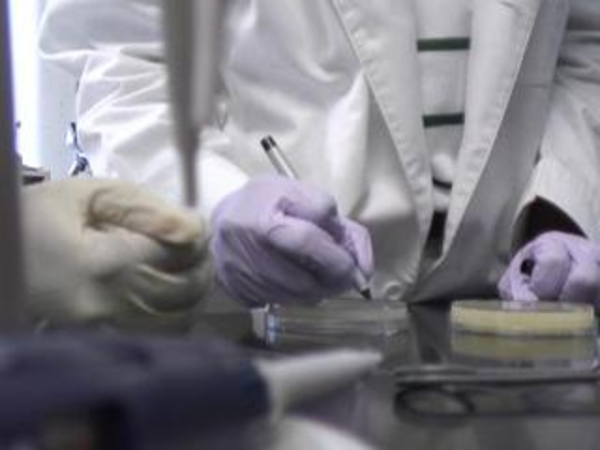
Posted By: autumn cade on July 22, 2010 FEATURED Content It's a process you may have been watching for weeks--the cleanup of newly-patched oil well in the Gulf of Mexico. "What BP is concentrating on right now is containing the oil spill itself. They're trying to burn the oil away to get rid of it, and that's a process that could produce more environmental contaminants," said South Carolina State University Microbiology professor Dr. Waltena Simpson. There are contaminants you can't see. "Pollutants are produced that can be carcinogenic and pose hazards to human health," Simpson says. She says the pollutants aren't going anywhere. "They tend to stay in the environment and persist for very long periods of time, so it's very important for the sake of the environment and for the sake of people living in the environment for those contaminants to be removed as quickly and as safely and effectively as possible," Simpson said. That's where Dr. Simpson's abilities comes in. Right now, she's working with strains of a bacteria called sphingomonas, found naturally in soil. "We saw that they had an ability to break down a variety of environmental contaminants, which made them very interesting to us," Simpson says. More than just interesting, they could potentially be an eco-friendly clean-up tool. "What they can do is provide a low-cost, natural way of trying to remove harmful contaminants from the gulf," Simpson says. She and her staff are results in the lab. "The clear zone that we see around the sphingamonas shown here in yellow indicates pH degradation," Simpson said. Though she says it appears that the sphingamonas is doing its job, she will continue researching the process for the next three years. In the meantime, Dr. Simpson is watching the gulf from afar. "You realize that they're trying to get rid of the oil, but you also know that this way of trying to remove a problem is also possibly going to create even more problems," Simpson says. She's hoping she's close to finding their solutions. Dr. Simpson's project is linked with the Savannah River Site. Now, they're in the process of getting samples from the gulf so Simpson can test her strains of bacteria. http://www.wltx.com/news/local/story.aspx?... If you enjoyed this article, Join HBCU CONNECT today for similar content and opportunities via email! |
 |
autumn cade
Cal St Univ, Long Beach class of 2015 Member Since June 2010 |
More From This Author
Latest News
 |
Beyond the Gates Honors HBCU Tradition with Banneker University Homecoming Airing Friday, October 2, and Monday, October 5The hit CBS daytime drama “Beyond the Gates,” nominated for 15 Daytime Emmy Awards, continues to celebrate African American heritage by showcasing the longstanding homecoming traditions of historica ...more
Reginald Claremont • 78 Views • September 30th, 2026 |
 |
Jackson State University Secures $7.5 Million Federal Research GrantJackson State University has been awarded a $7.5 million federal research grant from the U.S. Department of War's HBCU/Minority-Serving Institutions Program, one of just 10 institutions selected natio ...more
Roger The Great • 110 Views • September 30th, 2026 |
 |
Jackson State University Counts 12 Sitting College Presidents and Chancellors Among Its AlumniTwelve current college presidents and chancellors across seven states share a Jackson State University degree, underscoring JSU's role as a national pipeline for higher-education leadership. ...more
Roger The Great • 132 Views • September 29th, 2026 |


Popular News
 |
Louisiana Upholds Life Sentence to Black Man For Stealing Hedge Trimmers in 1997While this may not be HBCU related news, as an AFrican American male, I had to share this appalling decision by the Louisiana court system to keep a man in jail with a life sentence for such a petty c ...more
Roger The Great • 405,805 Views • August 6th, 2020 |
 |
Blonde Instagram Model Goes Viral for Graduating from HBCU and Pledging Delta Sigma Theta!A blonde woman is going viral this morning, for graduating from A Historically Black College while pledging a Black sorority, Delta Sigma Theta Sorority Incorporated.
@Blonde_HBCU
The woman, an IG ...more
Roger The Great • 190,134 Views • November 30th, 2020 |
 |
Apple to Invest over $40 Million Dollars into HBCUs - Time to major in Computer Science!!!On Tuesday Johnny C. Taylor, President and CEO of the Thurgood Marshall College Fund stopped by “NewsOne Now” to make a major announcement that could literally change the lives of thousands of HBCU st ...more
Roger The Great • 130,971 Views • March 11th, 2015 |
 |
North Carolina HBCU Unity DayShaw University - Elizabeth City State University - Johnson C. Smith University - Fayetteville State University - Livingstone College - North Carolina A&T State University - North Carolina Central Uni ...more
Reginald Claremont • 117,516 Views • August 8th, 2016 |
 |
Black Billionaire Robert F. Smith to Donate $50 Million to Support STEM Students at HBCUsThe Student Freedom Initiative announced today a $50 million personal gift from Robert F. Smith, philanthropist and Founder, Chairman and CEO of Vista Equity Partners. This gift matches the initial fu ...more
Roger The Great • 86,537 Views • October 22nd, 2020 |


