




Legacy Bowl Debate...To Be, Or Not To Be
|
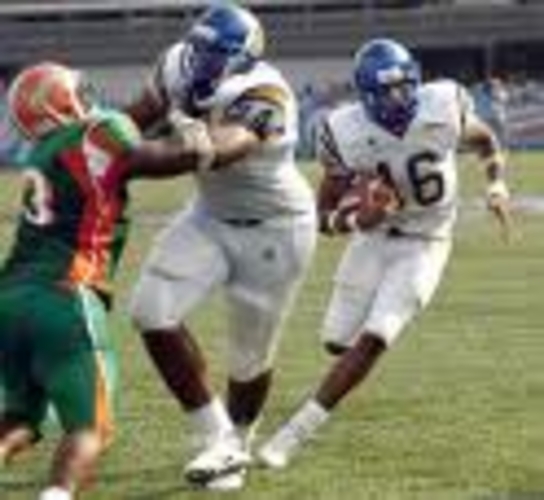
Posted By: Russell Clark on August 26, 2010 By ALVIN HOLLINS JR. The ongoing debate among the respective sports fan bases of the nation’s two HBCU NCAA Division I Football Championship Subdivision (FCS or I-AA) conferences – the Mid-Eastern Athletic Conference (MEAC) and the Southwestern Athletic Conference (SWAC) – ignited by the spectre of a revived Heritage Bowl (Legacy Bowl) in December 2011 has been quite revealing. What the spirited discussions have uncovered is a schism, or a divide, between the two leagues, who seem to be at polar opposites on the merits of the proposed postseason extravaganza – in one corner, the SWAC, which years ago opted out of the NCAA championships in favor of a divisional format and a league title game, and in the other, the MEAC, which favored remaining in play for a national championship. So while the revived “bowl” would pit the champions of the two leagues in a postseason affair before a national television audience via ESPN, and guarantee up to $3 million for the conferences, the MEAC could lose its’ automatic NCAA playoff bid in the process. On one hand, SWAC partisans argue that the playoffs are a financial and competitive dead end for HBCUs – that vying for mainstream recognition via the national polls, or to contend for a national title is both demeaning and an exercise in futility – and that the Legacy Bowl is a better alternative for the Black College sports collective. And while MEAC supporters are split to a certain degree on the issue, they appear to be in agreement that the playoffs afford greater recognition for the league and a golden opportunity to compete with the division’s elite programs, which in turn will serve to help HBCUs remain relevant in the vital recruiting arena. The fact that three MEAC schools – Florida A&M, South Carolina State and North Carolina A&T – have had previous postseason success, also fuels the sentiment within the league for retaining the playoff option. But the divide between the two leagues and their respective fan bases may be indicative of a larger concern about their capacity for success on a wider stage outside the HBCU comfort zone – perhaps a remaining vestige from a segregated past. For years during the first half of the 20th Century, American intercollegiate sports featured two separate sports realms, one Black and one White – an era which began winding down in the early 1970s thanks to the momentum from the Civil Rights Movement. In the late 1970s, both the MEAC and SWAC elected to move to the Division One mainstream for the promise of greater exposure and financial windfalls for their respective member institutions. But that move up was made without a strategic, long-term plan for bringing those athletic programs, which had been closely associated with Health and Physical Education since their inceptions, in line with a modern-day, intercollegiate sports business model – something with which HBCUs continue to struggle with over 30 years later. And while the NCAA Basketball Tournament continues to provide a monetary boost to both leagues each March, the much-hoped-for boon from football vanished into thin air almost before it began. All schools from all divisions used to receive six-figure ($150,000) payments for both teams from ABC-TV for regional broadcasts in the late 1970s and early 1980s, but that revenue stream (and the resulting exposure) disappeared when the major conferences sued the NCAA, winning control of television for football. During the past 30 years, HBCU athletic programs have had their bright shining moments, yet still have largely struggled, never consistently taking the innovative steps in marketing, fundraising, recruiting, compliance and strategic planning necessary to contend nationally in all sports in Division One. Now, with the national economy in a tailspin and states making severe budget cuts in education, institutions will be pursuing new revenue streams to sustain their athletic programs in the coming years, while easing the burden on the schools’ bottom lines. Which brings us back to the questions concerning the Legacy Bowl: Will the financial benefits from the game be worth giving up a chance to play for a national championship? And, is the move toward a MEAC/SWAC postseason bowl game a “retreat” to an HBCU comfort zone and away from competition on a larger stage? Those are the burning questions that must be answered as Division I HBCU sports programs ponder their futures individually and collectively. http://hbcusportsonline.com/media/2010/08/... If you enjoyed this article, Join HBCU CONNECT today for similar content and opportunities via email! |
 |
Russell Clark
From Decatur, GA Member Since March 2010 |
Comments
More From This Author
Latest HBCU Sports



 |
Pittsburgh, Reading, and Scranton will host 'Fan Zones' for soccer fans to enjoy 2026 FIFA World Cup eventsThe Fan Zones will amplify and complement Philadelphia’s 39-day FIFA Fan Festival at Lemon Hill Park — extending the World Cup’s energy and economic impact across PA
Author: Keith Schweigert (FOX ...more
Hija Chang • 132 Views • May 8th, 2026 |
 |
Oura Q&A with Professional Wide Receiver Odell Beckham Jr.Q: How does a bad night of sleep make you feel?
A: “I think when I get bad sleep, my day just doesn’t go smoothly. You wake up feeling groggy. You feel like you’re always trying to find your groove ...more
Hija Chang • 120 Views • May 7th, 2026 |
Popular HBCU Sports


