


A Crash Course on Paying College Tuition
|
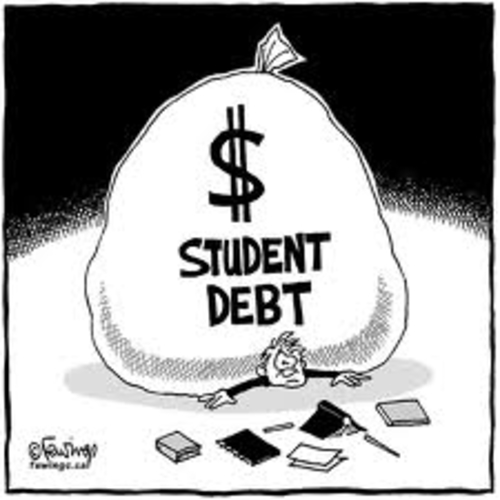
Posted By: on January 30, 2013 The good news: Junior got into college. The not-so-good news: It's going to cost you. It's time for the annual ritual when families fill out the Free Application for Federal Student Aid, wait for the aid letters to roll in and then sit down to decide which school is "the one." And in many cases, the final price tag can trump a great curriculum, sprawling campus and renowned professors. That's why having a frank, open conversation with your child about the family's financial options is one of the most important steps you take when choosing a school, says David Childress, a vice president at Student Aid Services, a provider of research and tools to college enrollment and financial-aid offices. That includes discussing ways to make the most of scholarships, grants and other aid. There is more than $236 billion in student aid, such as loans, scholarships and grants, available each year, according to Student Aid Services. Undergraduates receiving aid get an average of $13,218 per year. Here's how to begin your conversation: 1. Dissect and compare each award letter. Once you receive the financial-aid award letters from all the schools, it's time to sit down as a family and compare them—carefully. There is no standard format for award letters so the information contained in each can vary widely. Typically, a letter lists financial aid from multiple sources, such as school scholarships, work-study money and federal loans, along with your expected family contribution. Some schools outline the cost of attendance, including tuition, room and board, and miscellaneous expenses like books, according to financial-aid site finaid.org. Some just include tuition and fees while others don't include the cost of attendance at all. To help with the math, colleges and universities participating in federal student-aid programs are now required to have a net-price calculator on their websites. The tool estimates the cost of attendance, including tuition and fees, room and board, books and supplies, transportation and personal expenses. Then it subtracts any aid, such as a Pell Grant, scholarship or loan, the family expects the student to receive. You'll need to input information such as parental income, household size and number of children currently in college. Leslie Tobakos, mother of two college-aged kids, compared apples to apples on tuition, room and board and fees by making a spreadsheet to track the bottom line for each school. She wrote down all the names of the schools her daughter had applied to and realized they were all over the country. Some schools were farther from home, like Claremont McKenna College in California. She had to consider travel expenses, including trips home for the holidays. "I didn't care how much money they were giving us," says Ms. Tobakos, who lives in White Lake, Mich. "I cared what the bottom line would be." 2. Do the family math. Once you've determined exactly how generous each school is—or isn't—being, you'll need to calculate how much your family (the parents and the student) will need to dish out. Spell out how much you'll pay each semester and what that money covers. It could include tuition, room and board. Take into account aid that covers only the first year and how you'll make up the difference the following years. Then specify which expenses your child will be expected to pay for—say, dining out, books and activity fees—and how he or she come up with the money. Kate O'Connor, a senior at Michigan State University, works about 25 hours a week through a work-study program and about 20 hours at a part-time job to help with costs not covered by loans, scholarships and grants, because her parents couldn't afford to contribute. 3. Find free money. That duct-tape dressmaking may be your ticket to some extra cash for college. There are scholarships to fit just about any group or niche. (Yes, even duct tape.) Sites such as Fastweb.com, SchoolSoup.com and SallieMae.com/scholarships list many options. If Junior plays a sport for school or a league, for instance, he or she should look into the $500 BigSun Scholarship (bigsunathletics.com). If your teen is a leader—say, for a school group or in your community—look into the $2,000 Discus Awards College Scholarship (discusawards.com/scholarship-info). Ms. O'Connor landed a scholarship from Kentucky Fried Chicken worth more than $20,000 over four years. It's geared toward high-school seniors with financial need who pursue an education at a public institution in their home state. Students may be eligible for state aid. Many companies offer scholarships to children of employees. Children of veterans may qualify for awards as well. And families also should reach out to civic, religious, community and ethnic groups. 4. Consider a payment plan. Many schools—public, private, large and small—offer tuition payment plans that generally don't charge interest rates. There typically is a one-time, upfront fee of about $50, and you make monthly payments—the monthly amount is based on the family's income level—says Charlie Rocha, senior vice president of student lending at Sallie Mae. You can either apply directly through the school or the payment-plan provider. 5. Look at your loan options. In the end, your family may have no choice but to borrow money. First look into federal loans, which typically have the lowest interest rates. The subsidized federal Stafford Loan currently has a fixed interest rate of 3.4%. The federal PLUS loan for parents has a fixed rate of 7.9%. Perkins loans have a fixed interest rate of 5%. You can apply for these with the Fafsa. (Go to fafsa.ed.gov.) Private bank loans should be your last option since they tend to have higher rates. Be sure to discuss the post-graduation implications of a loan. That means spelling out payment amounts, when they will start, how long they will last and the overall cost over the life of the loan. WSJ | Emily Glazer | 1/27/2013 Write to Emily Glazer at emily.glazer@wsj.com For more articles like this please visit https://www.inclusioin360.com If you enjoyed this article, Join HBCU CONNECT today for similar content and opportunities via email! |
Comments
More From This Author
Latest Blogs
 |
Mahama’s Pan‑African Push: Reconnecting Africa and the Diaspora through Nkrumah’s LegacyPhoto: John Dramani Mahama stands today where Kwame Nkrumah once stood — at the crossroads of Africa’s destiny.
Across the shifting landscape of global power, Ghana’s President John Dramani M ...more
Joel Savage • 52 Views • September 25th, 2026 |
 |
Dual sovereigns of the sky: The crow’s mind and the eagle’s mightA photo of a crow and an eagle facing opposite directions, two intelligent birds symbolizing wisdom and power under a bright sky.
Across the vast skies of our planet, two birds stand out as symbo ...more
Joel Savage • 58 Views • September 25th, 2026 |
 |
The Future of Smart Homes: Trends Shaping Modern LivingSmart homes are becoming a more familiar part of everyday life as connected devices, home automation, and artificial intelligence continue to develop. What once seemed like a luxury feature is increas ...more
Satyam Kumar • 72 Views • September 25th, 2026 |
 |
Why millions will lose jobs soon, and how smart nations are preparingPhoto: A modern workspace showing robots, AI interfaces, and human workers collaborating, revealing the future of work and global job transformation.
The world is entering a historic transformati ...more
Joel Savage • 84 Views • September 24th, 2026 |
 |
Why Crypto Scam Victims Trust Proficient Expert Consultant for Asset RecoveryProficient Expert Consultant – Cryptocurrency Recovery & Blockchain Investigation Services
Seeking Answers After Cryptocurrency Loss?
Losing cryptocurrency to investment scams, wallet compromises, p ...more
Dominik Helmfried • 84 Views • September 23rd, 2026 |
Popular Blogs
 |
Divorce in America in 2009 – What’s love got to do, got to do with it?
Join Brother Marcus and the cast and the crew of the Brother Marcus Show live this Sunday evening on February 1, 2009 @ 8:00 p.m. for another hot topic in our community! “Divorce in America in 2009 ...more
Brother Marcus! • 75,423,343 Views • January 27th, 2009 |
 |
VISINE ALERT!!!Seemingly innocent medication such as Visine eyedrops are used by people to concoct a mixture with similar effects as a date-rape drug.
When mixed with alcohol and taken orally, the eyedrops can l ...more
Siebra Muhammad • 122,504 Views • May 23rd, 2009 |
 |
"Chain Hang Low" check out the real meaning of the Lyrics!Recently there is a new artist out of Saint Louis that goes by the name JIBBS. Jibbs debut single "Chain hang low" has a history that most people are not aware of. The particular nursery rhyme that th ...more
Tyhesha Judge-Fogle • 81,289 Views • November 9th, 2006 |
 |
HBCU Marketplace Gifts: Divine 9 Premium Fraternity / Sorority Playing CardsVendor: Charles Jones
Item Price: $20.00
Price Includes Shipping: Yes - Shipping Included
Item Description:
Pantheon Series - Divine 9 - Premium Playing Cards (choose Gold Series or Silve ...more
Hija Chang • 64,534 Views • December 2nd, 2018 |
 |
Black College Student Sentenced to 12 Years in Prison for Kissing a White GirlAlbert N. Wilson, a former University of Kansas student, has been sentenced to 12 years in prison and a lifetime of probation after being convicted by an all-white jury of raping a white teen girl. Bu ...more
Roger The Great • 57,332 Views • June 4th, 2020 |


