







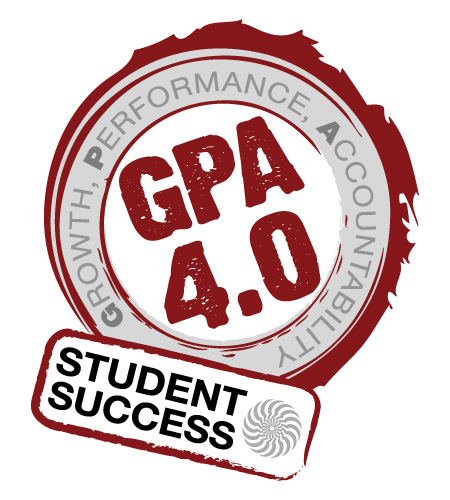
Diverse Conversations: Is a 4.0 at an HBCU the Same as a 4.0 at a PWI?
|
Posted By: Hija Chang on July 01, 2014 by Matthew Lynch Historically Black colleges and universities (HBCUs) have an important tradition in the United States. It’s not necessarily a straightforward tradition, but it’s one with which we still grapple. One of the biggest struggles, perhaps, is the equalizing of values, of recognition and importance. The problem addressed in this interview—my interview with George Johnson, student accounts manager at Georgetown University and a graduate of two HBCUs—is that of academic weight. Does a 4.0 at an HBCU have the same value as a 4.0 at a predominantly White institution? Q: The first question, then, is one that seeks to generalize. Generally speaking, does a 4.0 at an HBCU have the same value as a 4.0 at a PWI? If not, why not? A: Generally speaking, a 4.0 at an HBCU does have the same value as a 4.0 at a PWI. I say this because a 4.0 simply means you were able to master the subject being studied with the highest grade possible for the requirements of the degree or course. If we use the old adage of “2+2 = 4,” then in general terms a 4.0 is a 4.0 is a 4.0. I say that because the true debate is not if it has the same value, but is the criteria required to receive a 4.0 more arduous at a PWI versus an HBCU. To date, there is no real scientific evidence to prove or disprove this theory. Furthermore, this statement falls apart on the merits, as professors from PWIs teach at HBCUs and vice versa. In terms of value, what does getting a 4.0 really mean? There are students who graduated without honors who are millionaires. There are students with 4.0s who are currently out of work. As I stated in a previous article, we should be commending anyone who is able to get a 4.0 regardless of the institution it was received from, for that truly takes hard work. Q: In what contexts do you think there is the greatest gap in value between 4.0s from HBCUs and 4.0s at PWIs? Is there anything in particular that continues to perpetuate this gap? A: The greatest gap in value comes from the refusal to change the hierarchy created within colleges and universities across the U.S. Even PWIs are separated into “Ivy League” versus everyone else. When you look at USA TODAY’s top college rankings, there is no HBCU listed in the top 20. This perpetuates the belief that the education at an HBCU is below the standards of our nation’s top universities, which is simply untrue. The formula used to create the top 20 is based on various categories that have nothing to do with academic standards. They rely on stats like graduation rates, retention rates, the high school SAT scores of incoming students, and “education experts” to determine this ranking. There is no true academic valuing tool or method that is being used to determine this. Furthermore, many of the HBCUs are accredited by the same governing body as the PWIs. So they are good enough to be accredited by the same academic standards, but the academic standards are still unequal. A very flawed argument at best. Q: How is the overall relationship between academic excellence at HBCUs versus PWIs determined and how, if at all, is that relationship changing? A: Unfortunately, perception is reality when it comes to this question. As stated previously there is no scientific method to the determination of this statement. The overall standard is rooted in perceived ranking of Top PWIs versus PWIs. PWIs versus HBCUs and the unfortunate ranking of HBCUs versus HBCUs. Although not used as frequently, during the Civil Rights era, the term “The Black Ivy League” was coined for certain HBCUs that “pulled the best and most privileged Black students.” Howard University, for years was deemed to be “The Black Harvard.” Although not heralded as it once was, this hierarchy has created a dissention in the African-American community’s views on academic excellence among HBCUs. If we are unable to agree that HBCUs across the board have an equal standard of learning with each other, how can we debate that they are comparable to PWIs? I do believe that, in recent years, the views of the “hierarchy” of HBCUs have significantly declined, but I feel that, if we want to be perceived and recognized as equals with PWIs, we must come to an agreement that we are equivalent to one another. The fact that many students that attended HBCUs for undergrad were able to get graduate degrees from PWIs is under-researched evidence of the relationship change. Q: What have been some of the most significant strategies for equalizing the perceived values of academic excellence at HBCUs versus PWIs? A: I am not sure if I would necessarily say it is a strategy, but the recent visibility of HBCU graduates, alumni and dropouts has created a change in perceived values. The commencement speech at Howard University by Sean Combs and the celebrity appearances in commercials advertising HBCUs have brought a newfound attention to these colleges and universities. The addition of new degree programs, including masters and doctoral at many of the HBCUs, is also helping to equalize this standard. Another strategy that has been utilized is the raising of the academic requirements to attend HBCUs. Long lives the stigma that HBCUs are “last resort” or “willing to accept everyone.” Although they do tend to have lower requirements for admission, it does not change the fact that the academic standard is one of high quality. I like to believe that HBCUs are schools that give “second chances” and are more willing to put in the work to bring out the “diamonds in the rough” compared to PWIs. The continuing partnerships that many of the HBCUs are creating with corporate America, study abroad programs and STEM programs are also helping to decrease the perceived inequality of learning. Q: What can administrators and educators at HBCUs do and what can their counterparts at PWIs do to try and overcome the remaining gaps, the remaining discrepancies in values? A: I feel that administrators and educators need to re-instill that the value is in receiving the college education, and not where you receive it from. Perception is reality on this subject. If tomorrow, 10 former HBCU graduates became the CEOs of 10 fortune 100 companies, people would begin claiming that there is something that HBCUs are doing that PWIs aren’t. Too much weight is being put on where you are getting educated based on what people are doing with their education. Educators need to remind students of the reasons they attended college. Making sure that students are engaged and not only able to repeat information, but also apply it. The 4.0 does not guarantee that you will be more successful in life, regardless of where it is received. It does not guarantee wealth, health or how you will be able to apply your knowledge to life situations. It also becomes the responsibility of the students that attend HBCUs who are doing well in their respective fields to be visible. We have to push the message that we are equivalent to those who graduate from other institutions. We must be vigilant in reminding students at HBCUs that their degrees have worth and value. That Harvard, Princeton, and Yale are excellent schools based on the academic, societal achievements of their alumni and professors, not based on the devaluation of other institutions. I conclude by saying that the pursuit of knowledge is a valiant one. It brings together people from all walks of life, different shapes and sizes. It should not matter if you choose to attend an Ivy League, HBCU, PWI, or community college. Your GPA should not be a topic of debate because you got it “here” instead of “there.” The fact that you chose higher education is to be applauded and respected. To devalue that choice in any way is simply unacceptable. I would like to thank George Johnson for sitting down to talk with us. Source: http://diverseeducation.com/article/65277/ If you enjoyed this article, Join HBCU CONNECT today for similar content and opportunities via email! |
 |
Hija Chang
Management, See Moss Interactive Bellarmine University class of 2021 Member Since January 2011 |
Comments
More From This Author
Latest News


 |
Rosen Foundation expanding scholarship program, partnering with Bethune-Cookman UniversityCarrying on the legacy of Harris Rosen and his commitment to education, today the Harris Rosen Foundation announced it is expanding its already-successful scholarship program and partnering with Bethu ...more
Reginald Culpepper • 299 Views • May 19th, 2026 |
 |
Sinners vs. Michael: Which Film Actually Won the Ultimate Culture Debate?While Antoine Fuqua’s Michael is dominating the box office with its electrifying, stadium-level concert recreations and a star-making, uncanny physical performance by Jaafar Jackson, critics and film ...more
TaQuan Ford • 233 Views • May 16th, 2026 |
Popular News



 |
North Carolina HBCU Unity DayShaw University - Elizabeth City State University - Johnson C. Smith University - Fayetteville State University - Livingstone College - North Carolina A&T State University - North Carolina Central Uni ...more
Reginald Culpepper • 109,467 Views • August 8th, 2016 |


