


Winning the Wars to Save HBCUs Starts With Honest Look at Leadership
|
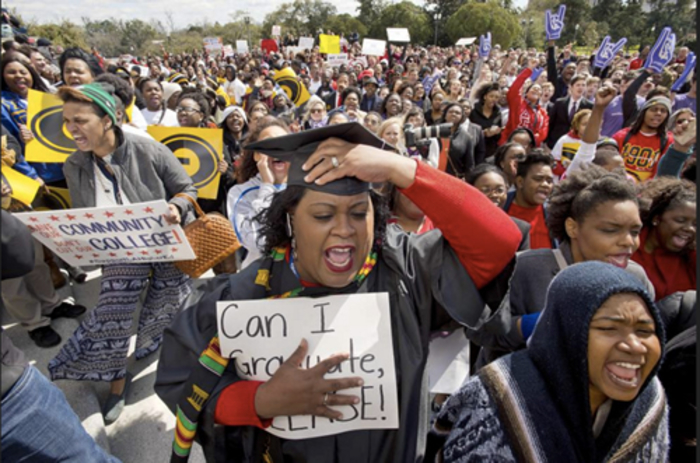
Posted By: Reginald Claremont on June 06, 2016 Originally published April 1, 2016 by JL Carter Sr. Two days ago, a Louisiana State University endowed professor wrote a heartbreaking Times-Picayune editorial on the physical degradation of Southern University’s Baton Rouge campus. In a winding, descriptive narrative about leaking roofs, molded ceiling tiles and slashed budgets, it was a single sentence in Robert Mann’s epitaph on Louisiana’s concern for Southern that perfectly captured the generational suffering felt by HBCU advocates nationwide. That Southern’s infrastructure has apparently suffered more than other Louisiana universities – LSU’s threadbare campus appears sparkling by comparison – causes one to wonder how different the school’s condition might be if the majority of its students and faculty were not African-American. The thesis is clear; Louisiana’s volatile mix of race and politics has poisoned the flagship school of one of the state’s systems of higher education. But what happens when the same evils have a not-so-visible impact on the campus? A sick building will tell you that something is wrong, even if the source of its damage is beyond what can be seen with the naked eye. The same is true about HBCU leadership, and Louisiana proves exactly how a lack of resources creates short and long-term negative outcomes. The universal question of “how could anyone let this happen” is asked with a variety of targets in mind: the governor, HBCU boards and presidents are the usual victims of the inquiry. But ultimately, is the goal of leadership to change the politics which surround HBCUs, or to work within them as they change in existence? There was a time in history where a war on two fronts was not winnable, but close to manageable for HBCUs. But desegregation in college choice reduced the tuition revenue, the marketing appeal and the cultural strength of HBCUs to the numbers we know today; just about two out of every ten black students in college enrolls at an HBCU. Now the wars to secure resources and defeat racial ill intent has fewer soldiers and fewer dollars for wartime spending, but we tend to focus on who to blame instead of how to adapt. The opponent has adjusted its strategy. Conservative state governments, which fund the majority of public HBCUs in the country, have relished the excuse of depleted coffers. They’ve illegally duplicated programs,lawfully realigned state higher education governance and created performance-based funding standards designed to punish the HBCU mission of access and opportunity for all students. Theygerrymander voting districts to ensure that their policies remain in place and grow in impact. HBCUs have adjusted in lawsuits from students and alumni, aligning academic programs with industrial trends, and working to recruit from uncommon places for students. But those efforts haven’t produced enough students and giving donors to slow the paralyzing effect of the political ether, and too many stakeholders misconstrue the HBCU struggle as an outcome of black incompetence, and not a symptom of anti-black racism. All institutions contend with managerial nepotism and ego, and because HBCUs do not have the money or technology to minimize the impact of vice-presidents, directors and managers with personal agendas, these harmful elements go unattended in the short-term. Long-term, their agendas and issues can result in major deficiencies that impact institutional control and efficiency. A bad president can make good VPs want to leave; a bad VP makes good directors rebellious, and bad directors make staff unproductive. From the top down, bad leadership permeates to empower an HBCU human product which appears rude, unknowledgeable and unmotivated. And when clients – students, parents and alumni begin to get pissed with the product – these same leaders have to answer for defections in managerial talent, lapses in service, and gaps in innovation; searching to find answers from the bottom up. Louisiana is the perfect test case for how the dual war is waged against HBCUs. In the last two years, every one of the state’s public HBCUs has, or will have replaced their chancellors and presidents. Every campus has received substantial budget cuts that have resulted in discontinued programs, and high-profile failures in physical plant infrastructure. The state has correctly banked on students and alumni remaining loudly complacent on the its ravages against the Southern System and Grambling State University. They gladly allow marches and protests at the capital, in exchange for keeping the neglect out of the federal courts as a matter of Constitutional violation. And the same thing plays over and over in places like North Carolina, Florida, Georgia and Maryland. And our focus remains on if our leaders are smart enough, charismatic enough, or politically savvy enough to win us and the enemy over at the same time, as if the enemy didn’t have a hand in their appointment, or doesn’t sign their checks and pay their health insurance: as if we we didn’t sit silently by while politics and agendas decided on their appointments, on our behalf. In the end, it doesn’t matter who the president is or what they succeed or fail to do; it is up to students and alumni to realize that the future of HBCUs bends at the will of the actively informed. And the most important thing to know in preserving the future of HBCUs is that none of our presidents, good or bad, are equipped to fight two unwinnable wars on their own. One of these wars must be picked up by students and graduates, and fought in places well outside of protest throngs and critique of leaders appointed to purposefully fail through executive tampering, or to be forced into the same by outside influences. If you enjoyed this article, Join HBCU CONNECT today for similar content and opportunities via email! |
 |
Reginald Claremont
President, Fulfillment and Web Services, HBCUCONNECT Clark Atlanta University class of 1998 Member Since September 2000 |
Comments
More From This Author
Latest News
 |
FAMU Partners With JCPenney to Help Students Dress for SuccessMore than 250 Florida A&M University students received support in preparing for upcoming career opportunities through the Suit Up JCPenney event, which provided access to discounted professional attir ...more
Reginald Claremont • 143 Views • September 23rd, 2026 |
 |
For Your Grammy Consideration: James Artissen - Blank FaceFor Your Grammy Consideration.
Artist: James Artissen
Song: Blank Face
Genre: Dance, Pop, R&B
Label: Humble Sound Records
Category: Best Dance Pop Recording
#JamesArtissen #BlankFace #Gram ...more
Lenell Johnson • 133 Views • September 23rd, 2026 |


Popular News
 |
Louisiana Upholds Life Sentence to Black Man For Stealing Hedge Trimmers in 1997While this may not be HBCU related news, as an AFrican American male, I had to share this appalling decision by the Louisiana court system to keep a man in jail with a life sentence for such a petty c ...more
Roger The Great • 405,769 Views • August 6th, 2020 |
 |
Blonde Instagram Model Goes Viral for Graduating from HBCU and Pledging Delta Sigma Theta!A blonde woman is going viral this morning, for graduating from A Historically Black College while pledging a Black sorority, Delta Sigma Theta Sorority Incorporated.
@Blonde_HBCU
The woman, an IG ...more
Roger The Great • 190,068 Views • November 30th, 2020 |
 |
Apple to Invest over $40 Million Dollars into HBCUs - Time to major in Computer Science!!!On Tuesday Johnny C. Taylor, President and CEO of the Thurgood Marshall College Fund stopped by “NewsOne Now” to make a major announcement that could literally change the lives of thousands of HBCU st ...more
Roger The Great • 130,939 Views • March 11th, 2015 |
 |
North Carolina HBCU Unity DayShaw University - Elizabeth City State University - Johnson C. Smith University - Fayetteville State University - Livingstone College - North Carolina A&T State University - North Carolina Central Uni ...more
Reginald Claremont • 117,168 Views • August 8th, 2016 |
 |
Black Billionaire Robert F. Smith to Donate $50 Million to Support STEM Students at HBCUsThe Student Freedom Initiative announced today a $50 million personal gift from Robert F. Smith, philanthropist and Founder, Chairman and CEO of Vista Equity Partners. This gift matches the initial fu ...more
Roger The Great • 86,505 Views • October 22nd, 2020 |


