




David Malarcher gets overdue Hall of Fame honor
|
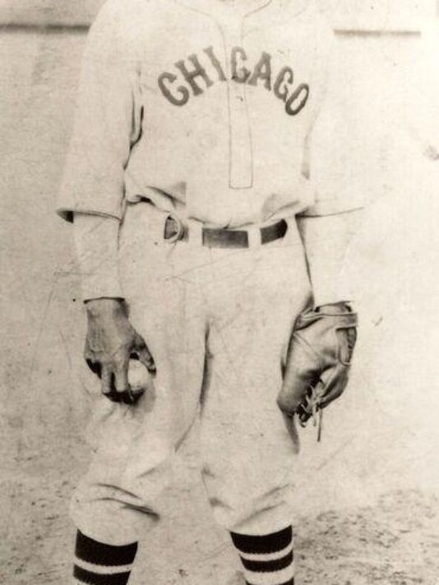
Posted By: Hija Chang on June 20, 2016 This is one of a Louisiana Sports Writers Association series of stories featuring the 11 members of the Louisiana Sports Hall of Fame’s 2016 induction class. They will be enshrined Saturday, June 25 in Natchitoches, capping three days of activities. The banquet is nearing a sellout. For a full schedule or to buy tickets, visit LaSportsHall.com or call (318) 238-4255. Soon after the National Baseball Hall of Fame announced that the famous Satchel Paige would in 1971 become the first Negro League player to enter the hallowed halls of Cooperstown, Convent native David Malarcher reacted with jubilation. Malarcher, who himself had toiled as a much admired player and manager when the national pastime was mercilessly divided by segregation, viewed Paige’s admission to the National Hall of Fame as a landmark development and milestone in the decades-long effort to, at long last, earn the Negro Leagues, its players, managers, owners, journalists and fans the respect that had eluded them for so long. In a June 17, 1972, letter from his post-retirement Chicago real estate business to other former Negro Leaguers in the Windy City, Malarcher wrote: “No. 1, the history of Negro baseball players reveals the fact that members and peoples of the Negro race in America were engaged in and starring in baseball as long as the game has been been played here. “And now,” he added, “the efforts of the National Baseball Hall of Fame to include all professional baseball players in its records and history is a valiant demonstration of its will to ‘right the wrong’ done the Negro player in this phase of American sport.” Paradoxically, though, while dozens of Negro Leaguers have since been inducted into Cooperstown and popular knowledge and awareness of blackball’s existence and legacy has skyrocketed, Malarcher himself remains, in the minds of many observers and historians, one of the most underappreciated and overlooked figures in Negro Leagues history. Malarcher’s greatness as a player and manager has somehow flown under the radar and has only recently started coming to light in his native Pelican State. In 2015, the Triple-A New Orleans Zephyrs inducted him into their New Orleans Professional Baseball Hall of Fame, an honor that’s now being duplicated by the Louisiana Sports Hall of Fame. On Saturday, June 25 in Natchitoches, Malarcher will be enshrined as part of the 11-member Class of 2016 in ceremonies at the Natchitoches Events Center, just a long fly ball away from the $23 million Hall of Fame museum. “Oh my goodness, I’m very proud of him, and not only me, but the entire family,” said Malarcher’s grand nephew, Alvin Malarcher. “I never even though about (his uncle being honored). And now he’s being elected for another hall of fame. This is really just another great, great honor for the family.” Still, perhaps the lack of recognition stems from Malarcher’s personality and disposition. Unlike higher-profile Negro Leagues stars — such as Paige, the relentless self-promoter and hardball mercenary, or Josh Gibson, the home run-clubbing “Black Babe Ruth” — Malarcher possessed a quiet, unassuming nature, someone who didn’t seek the limelight and who remained content to simply help his teams win championships. But even more so, Malarcher — who died in Chicago in 1982 at the age of 81 — was a sort of Renaissance man in the annals of Negro League baseball — a college graduate, a World War I veteran, a scholar, a poet, an activist, a slick-fielding third baseman, a championship-winning manager. Once he arrived in the Windy City in the early 1920s, Malarcher began accruing a reputation as a polite, gracious, heady, gallant player who, at the same time, possessed the fiery spirit and competitive gusto that marked Negro Leagues play. That combination of intelligence, exuberance and hardball instinct earned Malarcher the role of star pupil to the legendary Andrew “Rube” Foster, who had evolved from a star pitcher in the early 20th century into a team owner, manager and founder of the first Negro National League in 1920. Rube Foster was a towering figure in the world of blackball, and Gentleman Dave Malarcher earned his stars at the foot of the master. “If you mentioned Aristophanes, Pericles, Sophocles, Thucydides, Euripides of Socrates, this scholar knew of their talents,” said Larry Lester, an author, historian and 2016 recipient of the prestigious Harry Chadwick Award for excellence in baseball research. “Off the playing field, Julius was known for his prose and philosophy. “Rube’s star student had the gentle demeanor of a lap dog, but had a Rottweiler appetite to win,” Lester added. “Malarcher had the purity of Black Moses, the tenacity of Black America and sanctity of Black Madonna.” A love for small ball A clutch hitter and speedster, Malarcher tormented opposing pitchers during his playing days, while also flashing the leather at the hot corner. But perhaps more importantly, he quickly absorbed Foster’s lessons in baseball strategy and acumen, picking up the legend’s love of what would be called “small ball” today. After inheriting the managerial reins of the American Giants from Foster in 1926, Malarcher proceeded to lead the squad to multiple NNL titles as well as two straight Negro World Series crowns. His accomplishments made him one of the most widely respected figures in black baseball. Malarcher’s climb to the pinnacles of African-American baseball began in 1894, when he was born in rural St. James Parish to a farming family. It was David’s mother who encouraged the youth to value education and learning. That nurturing nature led Malarcher to the Crescent City, where he attended New Orleans University (a precursor to modern-day Dillard University), from which he graduated in 1916 and where he led the NOU baseball squad to an undefeated record over an eye-popping four seasons. Those academic experiences stuck with young Dave throughout his life. “Education should discipline the mind and the mind should discipline the body,” Malarcher told the Chicago Tribune in 1976. “And knowledge is power — power to reason and to observe and profit from the things observed. ... “The education and the mind and spirit discipline that I learned at New Orleans University enabled me to observe and absorb the baseball training techniques and strategy” of his mentors in the Negro Leagues. While cracking the books at NOU, Malarcher cultivated his on-field skills with local semipro teams in the Big Easy, such as the Black Eagles. His big break in baseball came around the time he graduated the university when the top-tier Indianapolis ABCs and their owner, C.I. Taylor, swept through New Orleans on an exhibition tour. Once Taylor caught a glimpse of Malarcher on the Crescent City sandlots, the Hoosier kingpin snapped Dave up and brought him to Indy. After earning his stripes with the ABCs, Malarcher entered the Army, serving overseas in Europe toward the end of the First World War; while there he also laced up his spikes for his military camp team in LeMans, France. Toward the end of his military service, Malarcher was summoned by Rube Foster, who lured the young Louisianian to the Windy City, where Malarcher began his tutelage under his illustrious mentor. From there, Malarcher blossomed into a Negro Leagues stalwart in his own right, playing and managing within the game until the mid-1930s, when he and wife Mabel settled into their modest home in Chicago. Malarcher proved to be a savvy businessman, opening a thriving real-estate business; he used his entrepreneurial success to join other African-American real-estate agents in Chicago to fight for more black employees in the home-loan business, spur local leaders to increase home-ownership opportunities for African-American residents, and combat corruption in the housing market. ‘A poet’s sensibility’ Now, more than three decades after Malarcher’s death, many writers, historians and fans are wondering why Malarcher — a man who exemplified his sport’s best nature and garnered the eternal respect of his peers as a player, manager and gentleman — hasn’t gotten more love on a national scale. Particularly, some wonder why he remains overlooked by Cooperstown. “In doing research on Dave Malarcher, I came across a men who truly deserved the name ‘Gentleman,’” esteemed Louisiana sports writer and historian Ted Lewis said. “Besides having a first-rate baseball mind, thanks to the tutelage of Rube Foster, Dave Malarcher brought a poet's sensibility to the game. Who else in baseball — black or white — has ever done that? “How,” he added, “he was overlooked by the Hall of Fame's Negro Leagues committee, I'll never understand.” Added fellow veteran journalist Ro Brown: “He was also an interesting guy to me. Just his background, his lineage and his education. That was highly unusual for black and white baseball players of the time to have. “Here’s a guy who had the nickname ‘Gentleman.’ That should tell you something right there, so he was somebody who deserves this kind of recognition.” One day, Malarcher just might make it into Cooperstown. He himself viewed such validation with the same measured patience and congeniality that marked his entire baseball career — and his entire life. “Propaganda is a terrible thing,” Malarcher told seminal Negro Leagues author John Holway. “The propaganda of segregation and bigotry is evil. It deceives people. I used to have Negroes occasionally tell me, ‘Do you think Negroes can play in the Major Leagues?’ And do you know what I would say to them? ‘Do you think so and so here, who is a barber, can cut hair like a white man?’ I would say, ‘Do you think Doctor so-and-so, who is teaching in a medical school, can teach a white professor?’ Well, certainly. And I would say, ‘What's baseball that I can't play it like a white?’ And I used to say occasionally that if they say that the Negro is the nearest thing to the savage, I think he would play better than a white, because baseball is only running and jumping and throwing a stick. He would be better. “But the whole point is that the propaganda of keeping the Negro out of the Major Leagues made even some of the Negroes think that we didn't have the ability. It started them to thinking it too. But I said, ‘Just wait until we get in there, and see what happens.’ And they used to ask me, ‘When do you think we will get in?’ And I said, ‘When we can prove to the white man that we can bring him something, that's when we will get in there.’” And it’s that combination of humility, pride, perspective and optimism that earned Gentleman Dave Malarcher a whole bunch of appreciative fans, yesterday and today. Source: http://www.shreveporttimes.com/ If you enjoyed this article, Join HBCU CONNECT today for similar content and opportunities via email! |
 |
Hija Chang
Management, See Moss Interactive Central State University class of 2021 Member Since January 2011 |
Comments
More From This Author
Latest News


Popular News



 |
North Carolina HBCU Unity DayShaw University - Elizabeth City State University - Johnson C. Smith University - Fayetteville State University - Livingstone College - North Carolina A&T State University - North Carolina Central Uni ...more
Reginald Culpepper • 115,818 Views • August 8th, 2016 |


