





Alabama State University's "Death Doctor" to be Recognized at Global Conference on Forensic Science
|
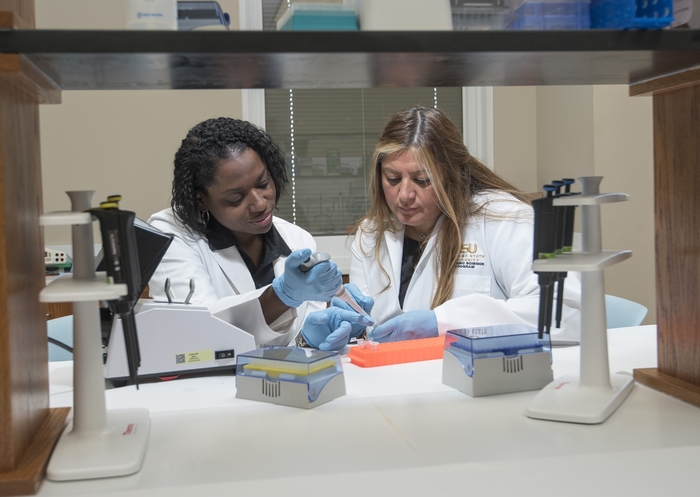
Posted By: Reginald Culpepper on May 26, 2017 ASU's Dr. Javan's research may help law enforcement better determine causes of death One of Alabama State University's nationally acclaimed forensic scientists and an expert on 'causes of death' has been selected to attend an international conference, which will allow her to share her latest insights in the field with her co-horts. ASU's Dr. Gulnaz Javan, an assistant professor in the University’s Forensic Science program, has won an International Association of Forensic Sciences Scholarship (IAFS) that is valued at $5,000 to cover the costs of travel, registration, housing and food to attend the 21st Triennial Meeting of the International Association of Forensic Sciences on Aug. 21-25, in Toronto, Ontario, Canada. The IAFS is awarding her this scholarship to allow and encourage cutting-edge researchers, scientists and others from around the world to discuss and debate issues focal to the forensic science disciplines. Javan's scholarly presentation for the Canadian meeting will have to do with her groundbreaking study that demonstrates the differences in causes of death between humans who died of unnatural deaths (such as homicides and various accidental deaths) versus those who died of natural causes (heart disease, strokes, etc.). She said that her studies in this field have been conducted since 2014 in ASU’s Forensic Science program's Thanatos Research Lab. “I am excited to share with an international audience the first study to establish an innovative way to incorporate molecular pathology in ascertaining causes of deaths,” said Javan, who is the principal investigator. “My presentation is part of numerous studies contributing to understanding postmortem microbiology of decomposing human bodies.” She says her study is relevant because it supports the creation of the Human Postmortem Microbiome Project (HPMP), a global consortium that endeavors to cultivate forensic criminal investigative tools and databases for forensic investigations. She and her assistant, Sheree Finley, an instructor in ASU's Physical Sciences Department, use state-of-the-art sequencing technology to identify the microbes that thrive in different internal organs after death and on the surfaces of decomposing human cadavers to assist law enforcement and forensic investigators in developing evidence for its various homicide and cause-of-death investigations. If you enjoyed this article, Join HBCU CONNECT today for similar content and opportunities via email! |
 |
Reginald Culpepper
President, Fulfillment and Web Services, HBCUCONNECT Clark Atlanta University class of 1998 Member Since September 2000 |
Comments
More From This Author
| Honda USA Foundation Launches Drive the Legacy Fund to Evolve Support for Historically Black Colleges and Universities |
Latest News


Popular News



 |
North Carolina HBCU Unity DayShaw University - Elizabeth City State University - Johnson C. Smith University - Fayetteville State University - Livingstone College - North Carolina A&T State University - North Carolina Central Uni ...more
Reginald Culpepper • 116,503 Views • August 8th, 2016 |


