


The Lung Association's 'State of the Air Report' at 20: A Look Back and Ahead

|
Posted By: Hija Chang on May 24, 2019 FEATURED Content Former United Nations Secretary General Kofi Annan once stated "Knowledge is power. Information is liberating. Education is the premise of progress, in every society, in every family." Twenty years ago, the American Lung Association initiated the "State of the Air" report, with the goal of providing the public and policy makers with information summarizing air quality in their cities and counties. The Lung Association decided to use the frequency of exceeding the U.S. Environmental Protection Agency's (EPA) health-based air quality standards as the basis for assigning an air quality grade, using the typical academic grading system from "A" through "F". Those levels pose a health hazard for the general public as well for people especially vulnerable to the health impacts of air pollution. The intent of the report was to provide an annual assessment of local air quality that could then be used in the future to assess progress, or lack thereof, in achieving healthy air quality. State of the Air homepage Rather than limiting the report analysis to just the number of official violations of the health-based national air quality standards, the first report in 2000 used the frequency of the color-coded air pollution levels included in the EPA's Air Quality Index (AQI) as the key grading criteria. This approach allowed for giving extra weight to air pollution levels that were substantially above the health-based standard and thus pose a particularly significant threat to public health. Using the color-coded AQI as the basis for the report also provided a connection to the public's expanding awareness of daily air quality in their communities, as by the late 1990s the AQI had become a regular component of television, radio and newspaper weather forecasts (e.g., "code red day"). The 2000 report included information only on ground-level ozone air pollution, as the EPA had adopted a new air quality standard for small particle pollution (PM2.5) in 1997 and monitoring data for that pollutant wasn't yet available for the first report. However, data for this important air pollutant was added in 2004 and has been included in the report since then. Pictures of Los Angeles air quality in 1988 compared to today. While air pollution emissions have substantially declined over the past 20 years, our understanding of how, and at what levels, air pollution affects our health has also advanced. In addition to the expanding science concerning small particle pollution, the dramatic increase in air pollution health studies over the past two decades have shown that air pollution negatively impacts our health at much lower levels than previously believed. This has resulted in the EPA tightening health-based standards. For "State of the Air" this means in many cases, what were once passing grades became failing grades, measured by tighter, more protective standards. There have also been studies during this period that have identified the likelihood of increased ozone levels from climate change as ozone levels increase with higher temperatures, making efforts to reduce this pollutant even more challenging. Climate change has also increased the likelihood of more frequent severe forest fires that result in dramatic air pollution episodes that significantly endanger public health, such as those that impacted California in 2017. Another key component of the original "State of the Air" report, which has been continued in subsequent reports, was including data on the numbers of people especially vulnerable to the health impacts of air pollution. While exposure to unhealthy air pollution is a significant health concern for the general public, the knowledge of who are especially affected by the health impacts of dirty air has expanded dramatically over the past 20 years. In addition to these especially vulnerable people included in the first report—children and adults with asthma, children, the elderly, and those with chronic lung disease such as emphysema and chronic bronchitis—numerous studies have since identified people with lung cancer, heart disease, diabetes, and those living in poverty as at particular risk to their health from air pollution exposure. The Lung Association added data regarding the numbers of people with cardiovascular disease in 2004 and has expanded the list of these especially at-risk groups as evidence of their vulnerability becomes known. Looking ahead, it is clear that achieving healthy air quality for all of our nation remains a significant challenge. While there have been substantial improvements in our nation's air quality over the past 20 years, air pollution health science continues to advance with findings suggesting that air pollution at levels even lower than current standards present health risks especially for those most vulnerable in our society. It is clear that even more will need to be done in the future to reduce public exposure to air pollution. Reducing our nation's dependence on fossil fuels for power and transportation to address climate change will also have the additional benefit of improving air quality. Here's hoping that 20 years from now the "State of the Air" report for 2039 documents that everyone in our nation is breathing clean, healthy air. Ronald White is an independent consultant focusing on environmental health science and environmental policy. Mr. White served in several senior management positions at the American Lung Association National Office from 1982-2001 and was lead author for the 2000 "State of the Air" report. by Ronald White https://www.lung.org/about-us/blog/2019/05... If you enjoyed this article, Join HBCU CONNECT today for similar content and opportunities via email! |
 |
Hija Chang
Management, See Moss Interactive Central State University class of 2021 Member Since January 2011 |
Comments
More From This Author
Latest Health & Wellness
 |
Molluscum Contagiosum on Black Skin: Signs, Spread, and TreatmentMolluscum contagiosum shows up as small, firm, dome-shaped bumps with a dent in the center, and on brown and dark skin they are often skin-colored or pearly rather than pink. Here is how to recognize ...more
Roger Gates • 255 Views • October 12th, 2026 |
 |
Dark Knuckles on Black Skin: Normal, or a Sign to CheckKnuckles that are darker than the rest of your hand are common on brown and Black skin, and often they are just your skin. When the darkening is new or spreading, it can point to low vitamin B12, insu ...more
Roger Gates • 303 Views • October 11th, 2026 |
 |
Impetigo on Black Skin: What It Looks Like in Kids and What to DoImpetigo is a common, very treatable skin infection in children, but most descriptions lead with redness that can be hard to see on brown skin. Here is what to look for, how it is treated, and when yo ...more
Roger Gates • 339 Views • October 10th, 2026 |
 |
Discoid Lupus on Black Skin: Signs, Scalp Hair Loss and TreatmentDiscoid lupus leaves coin-shaped patches with dark rims and pale centers, and on the scalp it can scar hair follicles shut for good. Here is how it shows up on brown and black skin, when to get a biop ...more
Roger Gates • 297 Views • October 9th, 2026 |
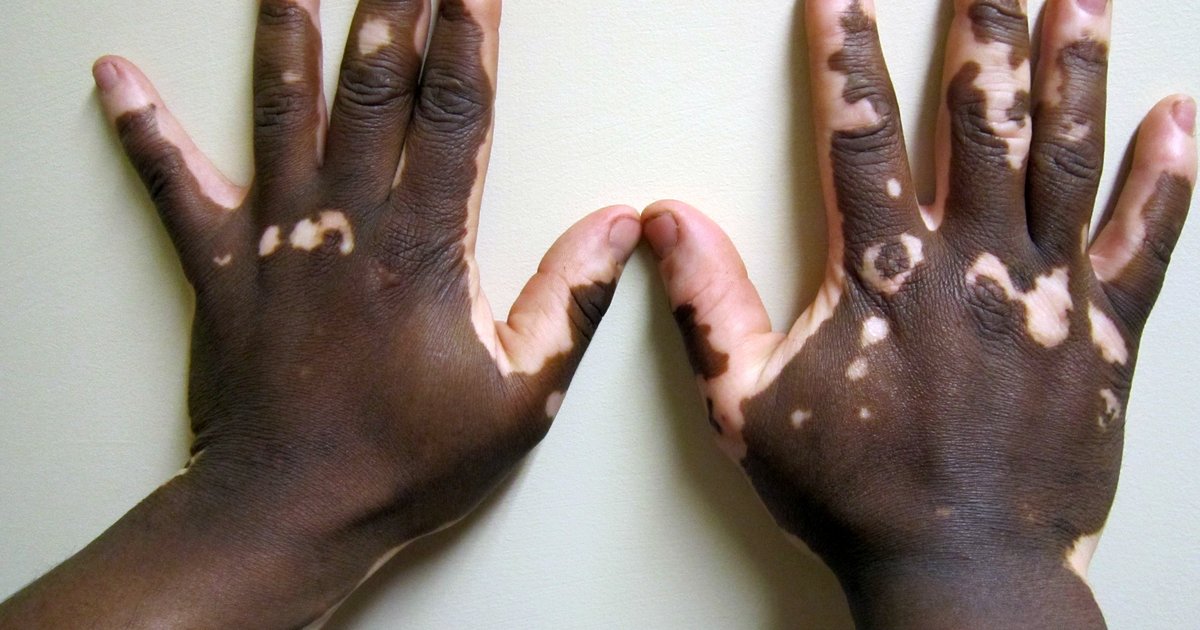 |
White Spots on Black Skin: Common Causes and When to WorryMost white or light patches on Black skin come from tinea versicolor, pityriasis alba, a healed rash or injury, sun-and-age spots, or vitiligo. Vitiligo is milk-white with a sharp edge and no scale; f ...more
Roger Gates • 317 Views • October 9th, 2026 |
Popular Health & Wellness
 |
BENEFITS OF UNSWEETENED APPLESAUCEhile good health is more complex than eating an apple a day to keep the doctor away, fruits and vegetables provide undeniably crucial nutrition vital for good health. Whether apples are whole or made ...more
Hija Chang • 52,761 Views • June 25th, 2019 |
 |
Pediatricians: Partners in Helping Parents Quit SmokingPediatricians: Partners in Helping Parents Quit Smoking
by Dr. Brian Jenssen
Secondhand smoke (SHS) exposure affects approximately 40 percent of the children in the United States, increasing their ...more
Hija Chang • 47,801 Views • July 18th, 2019 |
 |
Boris Kodjoe and Nicole Ari Parker Launch 'Kofit' Wellness App At Essence FestDo you want to get fit but don't have time to hit the gym? Boris Kodjoe's new app is the perfect solution.
Whether you’re a working mom juggling multiple responsibilities or an entrepreneur who is ...more
Hija Chang • 23,376 Views • July 19th, 2019 |
 |
Energizing Ginger Carrot JuiceWho knew ginger could taste good in juices? Try our ginger carrot juice.
#Juicing
Ingredients
2 carrots
½ honeydew
2 apples
½ orange
1 mango
1 thumb of ginger
½ lemon
Directio ...more
Hija Chang • 18,391 Views • July 16th, 2019 |
 |
Get your free Caregiver Notebook.Keep track of the health information of the person in your care. Choose just the pages you need, or download all of them to create a complete Caregiver Notebook.
...more
Reginald Claremont • 17,700 Views • April 4th, 2018 |


