







Why Historically Black Colleges and Universities Remain Black
|
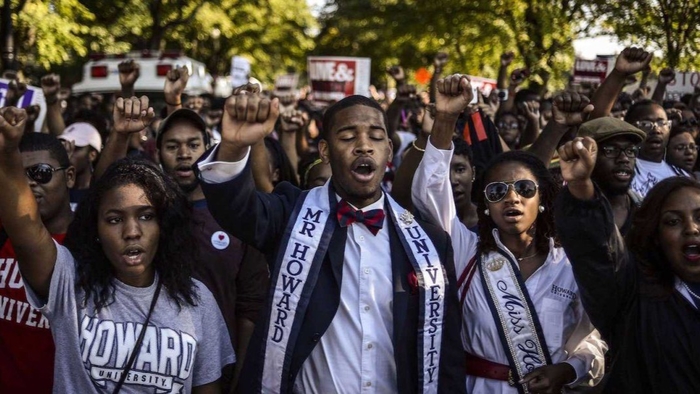
Posted By: Kennedy Williams on October 07, 2021 In a USA Today article from 2020, HBCUs Howard University, Grambling State University, Alabama A&M University, Alcorn State University, Jackson State University, Southern University, Alabama State University, and Hampton University were ranked among several predominately white institutions on a list of colleges with the least diverse student bodies. The article cites that despite growing national diversity, the student populations at these HBCUs remain 90% or more Black. When discussing diversity (or lack thereof) and HBCUs, it’s important to remember two things: 1. Why HBCUs exist in the first place and 2. The racial climate of this country. Before the establishment of the very first HBCU, African Institute (now Cheyney University), in 1837, there were very few Black people who had the opportunity to pursue high education. In 1799, John Chavis became the first Black person to attend college when he started at Washington and Lee University. Alexander Lucius Twilight became the first Black person to earn a bachelor’s degree when he graduated from Middlebury College in 1823. And it wasn’t until nearly three decades later, Mary Jane Patterson became the first Black woman to earn a bachelor’s degree after graduating from Oberlin College in 1862. Because Black people getting the opportunity to pursue higher education at predominately white schools came few and far between, there was a clear need for institutions centered around the education of Black people. Although the USA Today article did briefly touch on this, I believe that comparing HBCUs to PWIs in terms of diversity is a touchy subject because the very essence of the schools is not the same. HBCUs are the result of predominately white institutions refusing to admit Black students. HBCUs are the result of national racism. HBCUs are a result of wrongdoing. Though this country has made great strides since the day of Jim Crow, there is still systemic racism that prevents an even playing field, which is why so many run to our beloved institutions. HBCUs were created out of necessity to provide a safe space for students of color to learn and grow, and for those same reasons, HBCUs remain a pillar in the Black community. That is why historically Black colleges and universities remain Black. If you enjoyed this article, Join HBCU CONNECT today for similar content and opportunities via email! |
 |
Kennedy Williams
From Loganville, GA Spelman College class of 2020 Member Since July 2016 |
Comments
More From This Author
Latest News

 |
Rosen Foundation expanding scholarship program, partnering with Bethune-Cookman UniversityCarrying on the legacy of Harris Rosen and his commitment to education, today the Harris Rosen Foundation announced it is expanding its already-successful scholarship program and partnering with Bethu ...more
Reginald Culpepper • 289 Views • May 19th, 2026 |
 |
Sinners vs. Michael: Which Film Actually Won the Ultimate Culture Debate?While Antoine Fuqua’s Michael is dominating the box office with its electrifying, stadium-level concert recreations and a star-making, uncanny physical performance by Jaafar Jackson, critics and film ...more
TaQuan Ford • 226 Views • May 16th, 2026 |
Popular News



 |
North Carolina HBCU Unity DayShaw University - Elizabeth City State University - Johnson C. Smith University - Fayetteville State University - Livingstone College - North Carolina A&T State University - North Carolina Central Uni ...more
Reginald Culpepper • 109,453 Views • August 8th, 2016 |


