


The Evolution Of Black Hair
|
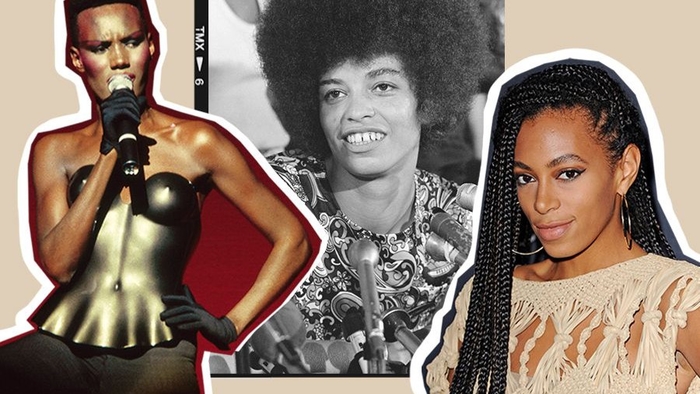
Posted By: S. Moore on March 01, 2023 Black hair is a fundamental part of Black History. From braids to afros to locs, our hair tells a story about the Black experience and our heritage. How we wear our hair can be a sense of self-expression and identity and is an integral part of Black culture that has transcended generations. In ancient African societies, hairstyles like braids, twists, and other styles were worn to signify marital status, age, religion, wealth, and societal rank. During slavery, braids were used as a tool for freedom, as slaves would cornrow their hair to map escape routes. They braided the plaits into patterns that resembled roads to travel or avoid. Small bits of gold and seeds were hidden in the braids to sustain them after their escape. Despite the pride that many Black people take in their hair, Black hair is still often discriminated against, especially in corporate America. In 2010, a Black woman in Alabama was rescinded a job offer after refusing to cut her dreadlocks; in 2018, New Jersey high school wrestler was forced to cut his locks so he could compete in a match; and in 2021 a six-year-old boy was denied entry into his first-grade classroom because of his dreadlocks in Orlando, Florida. Thankfully, recent progress made in the fight to end hair discrimination. In July 2019, California became the first state to pass a bill banning natural hair discrimination with the CROWN Act (Creating a Respectful and Open Workplace for Natural Hair Act). This act protects hair texture and protective hairstyles including cornrows, afros, braids, twists, and dreadlocks against discrimination in the workplace and educational institutions. Sen. Holly J. Mitchell, who spearheaded this act says “The goal of the CROWN Act is to guarantee that black women and men can choose how to wear their hair without fear of bias or discrimination.” The CROWN Act is yet to be passed in all fifty states, but it does mean progress. To celebrate Black History Month, we are honoring the crown we never take off by shining a light on the evolution of Black hair! 1900s: The Annie Malone and Madame C.J. Walker Era and the Invention of the Relaxer The 1900s was a revolutionary time for Black hair. Before Madame C.J. Walker grew her hair products empire and became known as the first Black woman millionaire in America, Annie Turnbo Malone paved the way. Malone debuted her Wonderful Hair Grower products in 1902, a product that was designed to improve scalp health and promote hair growth. Walker was one of her sales girls and started her own iconic haircare brand in 1905. In 1909, Garrett Morgan accidentally developed the first chemical relaxer after discovering a formula while working on sewing machines. Popular hairstyles at that time were The Gibson Girl, sleek tresses, pompadours, and smooth waves achieved through pressing combs and relaxers. 1920s – 1930s: Finger Waves, Wavy Bobs, Pin Curls  During the Roaring Twenties, Black hair trends included short flapper-esque haircuts, wavy bobs, and finger waves. During the 1930s, straightened, short hair with curls, waves, or finger waves lived on. 1940s – 1950s: The Invention of the Hair Weave  Black women in the 1940s continued to wear their hair short and straight with added curls. Other popular styles were Victory Rolls, the chignon, the croquignole curl, pageboys, and wavy hair. The 1950s introduced the first sew-in hair weaving process, developed by Christina Jenkins, and patented in 1951. Jenkins developed the idea of attaching hair to a net which was then sewn onto the client’s cornrow base and thus evolved what she referred to as ‘Hairweeve’. The pompadour bang, the beehive, and wigs also rose in popularity, however as Black nationalism started to rise, Eurocentric-influenced hairstyles became a topic of debate 1960s -1970s The Rise of The Afro During the Black Power Movement natural hair and turn away from Eurocentric beauty standards and damaging products. Natural hair and afros gave a sense of pride and confidence, and also became a form of activism and rebellion. Afros carried into the 70s, becoming more of a fashion choice, with Black celebrities like Diana Ross and Pam Grier rocking their afros in style. Braids started to make an appearance as well, notably when Black model and Actress Cicely Tyson appeared on the cover of Jet magazine in 1973 with cornrows, marking one of the first times natural hair and traditional African hairstyles were celebrated in mainstream media. However, straight hairstyles were still trending as people wore bombshell waves and the Jheri curl. 1980s: The Jheri Curl & The Hi-Top Fade  With the help of perm rod sets, the 1980s welcomed looser textured curls and the Jheri curl. Although the Jheri curl was invented by a white man named Jheri Redding, it took off in the black community thanks to Comer Cottrell and his partners who formed the Pro-Line Corporation in 1970. Asymmetrical cuts and big curly hair were also defining trends for this decade. Another popular hairstyle during this time was the hi-top fade, largely popularized by hip-hop culture as well as style icon Grace Jones. 1990s: Braids, Pixie Cuts, Swooped Bangs  The 1990s ushered in even more versatility for Black hair and more representation in pop culture and mainstream media. From Janet Jackson’s box braids in the 1993 film “Poetic Justice” and Brandy’s microbraids in the hit late-90s sitcom “Moesha,” braids were brought back into the forefront. Straight styles were also back in fashion, with women sporting pixie cuts, silk presses, swooped bangs, and flipped bobs. Natural styles like bantu knots and dreadlocks were also in style. 2000s to 2010s: The New Natural Hair Movement  During the 2000s, the natural hair movement was revitalized with the emergence of natural hair bloggers and YouTubers. In the last decade, relaxer sales started to decline as more women embraced wigs, extensions, and braids as protective styles. Cornrows, weaves, crochet braids, buzzcuts, and wash-and-go’s were also popular styles during this time. Now  The natural hair movement still continues today with more and more women rocking their natural hair and starting their loc journey or participating in ‘the big chop.‘ Women are also expressing themselves through wigs of all different styles and colors with ‘baby hairs’ galore. SOURCE https://hbcubuzz.com/2023/02/the-evolution... If you enjoyed this article, Join HBCU CONNECT today for similar content and opportunities via email! |
Comments
More From This Author
Latest Blogs
 |
CONNECTED TO THE MOST HIGH — EVERY MINUTE, EVERY DAY
“CONNECTED TO THE MOST HIGH — EVERY MINUTE, EVERY DAY”
You are connected to the Most High — not sometimes, not occasionally, but continuously. That divine connection is available to you fourt ...more
rickey johnson • 75 Views • May 11th, 2026 |
 |
Review of the 2026 Mazda CX-90 PHEV Full-Size SUVTwo years ago, Mazda shook up the big SUV market with the CX-90. It was unique and more enjoyable to drive than many rivals, but it also had some quirks. For 2026, Mazda isn't trying to reinvent the w ...more
Randi Payton • 84 Views • May 11th, 2026 |
 |
Audubon Center now that's a place to find KrishnARun don't walk to your nearest Audubon Bird Center
https://columbusaudubon.org/ ...more
Hija Chang • 99 Views • May 10th, 2026 |
 |
Best Mommy MemorieSAttending a baby shower for my sistA
Attending college graduations during Mommuhs Month
The month of May is hectic or relaxinG
Finals, Graduation,
Traveling, Private Pilot Lessons, Weddings, P ...more
Hija Chang • 117 Views • May 10th, 2026 |
 |
Team mates Central State University 👩🏽🎓👨🏾🎓Capitol UniversityLong Street to thee Gould Coast
Mothers you make life like a Dozen Roses like A to Z each moment each memory each clover is unique🎰
May family life keep our Mommuhs hyppy ...more
Hija Chang • 97 Views • May 10th, 2026 |
Popular Blogs
 |
Divorce in America in 2009 – What’s love got to do, got to do with it?
Join Brother Marcus and the cast and the crew of the Brother Marcus Show live this Sunday evening on February 1, 2009 @ 8:00 p.m. for another hot topic in our community! “Divorce in America in 2009 ...more
Brother Marcus! • 71,337,081 Views • January 27th, 2009 |
 |
VISINE ALERT!!!Seemingly innocent medication such as Visine eyedrops are used by people to concoct a mixture with similar effects as a date-rape drug.
When mixed with alcohol and taken orally, the eyedrops can l ...more
Siebra Muhammad • 119,602 Views • May 23rd, 2009 |
 |
"Chain Hang Low" check out the real meaning of the Lyrics!Recently there is a new artist out of Saint Louis that goes by the name JIBBS. Jibbs debut single "Chain hang low" has a history that most people are not aware of. The particular nursery rhyme that th ...more
Tyhesha Judge-Fogle • 77,999 Views • November 9th, 2006 |
 |
HBCU Marketplace Gifts: Divine 9 Premium Fraternity / Sorority Playing CardsVendor: Charles Jones
Item Price: $20.00
Price Includes Shipping: Yes - Shipping Included
Item Description:
Pantheon Series - Divine 9 - Premium Playing Cards (choose Gold Series or Silve ...more
Hija Chang • 62,812 Views • December 2nd, 2018 |


