







Spike Lee’s fellowship gives HBCU students a role in Hollywood
|
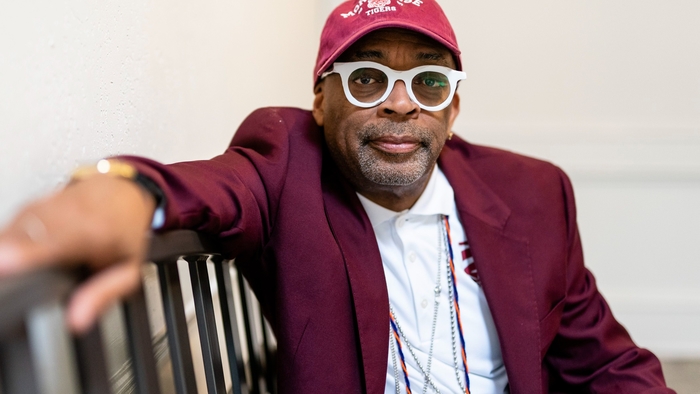
Posted By: S. Moore on May 22, 2023 ATLANTA — As recently as March, Taitu Livingston, who on Sunday graduated from Spelman College, the famed historically Black women’s college, was planning to spend the summer after graduation in Miami with her cousin, figuring out what exactly she wanted to do next and possibly pursuing dance, one of her majors and passions, as a form of storytelling. That plan changed last month. “I was sitting on the couch getting ready for my final assessments when I got the call,” she said. On the line was Jayson Council, Gersh Agency’s head of culture, calling to let her know that she was the recipient of a fellowship awarded by the agency and Spike Lee. Oh, and Council had someone else on the phone for the 22-year-old to speak with. “It was Spike on the phone congratulating me, saying he was proud of me and reminding me that he is my Morehouse brother.” (Lee earned his undergraduate degree at Morehouse College, the men’s college next door to Spelman and Spelman’s unofficial brother college.) Livingston is one of five students from the Atlanta University Center Consortium, which includes Spelman College, Morehouse College and Clark Atlanta University, who were named Spike fellows at Gersh. “My ultimate goal is to be a screenwriter and director,” Livingston said. “I want to produce, direct and choreograph my own films, all having to do with Afrocentric spirituality and Gullah heritage.” Livingston and her peers share a desire to tell stories about Black people’s histories and experiences, but none of them are keen to be in front of the camera. Instead, they said, they see the power and future of the industry as being behind the camera in agent, manager, producer, casting director and other off-screen positions. Late last summer, after Bart Walker, Lee’s agent, asked what Gersh was doing around diversity and inclusion, he was connected to Council, who was focusing on the agency’s efforts in this very area. Council eventually met with Lee, and the two discussed the challenges they saw in the industry and talked through remedies that could be long-lasting rather than fleeting. A fellowship program, they figured, was one way to create a pipeline into the industry for young Black people eager to work off-screen. To find the best young Black talents, they turned to Lee’s old stomping grounds: the AUC. The fellowship is paid, and the fellows will be given $25,000 for student debt relief. The inaugural class of fellows will spend this summer working in the Gersh Agency’s New York or Los Angeles offices, and at the end of the summer, each fellow will decide which office and department they would like to be placed in for the next year, when their fellowship becomes a full-time job. Atlanta, Lee said, was a natural place to start the fellowship because of its pool of talent, and also because it holds sentimental value. The celebrated director was born at Grady Hospital in 1957. His family moved to New York when he was 4, and he returned to the city to study at Morehouse in the ’70s. He graduated in 1979. Lee’s grandmother and mother both graduated from Spelman, and his grandfather and father both graduated from Morehouse. “We want this thing to be a legacy,” Lee said in an interview at the Johnson Lowe Gallery, where a celebration for the fellows was held recently. “Far too often, we, as a people dealing in film and television, it is my opinion that we focus too much in front of the camera and being in the spotlight, but in all honesty, there’s more longevity behind the camera, and you have a lot more creative control behind the camera.” To find the fellows, Council traveled to the AUC a number of times. There were 81 applicants, and more than 50 candidates were interviewed. Students were asked to have a grade-point average of at least 2.75 — an achievable number for many, but also one that wouldn’t exclude students who work or who juggle school and other life expectations. Letters of recommendation were also required, as well as a video explaining why the student wanted to participate. Quentin Anderson, a senior who will graduate from Morehouse in December and was awarded the fellowship, said the program feels “special,” because it embraces nontraditional students like him. “This opportunity is a new start for people like me,” he said. “I’m 25 years old, and I’ve been a part-time student at Morehouse since 2016.” Anderson nearly flunked out of school in his first year and decided to take some time off to start his own agency. With the coronavirus pandemic came online classes, so he virtually returned to Morehouse, where he has been studying communications. Council said he and Lee knew from the start that they wanted students who were passionate and hard-working, with an array of life experiences, not just traditional students with perfect grades. “We want to show that there’s dynamism in these pools,” he said. “You don’t just have to go to elitist schools, take the most elitist students while demanding a 3.9 or better and all of that. We want people who are real.” That’s also why Council traveled to Atlanta to meet students in person, he said. The agency plans to continue coming to campus and offering lectures and other ways of engaging with students. Michael E. Hodge, executive director of the Atlanta University Center Consortium, said programs like this fellowship are important for Black students, because opportunities like this have not historically been afforded to these students. “To have students go into these entertainment business fields behind the camera, in the boardrooms, makes a difference for what types of images are portrayed culturally that then inform — or misinform — the population about what a particular group in your community is about,” he said. He added that, without Black voices shaping the industry in decision-making roles, the imagery of Black America would be limited and inaccurate. “With no Spike, you won’t have images that portray history in a way that is authentic to the broad American culture, not just Black culture, but the broader American culture,” Hodge said. Jalen Ellis, a senior who graduated from Morehouse on Sunday, said he wasn’t initially sure whether starting a fellowship with a new agency after previously interning for a different one was the smartest idea, but the chance to be mentored by Lee pulled him in. One day, Ellis hopes to be a producer. “I decided to take the leap because this fits in line with what I want to see in the industry overall,” he said. “More Black professionals, more Black people in the boardroom who are assigning the jobs.” SOURCE The Washington Post If you enjoyed this article, Join HBCU CONNECT today for similar content and opportunities via email! |
Comments
More From This Author
Latest News


 |
Rosen Foundation expanding scholarship program, partnering with Bethune-Cookman UniversityCarrying on the legacy of Harris Rosen and his commitment to education, today the Harris Rosen Foundation announced it is expanding its already-successful scholarship program and partnering with Bethu ...more
Reginald Culpepper • 334 Views • May 19th, 2026 |
 |
Sinners vs. Michael: Which Film Actually Won the Ultimate Culture Debate?While Antoine Fuqua’s Michael is dominating the box office with its electrifying, stadium-level concert recreations and a star-making, uncanny physical performance by Jaafar Jackson, critics and film ...more
TaQuan Ford • 251 Views • May 16th, 2026 |

Popular News



 |
North Carolina HBCU Unity DayShaw University - Elizabeth City State University - Johnson C. Smith University - Fayetteville State University - Livingstone College - North Carolina A&T State University - North Carolina Central Uni ...more
Reginald Culpepper • 109,537 Views • August 8th, 2016 |


