






Black men were offered a second chance at college, then pitfalls piled up
|
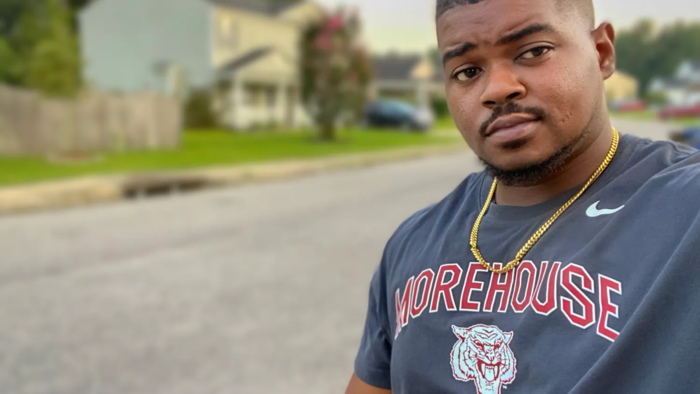
Posted By: S. Moore on June 01, 2023 After six years working at a rental car company at the airport, Dayne Burns approached his 30s longing for a change. So, it felt like fate in early 2021 when he saw Morehouse College in Atlanta was offering online classes. In promotional materials, the school touted its mission to serve prospective students like Burns, one of the millions of Black men in America who started college but never graduated. Beyond offering a degree, Morehouse was offering a second chance. “To help more men like you transform into the leaders they were meant to be, we’ve created an empowering, affordable educational experience that’s accessible from anywhere in the country,” said the Morehouse Online website. For Burns, the opportunity to complete his studies at one of the nation’s top historically Black colleges and universities from his home in South Carolina felt like a way “to turn everything around.” After being accepted, the setbacks started quickly and kept coming. Burns learned the advertised computer science degree wasn’t ready. Only after starting classes did he discover that about half his college credits had not transferred, making him a freshman when he expected to be almost a junior. Confusion about the financial aid process led to Burns and others being dropped from classes a few weeks into his summer term. After a year in the program, with the computer science degree yet to launch, Burns decided he was done. “This was a cash grab. I feel like they saw an opportunity and they knew that they could leverage their name,” Burns said. “One day, if they take it serious enough, this program could be something. But right now they wanted to get by on ‘We’re Morehouse. Give us your money. And we’ll figure out the rest.’” Burns’ frustration is with Morehouse, but the school isn’t solely responsible for the program. Morehouse Online is a partnership between the 156-year-old institution and 2U, a for-profit education tech company that helps operate degree programs at institutions including Yale; University of California, Berkeley; and Emerson College. Online program managers, of which 2U is among the most prominent, offer an enticing service for colleges looking to boost their enrollment numbers or add offerings because they take on much of the upfront work and cost of building an online program. The arrangements could be particularly alluring for HBCUs, which studies show have been chronically underfunded compared to other colleges. In return for footing the upfront costs, the company also at times keeps a majority of the revenue. Under its agreement with Morehouse, 2U receives 60% of the program’s revenue for up to a decade, according to the college. Concerns over online program managers have been building for years. Critics say the revenue-sharing model incentivizes both partners to push for higher enrollment than a university can serve. Online program managers have less federal oversight than colleges, which education advocates say leaves them free to prioritize profits over student success. The U.S. Education Department in February moved to expand the definition of third-party servicers to include companies such as 2U, a step that would require universities to disclose when they work with online program managers and subject them to further regulations. 2U is suing to block the expanded definition, saying the label has traditionally applied only to parties involved in financial aid. The department is considering revisions to its guidance. Morehouse is the only all-men’s historically Black college in the country and counts among its graduates Martin Luther King Jr., director Spike Lee and numerous congressmen and Cabinet secretaries. In launching the online program, the school and 2U offered returning students the opportunity to join that elite brotherhood and “become a Morehouse Man” — for roughly half the price of an on-campus degree. More than 5,000 people inquired about the program within three days of the February 2021 announcement, a school official said at the time. Morehouse Provost Kendrick Brown told USA TODAY that the school had expected to enroll fewer than 100 online students that first year. Faced with such high interest, it accepted twice that number in the first semester alone. Morehouse and 2U have struggled to meet the demand, leaving students to pay the price. The school and 2U advertised the computer science major that caught Burns’ eye, only to shelve plans for the degree months later. Morehouse had intended to launch up to six majors within two years, but still offers just one: business administration. Even then, the school has yet to develop all the classes for that program and is filling in the gaps by sending students to other schools. One Morehouse adviser is responsible for all of the program’s students. Current and former Morehouse online students who spoke with USA TODAY largely said they chose to share their frustrations because they support the college, believe the online program has potential and want to see improvements for future students. Even many with complaints praised the quality of the classes and said they have made meaningful connections with fellow students. Some students said the program has met their expectations. “I’m happy I did it, and I’m going to stick through it and see it forward. I think it’s amazing, the platform for learning about my own culture and learning about myself,” said Teddy Dukuly, a 32-year-old clerical associate at the New York City Department of Environmental Protection. He cited a class on the history of Black entrepreneurship as particularly rewarding. But many students also described persistent problems and setbacks, including some that mean it could take them longer and cost more to graduate than they had planned. Last month, more than three-dozen online students signed a letter to Morehouse administrators saying that they were “deeply concerned about a number of issues” such as limited class availability, “seemingly arbitrary” acceptance of transfer credits and a lack of student support including high turnover among 2U-assigned advisers. The students asked for a meeting with administrators and a written plan to address the problems. “We also ask that this plan give us a detailed sense — even if the ideas are not final — of where the online program is heading over the next 3 to 5 years with respect to projected enrollment, dedicated faculty and staffing, student support, degree program expansion and course offerings,” the May 8 letter says. The following week, a few days after USA TODAY informed the school of its plans to publish this article, Brown acknowledged to online students in an email that the school’s entry into online learning has “progressed more slowly than initially planned.” The provost said the school always planned to roll out the program in phases but faculty had to adjust classes to “account for the non-traditional, degree-completion learning needs of Morehouse Online students.” He listed nine classes currently in development, four of them required for graduation. He has instructed the school’s records department to accept transfer courses from accredited colleges, he said, to fulfill those requirements. Brown also said the school is hiring two program directors to support and advise students in the online program, and will launch a newsletter to keep students updated. “I have appreciated the grace many of you have extended to us as we strive to continually meet your learning needs so that you can complete your education,” he wrote. Christopher “Chip” Paucek, co-founder and CEO of 2U, praised the company’s partnership with Morehouse and said it is normal for colleges to launch programs that are still being developed. But he stressed that Morehouse alone enrolls students, decides when a degree should be marketed and develops the curriculum. He said 2U launched the program “on their timeline, with their approval.” “It’s our job to support the students through the program,” Paucek told USA TODAY. “But you know, obviously, they control the development of the courses, they control the approval of the courses, they control the timeline of the programs. And in this particular case, are there challenges in setting up these programs? Of course. We stand behind our partner in trying to face those challenges.” In a message earlier this week informing 2U employees of this impending article, Paucek said Morehouse Online was the college’s first entry into online learning and acknowledged that 2U has “much less experience with undergraduate education programs” — conditions that resulted in “some real operational challenges as the program was getting up and running.” Paucek also criticized news coverage of his company as a “predetermined narrative.” He said that generally both Morehouse and 2U are pleased with the program, “bumps aside.” Morehouse and 2U officials both described the program as an innovative and, at roughly $14,000 for tuition annually, affordable way for Black men to finish their degrees. Students can go at their own pace, and most in the program are taking classes part time. So far, just over 600 men have been accepted and taken at least one class, with approximately 325 enrolled in the most recent semester, according to the college. Some students told USA TODAY they never thought they would be a Morehouse Man at this stage of their lives. For others — those who started at Morehouse in their teens but didn’t finish — the online program is a chance to fulfill a long-stalled dream. Paul Carr, 48, dropped out of Morehouse a few credits shy of graduating in 1997 but still considers his Morehouse classmates family. His children refer to his closest Morehouse brothers as “uncle.” He called the school one of the last places in the country where young Black men can learn “in a safe space, unapologetically, without being attacked for” their race or having to “apologize for being excellent.” Carr recently skipped what would have been his 25-year class reunion because he wasn’t really part of that graduating class. Not finishing had always stung. “I wanted to finish my degree and have integrity,” he said. But two years since enrolling in Morehouse Online, that hope has been replaced by disappointment. “I’m not done,” he said. “And I have no idea when I’m going to be done.” After big promises and a fast launch, growing pains On an earnings call the week after Morehouse Online was announced, Paucek stressed that 2U was aiming to get “better and faster” at launching new programs. “You can see that in the case of an expectation of Morehouse to actually serve students this calendar year, even though we just announced it,” Paucek said on the February 2021 call. “If we can keep driving higher quality programs and get them rolling faster, that’s better for our schools, better for our students.” Within Morehouse, some faculty worried the company and university were moving too fast. Keith Hollingsworth, a business administration professor at the school, was chairman of a faculty committee that approved new courses. He said some faculty initially had concerns about working with an outside company. But they ultimately approved the business administration degree in May 2021, about three months after Morehouse and 2U announced the program. Meanwhile, the computer science degree languished in the university’s bureaucracy. Hollingsworth said faculty members were surprised at the demand for the business degree and wanted to assess the quality of that program before launching another. They also worried about offering a second degree while business classes were still being developed. The group ultimately sent the computer science proposal back to the computer science department for review. “You cannot offer it if the faculty hadn’t approved it, and the faculty were still talking their way through it,” Hollingsworth said. “I don’t know how 2U felt about that, but it really didn’t matter. We cannot offer things that have not been approved yet.” The lack of faculty buy-in didn’t stop Morehouse and 2U from continuing to promote the computer science degree. In marketing materials, they said the program would prepare students for “graduate studies or entry into the workforce as a computer science professional at the highest level possible.” “You’ll be more than just a leader in computer science,” the school’s website said. “You’ll be a Morehouse Man.” Students planning to study computer science said they didn’t find out the degree wasn’t available until they were about to begin classes in August 2021. Several students told USA TODAY that those who planned to enroll in the program were assured the major was still coming and that they could transfer when it launched. “It was just really upsetting because you guys accepted me to do this,” Burns said. “And even when they realized they didn’t have the computer science program, they never stopped advertising about it.” By September 2021, the school had added a disclaimer to its website that the major was “pending approval by the Morehouse College Faculty and Board of Trustees,” according to a digital archive of the program’s website. Soon, after advertising it for roughly six months, computer science was no longer mentioned. “What’s really disappointing to me is my last … classes that I need for graduation won’t be from Morehouse,” Benefield said. “The one degree that you’re offering, you don’t have the classes.” Brown, Morehouse’s provost, told USA TODAY that the first seven students graduated from the program last month. Brown said the school hopes to roll out two additional majors in the next academic year. As for the computer science major, Brown said it is not atypical for a program to be promoted ahead of final approvals, “especially when approval appears to be imminent.” But he said that ultimately the school wanted to “ensure the integrity” of the program and that faculty believed it wouldn’t meet the needs of non-traditional students. Brown said the university tried to be forthcoming with students about the change in plans. He said the school apologized to students who signed up for the major and offered them refunds or the chance to enroll in the business administration degree. “Morehouse is committed to delivering an exceptional educational experience and was therefore willing to forego offering a degree program to preserve the highest quality experience,” he said in a statement to USA TODAY. ‘We want this program to succeed’ When Morehouse Online students get fed up with the program’s growing pains, they often turn to one another for support through an online messaging group. Recently, the chat was flooded with students trying to piece together when classes they need would be available and venting about the school outsourcing courses to other institutions when they were promised a Morehouse education. Benefield and others also formed a nonprofit to streamline communication with the university. The group in February 2022 sent a letter to the university administration outlining issues including the lack of course availability. In response, university officials held a town hall. But Fred Quinn, 31, an online student who first attended Morehouse in 2009, said a university official also responded by telling the group to stop fundraising using Morehouse’s name after they had gathered donations to support students in need, such as those who had family members pass away. “We clearly love the school,” said Quinn, who is transferring to another college this fall. “We want this program to succeed, but there are brothers who are suffering in this process, and that’s the last thing we need to come back to school to do.” Many of the students’ earlier attempts to earn their degrees were waylaid by unexpected life events and the complexity of higher education. According to the U.S. Census Bureau, roughly 2.2 million Black men 25 or older in America have some college credits but no degree. Morehouse and 2U officials stressed the desire to serve this demographic when they articulated their vision for the program. Quinn said he failed to finish his first time at Morehouse when he missed a financial aid deadline following his grandfather’s death in 2011 and returned from the funeral to find his belongings in the hallway outside his dorm room. Another student has taken classes for years at various institutions during breaks in military service but never had the time to fully commit to finishing a degree. Others said they became overwhelmed by the academic rigors and bureaucratic hurdles of higher education when they first enrolled. Carr, the online student who was a few credits shy of graduating from Morehouse College in 1997, left school when his girlfriend became pregnant. He planned to take a one-semester break. Then life picked up the pace — marriage, two more kids, a career — and one semester stretched into 24 years. Carr found success without a degree thanks to his grandmother, who started homes for at-risk youth and adults with mental illnesses in Detroit, a family business he now helps operate. But Carr never gave up on graduating. When Morehouse announced its online degree completion program, it seemed like a perfect fit. Carr assumed he would be able to complete the political science degree he had started in 1993, especially given assurances by both Morehouse and 2U staff that more majors would be added. “I kept getting pitched that the political science department would be coming later, ‘So just hold tight. Meanwhile, take these classes.’ And so that’s what I did,” he said. That included paying for a class that Carr said he was later told he shouldn’t have been enrolled in because he had taken an equivalent class during his time on campus. Carr said it wasn’t until he was well into the program that he realized a political science degree likely wouldn’t materialize soon. If it doesn’t, most of his political science credits do not apply to the business administration degree he is enrolled in, so it could take him at least another year and a half to finish. In November — about 15 months after he started the online program — Carr said leaving Morehouse for a second time wasn’t an option. He had accepted that he and his fellow students were the “beta testers” and hoped his struggles, no matter how long it took him to graduate, would pave a smoother path for future students. Since then, that resolve has started to weaken and Carr, who has taken out nearly $25,000 in federal student loans while in the online program, is questioning whether it is fair to himself to push through an incomplete program. Deciding what to do is agonizing because of how deeply he supports the mission of HBCUs and how much he wants to finally graduate from Morehouse — the only college he applied to in high school. “I shouldn’t have to abuse myself and my time in order to accomplish things. … I think that that is a common theme for Black people, that has been placed on Black people in America, is that we have to suffer,” Carr said. “And I want to work diligently to move away from that narrative.” SOURCE USA TODAY If you enjoyed this article, Join HBCU CONNECT today for similar content and opportunities via email! |
Comments
More From This Author
Latest News
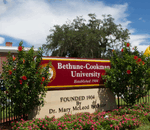 |
Rosen Foundation expanding scholarship program, partnering with Bethune-Cookman UniversityCarrying on the legacy of Harris Rosen and his commitment to education, today the Harris Rosen Foundation announced it is expanding its already-successful scholarship program and partnering with Bethu ...more
Reginald Culpepper • 199 Views • May 19th, 2026 |
 |
Sinners vs. Michael: Which Film Actually Won the Ultimate Culture Debate?While Antoine Fuqua’s Michael is dominating the box office with its electrifying, stadium-level concert recreations and a star-making, uncanny physical performance by Jaafar Jackson, critics and film ...more
TaQuan Ford • 197 Views • May 16th, 2026 |
 |
Healthcare Career Fair Aims to Connect Employers with Qualified Local Talent in Northern VirginiaHealthcare organizations across Northern Virginia will have an opportunity to connect directly with qualified job seekers this June during the upcoming Healthcare Career Fair in Prince William County. ...more
Reginald Culpepper • 368 Views • May 15th, 2026 |
Popular News



 |
North Carolina HBCU Unity DayShaw University - Elizabeth City State University - Johnson C. Smith University - Fayetteville State University - Livingstone College - North Carolina A&T State University - North Carolina Central Uni ...more
Reginald Culpepper • 109,314 Views • August 8th, 2016 |


