






Riding an enrollment wave, HBCUs could see further boost if the Supreme Court ends affirmative action
|
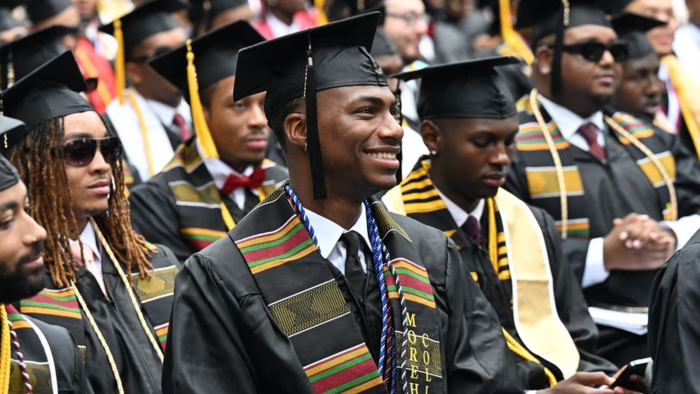
Posted By: S. Moore on June 21, 2023 Clark Atlanta is riding a wave of interest shared by dozens of historically Black colleges and universities, or HBCUs, across the country as students increasingly choose to attend campuses where they know they will feel welcomed, safe, and understood. While overall higher-education enrollment continues to fall nationwide, prominent HBCUs have for the last couple of years reported a surge of new students amid the racial justice movement fueled by incidents of police brutality. In the fall of 2022, even as total enrollment in higher education fell 1.1 percent, enrollment at HBCUs grew 2.5 percent, driven by a 6.6 percent increase in first-year students, according to the National Student Clearinghouse Research Center. “When you come to Clark Atlanta University, you are pulled out of your home environment and you’re put into a family,” said Kemryn Lawrence, a graduate student who also received her bachelor’s degree from the HBCU last year. Now, if the Supreme Court bans the use of affirmative action in higher education this month, historically Black colleges could grow even more attractive as elite, predominantly white colleges scramble to maintain diverse classes. Selective schools have said for years that they rely on affirmative action as a tool to ensure incoming classes are racially diverse. With that in mind, some experts worry that the upcoming decision will further deter some high-performing African American and Hispanic students from applying to the Ivy League and other elite, predominantly white colleges, instead opting for campuses that embrace and celebrate the Black and minority experience. Such a scenario would be bittersweet, HBCU administrators and researchers said. While affirmative action, which was adopted in the 1960s, contributed to enrollment drops at HBCUs as African American and Black students matriculated to predominantly white schools, the HBCU sector largely supports affirmative action in college admissions, said Cheryl Mango, assistant history professor at Virginia State University, an HBCU in Petersburg. “We understood that [affirmative action] represented what a desegregated society could look like,” Mango said. Most HBCUs were founded in the 19th century and have trained and educated some of the nation’s most prominent Black leaders, including Martin Luther King Jr., W.E.B. Du Bois, Thurgood Marshall, Oprah Winfrey, and Vice President Kamala Harris. The colleges enroll students of all races today, although Black students make up the majority of enrollments. Black student enrollment at all US colleges more than doubled between 1976 and 2021. As a result, the percentage of Black students nationally who attended HBCUs fell from 18 percent to 9 percent during that period. Now, the tide appears to be shifting. Harvard University and other Ivy League institutions have signaled the importance of strengthening ties with HBCUs in an effort to atone for institutional entanglements with slavery. Ruth Simmons, a former HBCU and Ivy League president, will advise Harvard’s work with HBCUs, including faculty and student exchanges. Already, Harvard has begun a $6 million project to preserve and digitize African American history collections held in HBCU libraries. The university did not make an official available for an interview for this story. For Harvard and its peers to win top Black students in a post-affirmative action era, administrators will need to work closely with Black churches, community organizations, as well as HBCUs to ensure that underrepresented students don’t feel isolated, higher-education consultants said. The consequences of California’s affirmative action ban in 1996 suggest that predominantly white universities have reason to be concerned. Admissions by underrepresented groups at its most competitive campuses dropped by 50 percent or more following the ban. Applications from Black and Hispanic high school graduates students also fell, said Zachary Bleemer, a Yale researcher who studies the impact of California ending affirmative action. “Many of those students might have chosen to go to HBCUs or other schools [where] they thought they would have a better chance of admission and where they might have felt more welcomed,” Bleemer said. The efforts by the Ivy League to share resources and ideas with HBCUs follow a recent groundswell of HBCU support from private and corporate donors since 2020; billionaire philanthropist MacKenzie Scott gave $560 million to 23 HBCUs. In addition, Fortune 500 companies are clamoring to recruit their graduates amid the ongoing social justice and Black Lives Matter movement. “HBCUs have become much much better at being very public about their story,” said Marybeth Gasman, executive director of the Rutgers Center for Minority Serving Institutions. Employers and universities alike are understanding the importance of engaging HBCU students and addressing historic funding inequities at the institutions, which were founded to educate formerly enslaved individuals, Mango said. “Oftentimes, we overlook the role that slavery has played in our determination to get higher education,” said Mango of Virginia State, who is founding executive director of a center that studies the history of HBCUs. “One of the major cruxes of slavery was to deny people the ability to read and write so you can control their every move, limit their access to knowledge, and their ability to attain freedom.” HBCUs, Mango said, have for 200 years provided safe spaces inside a society struggling with racial inequities where Black scholars can study and debate what human rights should look like. In 2021, there were 99 HBCUs in 19 states, Washington, D.C., and the US Virgin Islands, which collectively enrolled 287,000 students, according to the US Department of Education. Social media platforms, especially TikTok and Instagram, have also helped spread the word about the attributes of HBCUs, students said: four years steeped in tradition with epic homecoming celebrations, lots of community service, lifelong friendships, and the opportunity to celebrate Black history and achievements. Having Harris in the White House vocalizing her support of HBCUs, including her alma mater Howard University, has also helped raise awareness of the sector. “A lot of high schoolers tend to do research about what school should I go to on social media,” said Jasmine Amaniampong, student government president at North Carolina A&T State University in Greensboro. “You can make a short TikTok about Homecoming and it reaches so many different people.” For many Black students, the appeal of pursuing a degree on a campus surrounded by like-minded individuals who understand the ongoing struggles they face is an easy sell. “People are realizing that they have an option to be in a space that’s more comfortable [and] a safe space because a lot of our staff and our students look like each other and understand the different battles that we go through as Black students,” Amaniampong said. At Clark Atlanta, with its sun-dappled campus ringed by blooming magnolias, administrators are figuring out how to house the influx of new students coming to campus this fall. Returning students said the university has opened doors and taught them the importance of community and networking. The school is just down the street from fellow HBCUs Morehouse College and Spelman College. Lawrence, the graduate student at Clark Atlanta, embraced every aspect of college life as an undergrad. While pursuing a degree in biology, Lawrence took an internship with the White House Initiative on Historically Black Colleges and started a nonprofit devoted to helping teenagers stay out of prison by educating them about college. She is pursuing a master’s of public administration and has been awarded a full scholarship to any University of California campus to pursue a doctorate, which she says aligns with her career goals of becoming president of Clark Atlanta. “Everybody has a very get-up-and-go mindset; everybody has very innovative ideas,” Lawrence said about her alma mater. “I think the biggest thing is that everybody knows how to network and that was something that was very attractive for me.” Mekhi Perrin, who grew up in Queens, N.Y., was the first in his family to attend college when he enrolled at Morehouse in 2020. He was already committed to attend the university when George Floyd was murdered, but that event cemented his decision. “This has definitely been the best experience I’ve ever had,” said Perrin, who serves as president of Morehouse’s student government association. SOURCE Boston Globe If you enjoyed this article, Join HBCU CONNECT today for similar content and opportunities via email! |
Comments
More From This Author
Latest News

 |
Rosen Foundation expanding scholarship program, partnering with Bethune-Cookman UniversityCarrying on the legacy of Harris Rosen and his commitment to education, today the Harris Rosen Foundation announced it is expanding its already-successful scholarship program and partnering with Bethu ...more
Reginald Culpepper • 337 Views • May 19th, 2026 |
 |
Sinners vs. Michael: Which Film Actually Won the Ultimate Culture Debate?While Antoine Fuqua’s Michael is dominating the box office with its electrifying, stadium-level concert recreations and a star-making, uncanny physical performance by Jaafar Jackson, critics and film ...more
TaQuan Ford • 252 Views • May 16th, 2026 |
Popular News


 |
North Carolina HBCU Unity DayShaw University - Elizabeth City State University - Johnson C. Smith University - Fayetteville State University - Livingstone College - North Carolina A&T State University - North Carolina Central Uni ...more
Reginald Culpepper • 109,548 Views • August 8th, 2016 |


