







How HBCUs Produce Black Business Owners
|
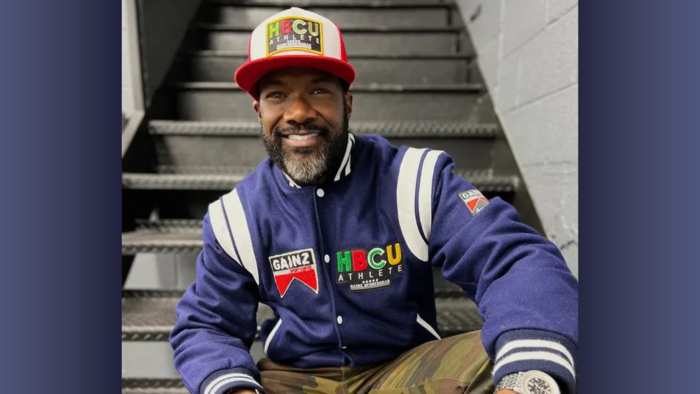
Posted By: S. Moore on June 21, 2023 According to a report by McKinsey & Company, “there is an estimated $1.6 trillion gap in aggregate revenue between Black-owned and non-Black-owned businesses across the U.S. economy — a figure that has only grown over recent decades.” In 2021, African Americans owned approximately 124,551 businesses. Nearly a third of these businesses were in the health care and social assistance sector. African American-owned businesses account for only 2.2% of the employer-owned businesses in the U.S. Of note, African American entrepreneurs start businesses with about a third of the capital of their White counterparts, making the hill they climb much steeper, and their businesses more vulnerable. During the Covid-19 pandemic, for example, Black-owned businesses closed twice as quickly as all other businesses. Historically Black Colleges and Universities (HBCUs) play a considerable role in producing Black business owners and entrepreneurs. Cornell C. Conaway, a graduate of historically Black Bowie State University, is one of these Black business owners. His company is Gainz Sportsgear, which designs and produces fitness accessories for athletes and gyms — including workout grips, wrist wraps and sports-oriented clothing. Conaway has partnered with 12 gyms in the mid-Atlantic region, and is the only Black Owned fitness manufacturer on the approved United States Powerlifting Association (USPA) vendor list. Conaway credits his education and experience at Bowie State University with his success. He is the first in his immediate family to attend college. As he shared, “My HBCU experience instilled confidence within me to know I was on the same level as my counterparts that graduated from household name universities.” Conaway’s professors at Bowie pushed him to challenge himself and didn't accept mediocrity. According to Conaway, “They stressed the importance of doing the right thing, making your family proud, being productive once you graduate, and most importantly, making sure you reach back to mentor a student either at Bowie or another HBCU.” As a way of showing pride in his HBCU experience, Conaway developed fitness gear that is branded for HBCU athletes. “I knew the bigger brands that manufactured fitness equipment didn't have an affinity for the gym enthusiast that attended an HBCU,” stated Conaway. He wanted HBCU athletes and graduates to be able to look down at their workout wraps and see "HBCU Athlete." He also wanted to capitalize on HBCU pride, sharing that “All HBCU alumni are big on culture, pride, and love for their [school]!” In addition, Conaway sees the HBCU gear as a “conversation starter in the gym,” allowing HBCU alumni to recognize each other and serving as a sort of billboard for HBCUs. Conaway recently partnered with Bowie State University to provide equipment for the university’s athletic department, and has become a licensed vendor for the institution. He is excited about the possibilities of producing gear for his alma mater. Conaway is also dedicated to giving back to HBCUs, and gives a portion of his profits to HBCU students through a partnership with the A.L. Harper Foundation — a 501(c)3 organization focused on HBCUs. With increased interest in HBCU athletics — which Conaway credits to Deion Sanders, former Professional Football Player and current Head Football Coach at historically Black Jackson State University — his equipment sells out almost as soon as he has it in stock. In his words, “Because top recruits are now considering HBCU programs we sell out of every new drop that hits the market.” Conaway is also capitalizing on HBCU athletes’ new ability to accept NIL (name, identity and likeness) deals, partnering with current HBCU athletes to promote his gear on their social media pages. According to McKinsey & Company, there is even more opportunity for HBCUs to “help train and develop the next generation of Black entrepreneurs and to help Black entrepreneurs scale up and sustain businesses in their communities.” They suggest that HBCUs create entrepreneurship degree and certificate programs, and partner with venture capitalist firms — such as Andreessen Horowitz and SoftBank, who “have made multimillion dollar pledges to invest in Black entrepreneurs.” SOURCE Forbes If you enjoyed this article, Join HBCU CONNECT today for similar content and opportunities via email! |
Comments
More From This Author
Latest News

 |
Rosen Foundation expanding scholarship program, partnering with Bethune-Cookman UniversityCarrying on the legacy of Harris Rosen and his commitment to education, today the Harris Rosen Foundation announced it is expanding its already-successful scholarship program and partnering with Bethu ...more
Reginald Culpepper • 319 Views • May 19th, 2026 |
 |
Sinners vs. Michael: Which Film Actually Won the Ultimate Culture Debate?While Antoine Fuqua’s Michael is dominating the box office with its electrifying, stadium-level concert recreations and a star-making, uncanny physical performance by Jaafar Jackson, critics and film ...more
TaQuan Ford • 244 Views • May 16th, 2026 |
Popular News



 |
North Carolina HBCU Unity DayShaw University - Elizabeth City State University - Johnson C. Smith University - Fayetteville State University - Livingstone College - North Carolina A&T State University - North Carolina Central Uni ...more
Reginald Culpepper • 109,507 Views • August 8th, 2016 |


