







FAMU Students Suɘ State of Florida for Discrimination in Funding in Civil Lawsuit
|
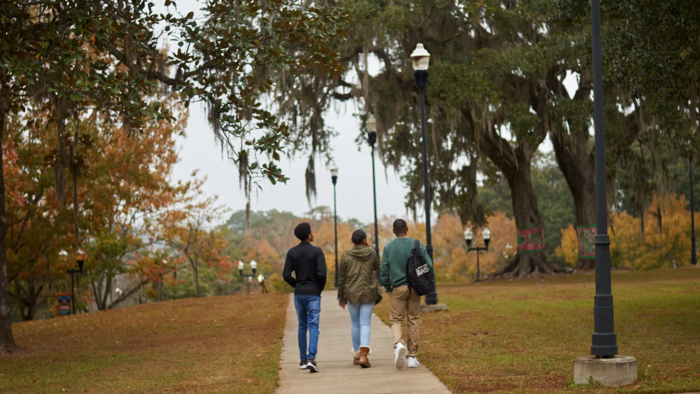
Posted By: S. Moore on August 17, 2023 Each spring, students, faculty, and alums from Florida A&M University (FAMU) swarm Florida’s Capitol in Tallahassee swathed in citrus orange and grass green. The annual fanfare, known as FAMU Day at the Capitol, is a rite of passage, when university stakeholders lobby with legislators, with the bellow of the school’s band serving as background music. The university was founded in 1887 and had a meager start: It was home to just 15 students and two professors. As the state’s only public HBCU and one of two land-grant universities, FAMU has since grown into a storied institution. Still, FAMU students have had to shoulder the burden of housing crises, dilapidated resources, and the psychological exhaustion that goes with doing more with less. So six FAMU students have sued the state of Florida, the former chancellor of Florida’s university system, and the board of governors for the state university system for alleged discriminatory funding that, they say, can be traced back to state-sanctioned segregation. The students say Florida State University (FSU) and the University of Florida (UF) in Gainesville, the state’s only other public land-grant institution, exist in a disparate world of opportunity. The lawsuit alleges that in 2019, the state allocated FAMU $11,450 per student, totaling $110 million, while UF received $14,984 per student, which amounts to a whopping $785 million. The lawsuit also alleges that FAMU has seen its agricultural program get downsized, while UF has received “primary control over research, education, and extension services” and a “larger share of state and federal agricultural and land grant monies.” The state has also effectively handed over some of FAMU’s resources to be overseen by FSU, another Tallahassee institution, according to the suit. In 2015, the lawsuit alleges, the state stripped a roughly $13 million budget from FAMU’s general operating revenue and moved the oversight of those funds to be under FSU’s authority. Teen Vogue speaks with Nyabi Stevens, a fourth-year psychology student, and FayeRachel Peterson, a second-year biochemistry master’s student, about their decision to join the lawsuit, the consequences of chronic underfunding, and the future they envision for their university. Editor’s note: This conversation has been condensed and lightly edited for clarity. Teen Vogue: What are some moments at FAMU that prompted you to be part of this lawsuit? Nyabi Stevens: I remember in one of my professor’s classes how it took forever for one of the computers to load. She said that she was in the same class in her undergrad, a couple years back, and it was the same computer. In general, we know there are a lot of things that aren’t up to date that can cause problems, [as we explain] in the lawsuit. We see these liabilities firsthand. TV: What are some of the consequences of underfunding you’ve witnessed during your college experience? NS: There have been a lot of freshmen admitted to the university and, of course, they have to stay on campus their first year. Our sophomore, junior, and senior students may need access to that housing because they don’t have a car, but there’s a lack [of space]. Last semester, and last year in general, they had to find students places to stay off campus due to the lack of on-campus housing. There are so many conflicts that come with not being able to be on campus as a college student, even making it to your class on time. FayeRachel Peterson: Being a master’s student, I have to be a part of completing research. There have been issues with not having certain machines. I’ll be in the lab, and I use a lot of machines needed for sterilization. They’re not available. Why? Because they are broken and we haven’t had the funding to get a new one. If we have any experiment where you don’t want close contact, our fume hoods don’t close sometimes. Other classmates are complaining about us having to go to Florida State University for the day because our equipment isn’t working. (Teen Vogue has reached out to FAMU for comment.) TV: How does that impact morale for you and your classmates? FP: It’s disheartening to hear students say “I’m just going to drop out” instead of even saying “I’m going to switch schools.” We need to finish, but at the same time, people don’t understand that when you’re getting your master’s, it's not just about finishing the classes. You have to finish the research, and if you don’t finish your research, you’re going to be here another year, and another year, and another year. I have dreams of what I want to do…. I don't want to end up stuck at the university because we don’t have the funding. It just kind of sucks sometimes, I will say that. It hurts. TV: We know this issue isn't isolated to FAMU. We see underfunding across HBCUs nationwide. It also feels like we’re in the midst of what we call “an HBCU renaissance,” with Vice President Kamala Harris being an HBCU alum and an overall increase in recognition. How does it feel to be enduring historical underfunding at a moment when HBCUs are being celebrated too? FP: It almost feels like people are being disingenuous. It’s not an honest moment. You see our people winning, and you wanna root for everybody, but sometimes you feel like you can’t root for yourself. It hurts a lot when you love to see your people win, but you can’t be a part of that group. NS: That recognition is good, and it’s so good to shine a light on HBCUs because we are a stepping stone for a lot of Black educated people. So many people think that to receive a good education they have to go to a [predominantly white institution]. HBCUs have the same access, we just don’t have all the necessities sometimes. A lot of high-pedestaled people are focusing on recognition, though. It’s the groundwork that matters. The area that needs to be focused on is funding. We’re doing a lot more with what we have, which is less, but why let it stay this way? This lawsuit is really important because we’re shining a light on things that matter. TV: What has the FAMU community's response been to the lawsuit, whether criticism or support? FP: It’s been refreshing to see people have your back about certain things. A lot of times at school students hear each other complain about something we could fix. It’s been nice to see people hear about the lawsuit and say, “That’s you? Somebody needed to fight for us. I’m proud of you for standing up for something I didn’t think to do or was too afraid to do.” It’s nice to hear even from faculty, “I wish somebody would’ve stood up for me when I was younger.” TV: As HBCU students in Tallahassee, you’re minutes away from the state’s Capitol where policies are being passed that directly impact you. Recently, there’s been an increase in discourse surrounding Gov. DeSantis’s “Stop W.O.K.E. Act,” parts of which were blocked by a federal court, as it could affect the way HBCU courses examine race and the world around them. How does this impact you, students who are trying to enact change while other harmful policies are also moving forward? NS: There’s always going to be some form of adversity for those who are trying to make a change. With Gov. DeSantis trying to implement bills that harm our people, it shouldn’t change the direction for our goal, which is to have liberation as students and African Americans. We will just have to stay focused and determined. TV: If you could look at your campus in 20 years, what solutions would you want to see in place for the next generation of students? NS: I want to see an expansion of our campus. Florida State University takes up the majority of [campus space in] Tallahassee. If you go to local stores and restaurants, they’ll have FSU paraphernalia, flags, and wall art. When you look for FAMU representation and it’s not there, it makes us think, What did we do? With that expansion will come recognition and respect, because we need that as students. Once we expand, we would be able to have different facilities and resources implemented. Hopefully, the staffing within our financial aid department will increase. FP: I really hope, as a STEM major, we have more program expansion. I see a lot of students come here and want to specialize in something and they just can’t because the programs are so small and underfunded. I wish we would have more opportunities to take up different majors. I wish we had more professors. I graduated with a bachelor's in chemistry, but people didn’t know how hard it was. If we failed a class, we could be held back a whole year because some of our classes could only be held once a semester because we didn’t have enough professors. We didn’t have any play room to make a mistake. SOURCE Teen Vogue If you enjoyed this article, Join HBCU CONNECT today for similar content and opportunities via email! |
Comments
More From This Author
Latest News

 |
Rosen Foundation expanding scholarship program, partnering with Bethune-Cookman UniversityCarrying on the legacy of Harris Rosen and his commitment to education, today the Harris Rosen Foundation announced it is expanding its already-successful scholarship program and partnering with Bethu ...more
Reginald Culpepper • 301 Views • May 19th, 2026 |
 |
Sinners vs. Michael: Which Film Actually Won the Ultimate Culture Debate?While Antoine Fuqua’s Michael is dominating the box office with its electrifying, stadium-level concert recreations and a star-making, uncanny physical performance by Jaafar Jackson, critics and film ...more
TaQuan Ford • 234 Views • May 16th, 2026 |
Popular News



 |
North Carolina HBCU Unity DayShaw University - Elizabeth City State University - Johnson C. Smith University - Fayetteville State University - Livingstone College - North Carolina A&T State University - North Carolina Central Uni ...more
Reginald Culpepper • 109,468 Views • August 8th, 2016 |


