


Unequal Care: The Hidden Reality of Healthcare Disparities
|
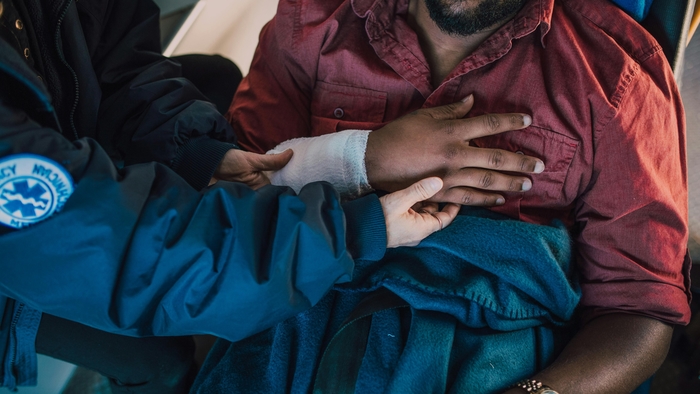
Posted By: Rachelle Papillon-Amblard on February 21, 2024 In the land of opportunity where advancements in healthcare seem limitless, realities are deceptive and persisting - not all Americans have the same access to healthcare. Healthcare disparities exist among races, ethnicities, socioeconomic status, geography, genders, and other factors. Dr. Edward E. Cornwell, a preeminent trauma surgeon and Chief of Howard University College of Medicine, said, "I was born in Friedman's Hospital, which became Howard University Hospital, ... the historical aspects of what would now be known as outcome disparities are front and center in the scientific and social aspects of what we do in surgical care." Compared to Whites, African Americans, Native Americans, and Alaska Natives have higher rates of mortality and chronic diseases. In 2021, African Americans had the lowest life expectancy at 70.8 years compared to 76.4 years for Whites and 77.7 years for Hispanics. For Dr. Edward E. Cornwell, medical disparities have historical roots dating from slavery as he explained during the 20th anniversary of W. Montague Cobb Institute Health Disparities Symposium conference at Howard University Hospital recently. "In the long fight to achieve equity, healthcare disparity is fundamental ... related to access." Bryan, a 23-year-old African American living in Washington, DC, endured a few of these medical disparities when he was undiagnosed and sent home in 2022. Suffering from symptoms such as shortness of breath and abdominal pain, he decided to go first to Medstar Hospital in Georgetown. After a nonconclusive test, still in pain and with no diagnosis, he was sent home. Bryan said, "I was in Washington DC and Virginia hospitals such as GW Hospital, MedStar, Unity Healthcare, and Tyson Emergency in Virginia. When I checked in at those hospitals, they could not detect what I had.” Bryan received multiple tests in each hospital with different and inconclusive results. He said, “It was a bit terrifying for me as I didn't know how they would treat me.” He eventually stopped going to hospitals because he felt that truly little effort was invested into treating him. This lack of compassion and understanding is also a problem of representation within the medical care system; Dr. Edward E. Cornwell said, "There's only a handful of hospitals that cared for or trained Black physicians to go into their specialty." Even if the medical disparities seem to narrow, they remain prevalent and continue to inflict harm on individuals, especially minorities. Individuals try to effect change to narrow the disparity gap. Dr. Edward E. Cornwell said, "The way to solve this is by increasing awareness through education. Increasing resource coordination can also benefit the groups most negatively impacted by health inequalities. For instance, by providing cultural competency training to healthcare professionals, healthcare organizations can contribute to reducing ethnic health disparities". Another factor weighs heavily in the balance: medical bills. In 2022, 40 percent of U.S. adults were in medical debt. Medical bills are also a leading cause of bankruptcy today in the U.S., which also impacts low-income and uninsured households more. "The biggest issue, in my estimation, is insurance," Dr. Edward E. Cornwell explained. There is a correlation between race and insurance status. "Insurance status bears the strongest correlation between whether you live or die.” Disparities in healthcare and treatment remain, imposing other obstacles for minorities, manifesting the urge for reforms and equitable care. The next conference about the Health Disparities Symposium at Howard University will be on Tuesday, April 16, 2024, hosted by the Department of Nutritional Sciences. By Rachelle Papillon-Amblard If you enjoyed this article, Join HBCU CONNECT today for similar content and opportunities via email! |
Comments
 |
Congratulations Rachelle! Great article
Wednesday, February 21st 2024 at 9:33PM |
More From This Author
Latest News
 |
In Case You Missed It: Connect with Employers You Missed Speaking with At Our Fall Conference & Career Fair!HBCU CONNECT's free Fall Virtual Conference & Career Fair drew more than 3,800 member logins and visits to the platform on Wednesday, October 21, as 49 employers and organizations recruited college st ...more
Cata Rizzle • 112 Views • October 26th, 2026 |
 |
📣 Introducing the MS-CC Student Community of Practice (CoP)!Connect with fellow students, share your ideas, and explore what’s next!
The MS-CC Student CoP brings undergraduate and graduate students together across institutions to explore research, technolog ...more
David Lockett • 135 Views • October 22nd, 2026 |
 |
Virginia State University Breaks All-Time Enrollment Record With Largest Class in Its HistoryVirginia State University has enrolled more than 6,350 students for the 2026-27 academic year, the largest in its documented history, along with the biggest first-time freshman class ever at 1,725 stu ...more
Roger Gates • 219 Views • October 21st, 2026 |

 |
FAMU Rattler Great Andre Dawson Receives Florida Governor's Medal of FreedomToday, Florida Governor Ron DeSantis presented the Governor’s Medal of Freedom, the highest honor the Governor can bestow on a Floridian, to Baseball Hall of Famer and proud Florida A&M University (FA ...more
Reginald Claremont • 371 Views • October 19th, 2026 |
Popular News
 |
Louisiana Upholds Life Sentence to Black Man For Stealing Hedge Trimmers in 1997While this may not be HBCU related news, as an AFrican American male, I had to share this appalling decision by the Louisiana court system to keep a man in jail with a life sentence for such a petty c ...more
Roger Gates • 406,181 Views • August 6th, 2020 |
 |
Blonde Instagram Model Goes Viral for Graduating from HBCU and Pledging Delta Sigma Theta!A blonde woman is going viral this morning, for graduating from A Historically Black College while pledging a Black sorority, Delta Sigma Theta Sorority Incorporated.
@Blonde_HBCU
The woman, an IG ...more
Roger Gates • 190,541 Views • November 30th, 2020 |
 |
Apple to Invest over $40 Million Dollars into HBCUs - Time to major in Computer Science!!!On Tuesday Johnny C. Taylor, President and CEO of the Thurgood Marshall College Fund stopped by “NewsOne Now” to make a major announcement that could literally change the lives of thousands of HBCU st ...more
Roger Gates • 131,260 Views • March 11th, 2015 |
 |
North Carolina HBCU Unity DayShaw University - Elizabeth City State University - Johnson C. Smith University - Fayetteville State University - Livingstone College - North Carolina A&T State University - North Carolina Central Uni ...more
Reginald Claremont • 119,511 Views • August 8th, 2016 |
 |
Black Billionaire Robert F. Smith to Donate $50 Million to Support STEM Students at HBCUsThe Student Freedom Initiative announced today a $50 million personal gift from Robert F. Smith, philanthropist and Founder, Chairman and CEO of Vista Equity Partners. This gift matches the initial fu ...more
Roger Gates • 86,888 Views • October 22nd, 2020 |


