


HIP-HOP TAKES THE OLYMPICS: THE RISE OF BREAKING ON THE GLOBAL STAGE
|
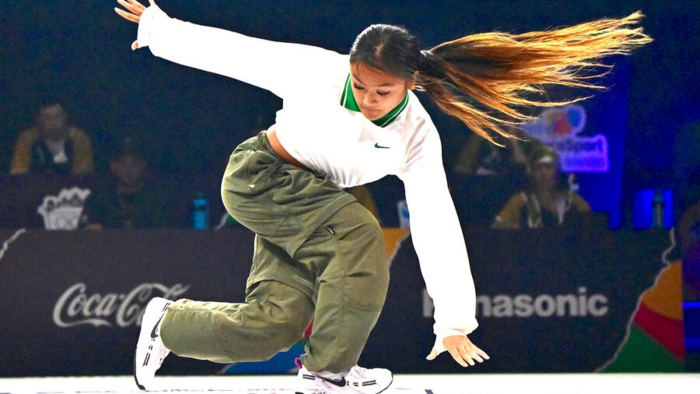
Posted By: Catalina Deossa on July 31, 2024 Logan Edra, a 21-year-old breakdancer known as Logistx, is poised to make history by representing breakdancing at the Paris 2024 Olympics. Having grown up immersed in the four elements of hip-hop—rapping, graffiti, DJing, and breakdancing—Edra has channeled her passion for the Bronx-born street dance style to a global platform. She views her participation as part of a larger movement to promote hip-hop's core values of peace, love, unity, and fun, while also enhancing visibility for the culture. Breakdancing, or breaking, originated in the 1970s within hip-hop culture, which emerged as a form of creative expression for Black Americans facing social struggles. Over the past fifty years, hip-hop has extended its influence across music, culture, art, fashion, and sports worldwide. The inclusion of breaking in the Olympics represents a significant milestone, highlighting how the energetic dance form has evolved from local street performances to an international competitive arena. At the Paris Olympics, Edra will join fellow American breakdancers Jeffrey “B-boy Jeffro” Louis, Victor “B-boy Victor” Montalvo, and Sunny “B-girl Sunny” Choi. They will compete against 16 other B-boys and 16 B-girls from around the globe in solo battles, vying for the first-ever Olympic medals in breaking. The competition will take place on August 9 and 10 at La Concorde, with judging based on a digital scoring system introduced at the 2018 Youth Olympics. This system will evaluate technique, performance, musicality, creativity, and more. Despite the excitement, there are concerns among some dancers about preserving the culture of breaking within the Olympic format. Traditionally, the sport emphasized community and artistic expression over competition, and some worry that the Olympic framework may not fully capture the heart of breaking's cultural roots. Carmarry Hall, a competitive breaker known as Pep-C, observes that while the Olympic platform brings visibility, it may not entirely reflect the essence of breaking. Conversely, Ana “Rokafella” Garcia, a pioneering Puerto Rican B-girl, believes that while breaking will inevitably evolve and attract more participants and audiences, its core identity will remain intact. She underscores that hip-hop, with its deep Afro-diasporic roots, cannot be separated from its historical and cultural context. Edra herself reflects on the significance of this moment with mixed emotions. While thrilled about the opportunity to compete on such a prestigious stage, she also feels a sense of sadness for the “OGs” (original pioneers) of breaking who will not have the chance to showcase their talents in the Olympics. Nevertheless, she values the support from the breakdancing community and acknowledges the importance of this exposure. Sergio “B-boy Zeku” Garcia, who runs BreakinMIA in Miami where Edra trains, is enthusiastic about the Olympics' potential to inspire young people. He appreciates the broader reach and impact of having breaking featured on an international stage, regardless of the competitive outcome. Garcia highlights the accessibility of breaking as a sport that requires minimal equipment—just oneself and some music—making it an appealing option for youth worldwide seeking creative outlets. Overall, the inclusion of breakdancing in the Paris Olympics represents both a celebration of its cultural significance and a challenge to maintain its authentic spirit under global scrutiny. If you enjoyed this article, Join HBCU CONNECT today for similar content and opportunities via email! |
 |
Catalina Deossa
Archaeologist, CHRONOS SAS Florida Int`l Univ class of 2011 Member Since April 2024 |
Comments
More From This Author
Latest HBCU Sports
 |
HBCU Kickball Showdown# HBCU Kickball Showdown: The Alabama Takeover Brings HBCU Culture, Competition, and Community to Huntsville
**Huntsville, Alabama | April 3, 2027**
Get ready for a new HBCU experience that brin ...more
Red Circle • 80 Views • October 20th, 2026 |


 |
North Carolina A&T University Alumnus Shines in NFL Debut Games for the 2026 Season!🏈 **FROM THE HBCU TO MAKING NOISE IN THE NFL!** Keep an eye on Bhayshul Tuten of the Jacksonville Jaguars. Before finishing his college career at Virginia Tech, Tuten spent two seasons at Nort ...more
Cata Rizzle • 447 Views • September 22nd, 2026 |
Popular HBCU Sports
 |
Sources: Deion Sanders Finalizing Deal to Become Head Coach of HBCU - Jackson State University!Pro Football Hall of Fame cornerback Deion Sanders is finalizing a deal with Jackson State University to become the school's next head coach, according to Sports Illustrated's Ross Dellenger. ...more
Roger Gates • 87,630 Views • September 18th, 2020 |
 |
HBCU North Carolina Central Now The Favorite to Land Lebron James Jr. Son of Superstar Lebron JamesDuke has long been considered a favorite to land LeBron James Jr., son of the Los Angeles Lakers superstar and living NBA legend. In the wake of today’s monumental Makur Maker news, oddsmakers think t ...more
Roger Gates • 86,290 Views • July 20th, 2020 |
 |
Coach Deion Sanders & Jackson State Make Offer to Top High School Football Prospect and LSU Commit, Khamauri Rogers!Holmes County football coach Marcus Rogers had one main statement to make when his son Khamauri Rogers, the top junior in Mississippi, received an offer from Jackson State on Sept. 23.
"I don't kno ...more
Roger Gates • 70,726 Views • October 5th, 2020 |

 |
Deion Sanders Announces His Coaching Staff @ HBCU, Jackson State University!JACKSON, Miss. – Jackson State head football Deion Sanders is excited to announce his inaugural coaching staff. The staff includes a unique blend of coaches at the NFL, intercollegiate, and prep level ...more
Roger Gates • 61,218 Views • December 7th, 2020 |


