






Bridging Global Gaps for Underrepresented Groups Through Internationalization
|
Posted By: Reginald Culpepper on December 17, 2024 Since it opened its doors over a century ago, North Carolina Central University (NCCU) has been dedicated to building the global marketplace beyond its walls in Durham by empowering its diverse student population. This commitment can be traced back to NCCU’s founder and pharmacist Dr. James E. Shepard, whose travels abroad profoundly influenced his worldview. Through his work as the field superintendent for Work Among the Negroes for the International Sunday-School Association, Shepard embarked on a three-month global tour across Africa, Asia, and Europe, during which he began to conceptualize his vision for NCCU—a public university in north-central North Carolina. His international outlook shaped the university’s foundational values and mission and has inspired its strategic direction today through comprehensive internationalization. This approach, as defined by the American Council on Education, involves a deliberate, organized effort to synchronize and incorporate policies, programs, and initiatives that make higher education institutions more globally focused and internationally engaged. For NCCU, that realization of comprehensive internationalization is the Eagle Promise strategic plan with its four pillars: global relevance, on-time graduation, leadership development, and career readiness. Designated a historically Black college and university, NCCU saw campus internationalization as a means of countering the harrowing statistics of Black students working and studying abroad. Overall, Black students have consistently represented 3% to 5% of all study abroad participants between 2000 and 2022, highlighting a significant underrepresentation in international experiences, exposure, and global opportunities, according to the Open Doors Historical Data Report. Many Black students, particularly males, have had limited opportunities to travel, obtain passports, or even board a plane for the first time. For government agencies, such as the U.S. Department of State, U.S. Agency for International Development, and the Peace Corps, Black people, particularly males, are also among the least represented groups. The U.S. Department of State’s Equal Employment Opportunity data from 2011, for example, indicates that Black people comprised 6% of foreign affairs employees and 8.5% of senior level officials, while the U.S. Government Accountability Office reported a 4% decline in Black representation in the Agency for International Development between 2002 and 2018. Through its Eagle Promise program, NCCU has embraced its global relevance through various initiatives, including study abroad programs, faculty and student exchanges, and partnerships with international institutions. These efforts aim not only to internationalize the campus but also to prepare students for the global challenges they will face in their careers. The goal is to equip students with the ability to engage in critical inquiry; adapt to diverse environments; and collaborate across socio-economic and political boundaries—qualities highly valued by employers in today’s interconnected world. One of NCCU’s main goals is to prepare students for a global work environment where adaptability, critical inquiry, and the ability to engage with diverse communities are crucial. The university fulfills this objective through comprehensive internationalization. To do so, effective internationalization cannot be limited to a few isolated offices, specific disciplines, or a select group of students. True engagement requires that internationalization be embedded across NCCU departments and accessible to all students, faculty, and staff to indicate a clear commitment to the complexities of the global community. The university offers this framework through its Eagle Promise program:
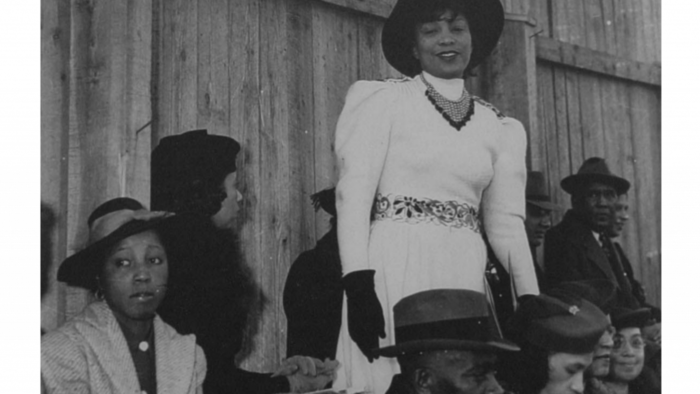
NCCU prepares its students to excel, ensuring they are equipped with the skills and cultural competence to confront global challenges. To read more, go to https://www.aascutellingourstory.org/promising-practice/bridging-global-gaps-for-underrepresented-groups-through-internationalization/. Photo cutline: Famed writer and anthropologist Zora Neale Hurston taught drama at NCCU in 1939 after traveling to Jamaica (1936), Haiti (1937), and Honduras (1947). If you enjoyed this article, Join HBCU CONNECT today for similar content and opportunities via email! |
 |
Reginald Culpepper
President, Fulfillment and Web Services, HBCUCONNECT Clark Atlanta University class of 1998 Member Since September 2000 |
Comments
More From This Author
Latest News
 |
Rosen Foundation expanding scholarship program, partnering with Bethune-Cookman UniversityCarrying on the legacy of Harris Rosen and his commitment to education, today the Harris Rosen Foundation announced it is expanding its already-successful scholarship program and partnering with Bethu ...more
Reginald Culpepper • 141 Views • May 19th, 2026 |
 |
Sinners vs. Michael: Which Film Actually Won the Ultimate Culture Debate?While Antoine Fuqua’s Michael is dominating the box office with its electrifying, stadium-level concert recreations and a star-making, uncanny physical performance by Jaafar Jackson, critics and film ...more
TaQuan Ford • 167 Views • May 16th, 2026 |

 |
Healthcare Career Fair Aims to Connect Employers with Qualified Local Talent in Northern VirginiaHealthcare organizations across Northern Virginia will have an opportunity to connect directly with qualified job seekers this June during the upcoming Healthcare Career Fair in Prince William County. ...more
Reginald Culpepper • 329 Views • May 15th, 2026 |
 |
Largest Class in 158 Years: Morgan State University Readies for Historic Spring CommencementMorgan State University welcomes another historic milestone for Maryland’s designated preeminent public urban research university with its upcoming 149th Spring Commencement ceremony scheduled for thi ...more
Reginald Culpepper • 506 Views • May 14th, 2026 |
Popular News



 |
North Carolina HBCU Unity DayShaw University - Elizabeth City State University - Johnson C. Smith University - Fayetteville State University - Livingstone College - North Carolina A&T State University - North Carolina Central Uni ...more
Reginald Culpepper • 109,221 Views • August 8th, 2016 |


