



Spelman College Students Develop AI-Powered Plant Care Technology at Arthur M. Blank Innovation Lab
|
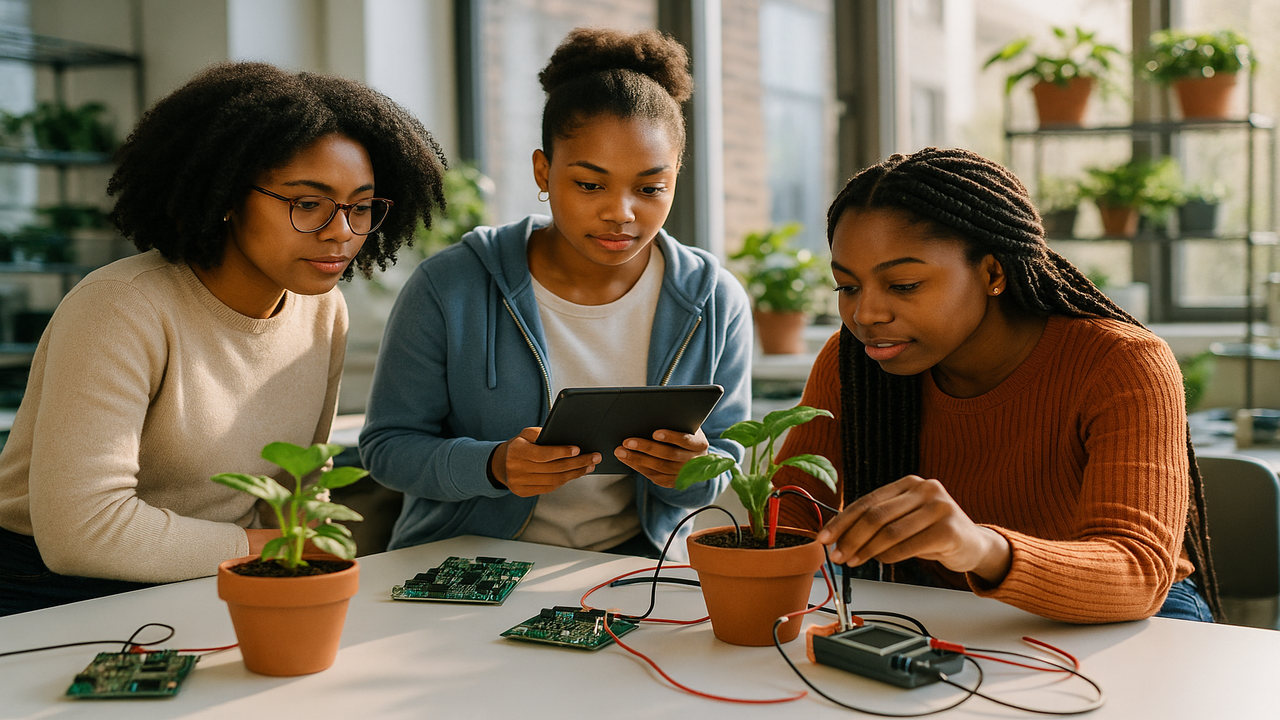
Posted By: Will Moss on March 07, 2026 A team of student innovators at Spelman College is leveraging artificial intelligence to revolutionize plant care, developing a groundbreaking tool that transforms how anyone can maintain healthy plants through real-time environmental monitoring and AI-powered guidance. The project, dubbed PlantGPT, emerged from Spelman College's Arthur M. Blank Innovation Lab and connects plant sensors to artificial intelligence software to analyze environmental conditions and deliver actionable feedback about plant health. Students Joy Rutledge, Temple Dees, Grace Burch, Jessica Obi, and Devyn Washington have contributed to the project's development at various stages. Key Takeaway: PlantGPT secured a $1,000 award at the Center for Black Entrepreneurship's New Venture Competition in 2025 and won top honors at the AAAS Making & Innovation Competition in Washington, D.C., demonstrating the commercial viability and innovation potential of HBCU student-led technology projects. "Plant GPT is a way to be able to talk to your plants," Rutledge explained in an Instagram video created by Spelman. "So, when your plant is dying, you need to know what type of information the plant needs or resources that the plant needs, such as water, sunlight, nutrients." How the Technology WorksThe system operates by gathering environmental readings through sensors strategically placed near plants. These sensors continuously monitor critical conditions including:
The collected data is transmitted to an artificial intelligence model that interprets the readings and generates personalized recommendations for optimal plant care. "So we've basically created sensors and connected it to an AI," Dees said. "You're able to get this real time data from your plant that way when it does notify you, you'll be able to adjust the conditions of your plant." Evolution and Technical InnovationThe project originated with Grace Burch, a Spelman College biology graduate who built the initial prototype as part of research conducted inside the Innovation Lab. According to the development team, early versions of PlantGPT utilized Arduino hardware, with subsequent iterations introducing significant technical enhancements. "My part of the project was switching the AI model to Tiny Llama, which is local and doesn't need the internet, and adding more features like written response and we're working on the vocal response feature," Dees explained, highlighting the team's commitment to making the technology more accessible and user-friendly. The prototype is currently undergoing testing on houseplants while the team continues refining the system's capabilities and expanding its feature set. The $1,000 award from the Center for Black Entrepreneurship's New Venture Competition has provided crucial funding to support continued development of the technology, demonstrating how targeted entrepreneurship support at HBCUs helps transform student innovation into viable commercial products. The project's additional recognition at the AAAS Making & Innovation Competition in Washington, D.C., further validates the technological sophistication and market potential of work emerging from Spelman's Innovation Lab. Originally reported by Black Enterprise. If you enjoyed this article, Join HBCU CONNECT today for similar content and opportunities via email! |
 |
Will Moss
Founder & CEO, HBCU CONNECT, LLC Hampton University class of 1995 Member Since June 1999 |





 |
FAMU Alumna Dr. Chato B. Hendrix Makes HBCU History as First Inducted Into Cheerleading Hall of Fame |