






Were there Black Chinese, and where are they now?
|
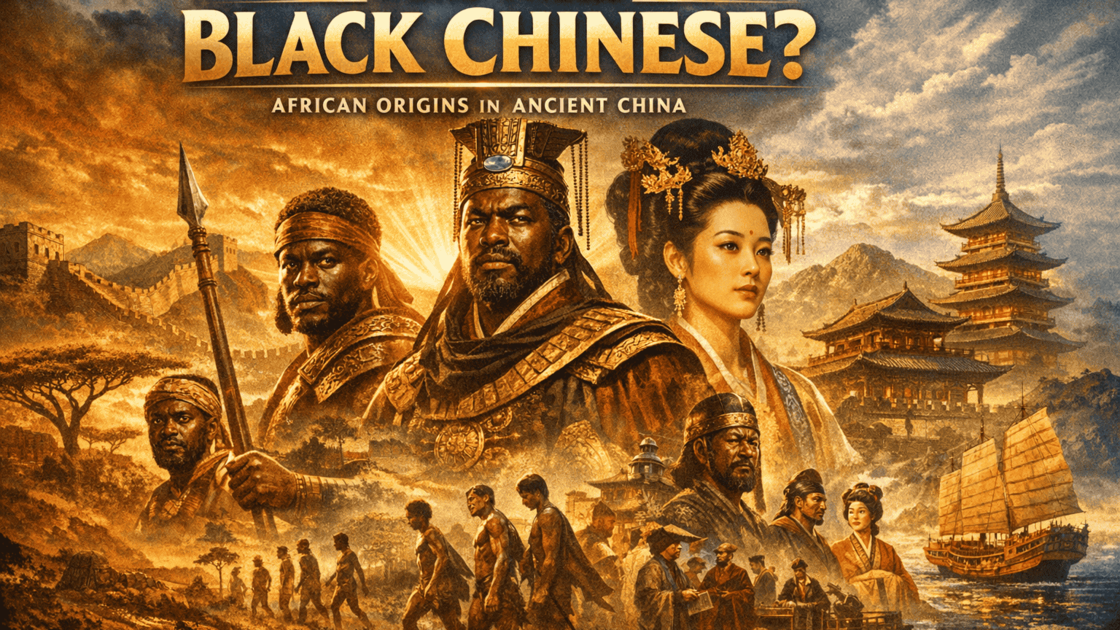
Posted By: Joel Savage on April 01, 2026 China’s ancient history is far more diverse than most people realize. Long before the rise of imperial dynasties, the region was home to waves of early human migrations—some of which included Black populations who settled in parts of ancient China. Modern genetic research, archaeological findings, and historical records increasingly support the idea that early China was shaped by people of African origin. This article explores who these early Black Chinese were, what happened to them, and how their legacy survives today. Early African migrations into East Asia Archaeological and genetic studies show that early Homo sapiens, leaving Africa, migrated along two major routes into Asia. One of these inland routes led directly into what is now China, between 50,000 and 45,000 years ago. These early migrants included groups with both straight and curly hair and some with features similar to today’s San people of Southern Africa. These populations settled across southern and central China, contributing to the genetic and cultural foundations of early East Asian societies. The Black Dynasties and early Chinese civilization Several Afrocentric historians and early 20th‑century scholars argued that China’s earliest dynasties had Black rulers. While mainstream historians debate the extent of this influence, the claims are rooted in the following: • Ancient texts describing dark‑skinned peoples in early China • Archaeological depictions of rulers with African features • Linguistic and cultural parallels between early China and Africa Some traditions identify the legendary emperor Fu Xi (Fu-his)—credited with inventing writing and social institutions—as a Black ruler. Others point to the Shang Dynasty (c. 1500–1000 BCE), sometimes described as having African origins in older historical interpretations. Although these claims remain controversial, they highlight a long‑standing recognition that early China was not ethnically uniform. The “Negro Empire” of Southern China Chinese scholar Chang Hsing-Lang wrote in the early 1900s that a Negro empire existed in southern China at the dawn of the nation’s history. This idea was dismissed for decades, but modern DNA research has revived interest. Geneticist Jin Li, a leading researcher at the National Human Genome Center in Shanghai, conducted extensive DNA studies showing that the first inhabitants of China were indeed of African descent. His findings support the theory that early Black populations were foundational to Chinese civilization. Foreign Blacks in the Tang Dynasty Beyond prehistoric migrations, China also had contact with African peoples during the Tang Dynasty (618–907 CE). Through the Silk Road and maritime trade routes, Africans—often referred to as “foreign blacks”—arrived in Chinese port cities. These individuals included: Merchants • Sailors • Soldiers • Envoys • Craftsmen Their presence is documented in art, literature, and diplomatic records. Where are they now? The descendants of ancient Black populations in China did not remain a distinct group. Over thousands of years, they intermarried with incoming Asian populations, gradually blending into the broader genetic landscape. Today, their legacy survives in the following: 1. Genetic Markers Some southern Chinese populations carry ancient African genetic signatures, though diluted by millennia of mixing. 2. Cultural Traces Elements of early Chinese art, mythology, and spiritual traditions show influences that some scholars link to early African settlers. 3. Modern African Chinese Communities In recent decades, a new wave of African migration has created vibrant communities, especially in Guangzhou and Shanghai. Estimates vary, but scholars suggest that hundreds of thousands of Africans have lived or worked in China in the 21st century, forming a new chapter in Afro-Chinese history. Why this history matters today Understanding the presence of Black people in ancient China challenges the myth of a racially isolated East Asia. It reveals: • Deep global interconnectedness long before modern globalization • Shared human origins that link Africa and Asia • A more inclusive narrative of Chinese civilization For readers, researchers, and historians, this story is a reminder that Africa’s influence on world history is far broader than often acknowledged. Related post: THE AFRICAN ROOTS OF BLACK JEWS: https://juskosave.blogspot.com/2026/03/the... If you enjoyed this article, Join HBCU CONNECT today for similar content and opportunities via email! |
 |
Joel Savage
Independent Belgian–Ghanaian Journalist, Writer & Author, Antwerp Province Member Since September 2013 |
Comments
More From This Author
Latest Blogs
 |
ALS: The silent breakdown of the human body and the search for real solutionsAn illustration showing the human nervous system highlighting motor neurons affected by ALS, revealing progressive muscle weakness and neurodegeneration.
Amyotrophic lateral sclerosis (ALS), wide ...more
Joel Savage • 46 Views • September 12th, 2026 |
 |
AI, truth and trust: Who will decide what the world believes tomorrow?An image of a person behind a computer struggling to read digital information on a screen, between AI, truth, and public trust.
Artificial intelligence has become the most powerful information forc ...more
Joel Savage • 77 Views • September 11th, 2026 |
 |
The rising dangers of tomorrow: Have we failed our children?Photo: Children are facing an uncertain and dangerous future shaped by today’s global decisions.
Every generation hopes to leave behind a better world for its children. Yet today, many people fe ...more
Joel Savage • 89 Views • September 10th, 2026 |
 |
Washroom Accessories Set: A Complete Guide to Choosing the Right Bathroom AccessoriesA well-designed washroom is not only about choosing the right toilet, basin, shower, or tiles. Small accessories also play an important role in keeping the space organized, convenient, and visually ba ...more
Grace international • 82 Views • September 10th, 2026 |
 |
Why modern leaders fail: The global crisis of integrity in politics todayPhoto: Disappointed crowds face future uncertainty amid a global crisis of trust in political leadership.
Across the world, citizens are losing faith in the people who lead them. From democracies ...more
Joel Savage • 108 Views • September 9th, 2026 |
Popular Blogs
 |
Divorce in America in 2009 – What’s love got to do, got to do with it?
Join Brother Marcus and the cast and the crew of the Brother Marcus Show live this Sunday evening on February 1, 2009 @ 8:00 p.m. for another hot topic in our community! “Divorce in America in 2009 ...more
Brother Marcus! • 75,419,333 Views • January 27th, 2009 |
 |
VISINE ALERT!!!Seemingly innocent medication such as Visine eyedrops are used by people to concoct a mixture with similar effects as a date-rape drug.
When mixed with alcohol and taken orally, the eyedrops can l ...more
Siebra Muhammad • 122,332 Views • May 23rd, 2009 |
 |
"Chain Hang Low" check out the real meaning of the Lyrics!Recently there is a new artist out of Saint Louis that goes by the name JIBBS. Jibbs debut single "Chain hang low" has a history that most people are not aware of. The particular nursery rhyme that th ...more
Tyhesha Judge-Fogle • 80,976 Views • November 9th, 2006 |
 |
HBCU Marketplace Gifts: Divine 9 Premium Fraternity / Sorority Playing CardsVendor: Charles Jones
Item Price: $20.00
Price Includes Shipping: Yes - Shipping Included
Item Description:
Pantheon Series - Divine 9 - Premium Playing Cards (choose Gold Series or Silve ...more
Hija Chang • 64,364 Views • December 2nd, 2018 |


