







Apartheid’s legacy and the rise of xenophobia in South Africa today
|
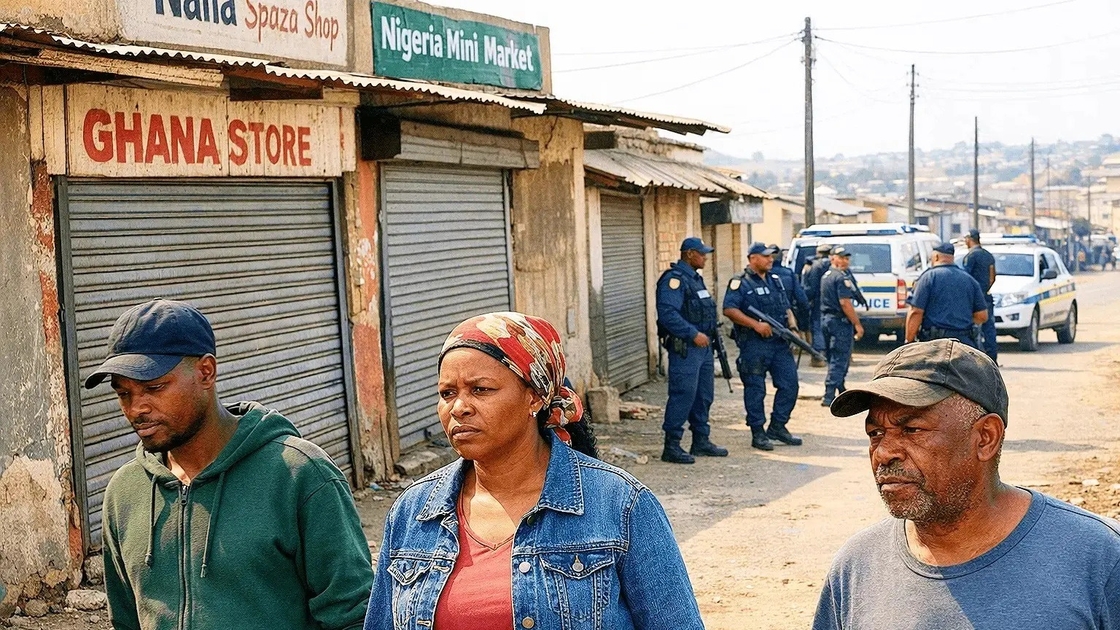
Posted By: Joel Savage on April 30, 2026 Photo: An image showing a South African township street with closed small shops owned by African migrants, police presence in the background, and community members walking past with tense expressions. More than thirty years after the collapse of apartheid, South Africa continues to wrestle with a painful legacy that still shapes its social and political landscape. One of the most disturbing consequences is the recurring wave of xenophobic hostility directed at fellow Africans, Ghanaians, Nigerians, Zimbabweans, Mozambicans, Malawians, and others who migrate in search of greener pastures or operate small businesses. The latest incident, reported on April 23, 2026, saw residents of Mthatha preparing for a demonstration demanding that foreign nationals close their shops and remain indoors. According to the Ghanaian community leadership, locals claimed that foreigners were taking their jobs and competing for scarce opportunities. Although the police assured the public that the protest would be peaceful, the fear among foreign nationals is unmistakable, reflecting a long-standing pattern of intimidation and violence. This hostility is not random. It is rooted in deep historical, economic, and psychological wounds, many of which can be traced back to the apartheid system. Apartheid was not merely a political structure; it was a deliberate social engineering project designed to create racial hierarchy, economic inequality, and a culture of suspicion. It fragmented communities, restricted movement, and conditioned generations to view outsiders as threats. When apartheid ended, the political system changed, but the psychological scars remained. South Africans inherited a society built on competition for survival, a belief that limited resources must be protected, and a violent culture where conflict was often resolved through force. These unresolved traumas now manifest as hostility toward African migrants who become convenient scapegoats for broader national frustrations. The reasons behind these attacks are complex and deeply intertwined with South Africa’s current socio-economic challenges. The country suffers from one of the highest unemployment rates in the world, with youth unemployment exceeding 60 percent. In such an environment, desperation fuels resentment, and foreigners, especially those who run small shops or informal businesses, are often blamed for taking opportunities that locals believe should belong to them. Many South Africans feel that foreign traders are more competitive because they work longer hours, offer lower prices, and operate through strong cooperative networks. This perception, whether accurate or exaggerated, creates tension in communities where survival is already difficult. Political manipulation also plays a significant role. Some local politicians subtly encourage anti-foreigner sentiments to distract citizens from government failures such as corruption, unemployment, and poor service delivery. Instead of addressing systemic issues, they shift the blame to migrants, knowing that frustrated citizens are eager for someone to hold responsible. Weak law enforcement further worsens the situation. When attackers burn shops, loot businesses, or assault foreign nationals without facing consequences, it emboldens others and normalizes violence as a form of expression. Another factor is the widespread misinformation that circulates in communities. Rumors that foreigners take all the jobs, dominate the informal sector, or are responsible for rising crime spread quickly and ignite anger. These narratives overshadow the reality that many foreign-owned businesses contribute positively to South Africa’s economy. They create jobs for locals, introduce new business models, strengthen supply chains, and increase tax revenue. Their presence also enriches cultural diversity, fosters social exchange, and strengthens regional trade networks that benefit South African companies seeking to expand into other African markets. The failure of Pan-African education has also weakened solidarity. Many South Africans are unaware of the sacrifices other African nations made during the liberation struggle, offering shelter, training, funding, and diplomatic support to the ANC and other anti-Apartheid movements. This historical ignorance has created a generation disconnected from the spirit of African unity that once defined the continent’s fight against oppression. It is therefore clear that apartheid has played an indirect but powerful role in shaping today’s xenophobic attacks. The system created deep economic inequality, spatial segregation, and a culture of violence that still lingers. It conditioned communities to distrust outsiders and left behind a fractured society struggling to rebuild cohesion. When democracy arrived, the structural foundations of apartheid were dismantled, but the psychological and economic consequences remained. Foreign Africans, who once supported South Africa’s liberation, now find themselves targeted as the new “outsiders” in a country they helped free. To address this crisis, African leaders must adopt a diplomatic, coordinated, and long-term approach. Diplomatic engagement with South Africa must be consistent, not reactive. The African Union should establish joint monitoring teams to identify hotspots and intervene before violence escalates. Schools across the continent, including South Africa, must integrate Pan-African history into their curricula to rebuild the sense of unity that once guided Africa’s liberation movements. Bilateral economic agreements can help regulate business permits, protect workers, and reduce informal competition that fuels resentment. African embassies must also strengthen their support systems by providing legal assistance, registering citizens, and offering emergency shelters during crises. At the same time, African governments must address the root causes that push their citizens to migrate. Many Africans leave home because their countries fail to provide opportunities. By creating jobs, reducing corruption, and investing in development, African leaders can reduce the pressure that drives migration and vulnerability abroad. South Africa, on its part, must enforce the law firmly and consistently. Without accountability, xenophobic violence will continue to resurface. Xenophobic attacks in South Africa are not isolated incidents; they are the echoes of a painful past amplified by present-day frustrations. Yet the solution does not lie in anger or retaliation. It lies in diplomacy, education, economic cooperation, and strong leadership across the continent. Africa must remember that unity is not a slogan; it is a survival strategy. If African leaders act decisively and collaboratively, the continent can prevent further bloodshed and rebuild the spirit of Pan-African solidarity that once inspired the world. You may also like this: Steve Biko: LEGEND OF A POLITICAL HERO https://juskosave.blogspot.com/2010/09/ste... If you enjoyed this article, Join HBCU CONNECT today for similar content and opportunities via email! |
 |
Joel Savage
Freelancing, Antwerp Province Member Since September 2013 |
Comments
More From This Author
Latest News


 |
Coppin State University: Celebrating the Class of 2026 and the Momentum That Carries Us Forwardfrom the desk of Anthony L. Jenkins, Ph.D., President of Coppin State University
May 28, 2026
Dear Eagle Nation,
As we honor the Class of 2026, we also celebrate the collective commitment ...more
Reginald Culpepper • 229 Views • May 28th, 2026 |
 |
Montgomery Public Schools to Host Security Job Fair at Alabama State UniversityMontgomery Public Schools (MPS), in partnership with Alabama State University’s Preventing School Violence (PSV) initiative, will host the MPS Security Job Fair on Wednesday, June 10, from 10 a.m. to ...more
Reginald Culpepper • 234 Views • May 28th, 2026 |
 |
FAMU student leaders expand global impact through Jamaica service-learning experienceFor 21 Florida A&M University student leaders and professional staff, a recent trip to St. Mary, Jamaica, became far more than an international travel experience. It became a living classroom rooted i ...more
Reginald Culpepper • 218 Views • May 28th, 2026 |
Popular News



 |
North Carolina HBCU Unity DayShaw University - Elizabeth City State University - Johnson C. Smith University - Fayetteville State University - Livingstone College - North Carolina A&T State University - North Carolina Central Uni ...more
Reginald Culpepper • 109,817 Views • August 8th, 2016 |


