





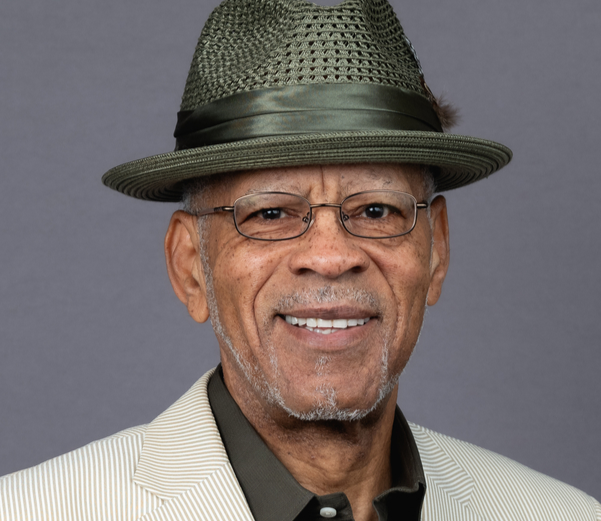


Dr. John B. Ervin Drops Knowledge On...Missed Opportunities And Expanded Options.

|
Posted By: C H on February 23, 2007 Dr. John B. Ervin (1916-1992)was the first Black dean of Washington University in St. Louis...He was also a nationally known and respected educator and scholar who served on and was appointed by Presidents Ford and Carter to the National Advisory Council on Extension and Continuing Education. He also served on the board of numerous St. Louis community based organizations. To honor his legacy of academic achievement and community service, Washington University established the prestigious John B. Ervin Scholars program in 1987 (a program which Tha Artivist is also an alumnus, Class of 2002)...The program will be celebrating their 20th Anniversary this September 2007...To learn more about John B. Ervin and this program please check out the following websites: http://admissions.wustl.edu/admissions/ua.... http://www.ervinconnection.blogspot.com The following is an article that Dr. Ervin did for the St. Louis Post-Dispatch where served as a guest columnist...It ran November 4,1982: Missed Opportunities And Expanded Options Several weeks ago, the minister of my church preached a sermon entitled “Missed Opportunities.” In that sermon, the basic illustration had to do with a major candy company that refused to permit the producers of the popular movie “ET The Extraterestrial” to use one of their products in the segments which showed the child enticing ET from his hiding place with a trail of candies. The producers wanted something which was familiar to every viewer, therefore necessitating a minimum of explanation, and thought that M & M’s could do that. Another company gave that permission and is reported to have difficulty keeping up with the demands for the brand of candy used in the film. The popularity of ET has created a whole new level of demand for the product. The point of the sermon- a missed opportunity for the Mars Candy Company and a real opportunity for the competition. I was challenged by that sermon and the train of thought provided by it brought into sharper focus two news stories which appeared a week or two later. The first was a story reporting that 40 percent of the Black students attending the University of Missouri at Columbia were on academic probation during 1981-82 and that at least the same number would be on probation in 1982-83, more than twice the rate for White students. The second story concerned a report by the College Board which indicated that Black students were averaging 100 points lower than White students on the Scholastic Aptitude Tests (SAT), used for college admission purposes. In each of those stories, there was mention of courses taken by Black students as compared with White students and the possible effect on academic achievement. It was explicitly stated that at the University of Missouri-Columbia the courses most often listed on the Black students transcripts included pop music, band, jazz lab, choir, typing, crafts, junior clerk and office orientation. While there is nothing wrong with taking such courses, a university official made an important point when he said, “They were making A’s and B’s and were graduating with 3.5 grade point averages, but were not taking the type of courses needed to complete successfully in an academic situation. He went on to say, “...when hard courses, such as chemistry, math, physics and English are sacrificed for the ones listed above, students expose themselves to the dangers of academic failure at the university level.” I would add that even when those students do well academically the course choices which were made in high school limit greatly the range of the career choices that can be made later. When, in college, a student makes a decision to study engineering or medicine or law and discovers that he or she cannot be admitted to professional school because of the inability to meet certain subject requirements, the failure to take these courses in high school represents a “missed opportunity.” On the other hand, those students who took advantage of the opportunity to enroll in the sciences, math, foreign languages, English, as well as some of those other courses, were making it more likely that they could compete successfully in the widest range of situations. In other words, they were “expanding their options.” Which brings me back to the theme for this little essay. It is clear that all of us want to take advantage of whatever opportunities come our way. The problem is that we are not able, usually, to know enough to make the determination that anyone of many situations needs to be treated as the “great opportunity”. What this means is that “missed opportunity” can be recognized only by hindsight, after the event has taken place and certain evidence has been collected which demonstrated “what might have been, if…” This is another way of saying that a missed opportunity gets defined within the context of later events—most of which could not have been foreseen by the persons involved. On the other hand, increasing or expanding options is a greater possibility for all of us, and is based upon the very simple principle that what I choose to do today, affects what I can or cannot do, tomorrow. The person who makes maximal use of learning opportunity, today, accumulates competencies which increase the range of possibilities for tomorrow and the next day. The person, for example, who takes four years of chemistry, physics, mathematics, a foreign language, or the humanities, may not want to become a scientist, a physician, a lawyer, an engineer—but he or she can if he/she wants to do so. The person who takes general science, introduction to math, social studies, etc. may be as bright as the first person, but alternatives have become so limited that certain career choices are not viable options. All of us may have missed opportunities because we did not know where a given choice might have led specifically. It becomes important, therefore, for us to make the most of present situations, to use present resources in such a way that we increase our range of options, rather than decrease those options. We must do those things which will make it possible to compete successfully in the largest range of situations. We may miss some opportunities-but making good choices is absolutely necessary if we are to take fullest advantage of the opportunities which we do accept. If you enjoyed this article, Join HBCU CONNECT today for similar content and opportunities via email! |
 |
C H
From Memphis, TN Member Since August 2006 |
Comments
More From This Author
Latest News
 |
FAMU Made: Raleigh Ford Heads to Brown University After Leaving Her Mark at FAMUWhen Raleigh Ford first arrived at Florida A&M University, leadership was the last thing on her mind.
The Leesburg, Florida, native describes herself then as quiet, reserved and unsure of what her ...more
Reginald Culpepper • 115 Views • May 27th, 2026 |

 |
Rosen Foundation expanding scholarship program, partnering with Bethune-Cookman UniversityCarrying on the legacy of Harris Rosen and his commitment to education, today the Harris Rosen Foundation announced it is expanding its already-successful scholarship program and partnering with Bethu ...more
Reginald Culpepper • 371 Views • May 19th, 2026 |
 |
Sinners vs. Michael: Which Film Actually Won the Ultimate Culture Debate?While Antoine Fuqua’s Michael is dominating the box office with its electrifying, stadium-level concert recreations and a star-making, uncanny physical performance by Jaafar Jackson, critics and film ...more
TaQuan Ford • 275 Views • May 16th, 2026 |
Popular News



 |
North Carolina HBCU Unity DayShaw University - Elizabeth City State University - Johnson C. Smith University - Fayetteville State University - Livingstone College - North Carolina A&T State University - North Carolina Central Uni ...more
Reginald Culpepper • 109,615 Views • August 8th, 2016 |


