


Students Register for Emergency Alert Systems
|
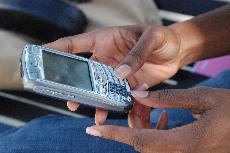
Posted By: Jehan Bunch on November 26, 2007 Students Register for Emergency Alert Systems By Kai Beasley Black College Wire About two weeks into the school year, students at Morgan State University were lining up to register - not for late admittance to classes but for the e2Campus system. Similar sign-ups were taking place at schools around the country. Dana Pinkston, The Courtbouillon "They set up podiums outside of the bookstore and asked everyone to give their information. It was pretty easy. I guess maybe 70 percent of the people I know are signed up," said Eze Amadi, a senior accounting major at Morgan State. The e2Campus system, owned by a company now known as Omnilert, was established in 2003 after the company's founders read the story of Jeanne Ann Clery, a 19-year-old Lehigh University freshman who was raped and murdered in her residence hall in 1986. In 1990, congress passed the Crime Awareness and Campus Security Act now known as the Jeanne Clery Act, which, among other things, requires schools to make timely warnings available to campus communities, about crimes that present an ongoing threat to students and employees. The Department of Education has the authority to fine schools that fail to comply. "Schools are realizing that they need to have a communication system that can communicate to all the areas on campus, not just email or internet notification," said Ara Bagdasarian, the president of Omnilert. Four years after e2campus was founded, on Sept. 21, 2007, gunfire erupted on the campus of historically black Delaware State University. Campus police and university officials wasted no time in closing down the 400-acre campus and warning students to stay inside. In the end two students were wounded and one, freshman Shalita Middleton of Washington, D.C., would die a month later on October 23. For some, the incident recalled the shootings at Virginia Tech, when a lone gunman killed 33 people including himself, but for many college officials, the shootings would again raise the question of the most efficient ways to communicate with students and faculty, in emergency situations. At Delaware State, campus gates were lowered and students were warned via the school's web site, email, and by door-to-door visits. Nationwide, more schools are looking to technology for the answer. "People expect colleges and universities to have the most up-to-date technology that allows their students to be notified of emergency situations as quickly and effectively as possible," said Sheldon Steinbach, an attorney and former vice president of the American Council on Education. "This has been an ongoing issue for 30 years," he said. "[Schools] have adopted reasonable methods suitable to the individual campuses. But the situations like Virginia Tech and the recent Delaware State incident, really serve as a wake-up call. More always needs to be done." Virginia Tech administrators have been criticized for taking nearly two hours, after the gunman killed his first victims, to notify students of his presence on campus. By that time, Seung-Hui Cho had resumed his deadly rampage. "In this day and age, we need a way to communicate with a large numbers of people instantaneously," said Chief Ernest L. Waiters, chief of police and director of public safety at Bowie State University in Bowie, Md. "Today, communication is the key to keeping a safe environment for students." Dillard University in New Orleans, La., purchased its e2campus system after Hurricane Katrina devastated the area. The school posted fliers around campus to get students to sign up. It has recently used the system to notify students of recent flooding on campus. Drew Daniels "Everybody got the message instantly," said Drew Daniels, a senior mass communications major. "There is really a safety benefit to the system. Students can feel connected and safe at the same time. It doesn't matter whether they're on campus or off campus." Bowie State implemented the e2Campus system in 2006, as a means of quickly notifying students of campus emergencies and school closings. According to the most recent statistics made available as a result of the Clery Act, there were 42 violent crimes per 100,000 students on college campuses nationwide in 2005, two years before the shooting at Virginia Tech. The FBI maintains a database of crimes reported on college campuses through its Uniform Crime Reporting Program. The 2005 statistics in that database show 28 historically black public colleges reported violent crime statistics. The colleges listed 257 violent crimes - including murder, non-negligent homicide and forcible rape. Bagdasarian said that awareness of the e2Campus system and those like it has increased dramatically only in recent months. "The demand was certainly not at the level it is today," he said. "Certainly, Virginia Tech and Delaware State really heightened awareness of the system to levels that we could not have achieved before." The e2Campus system allows for mass notifications to be sent out to students and faculty through mobile devices, landline phones (text-to-voice notification), school and personal email accounts, school web pages and digital signage throughout campus. The first school to utilize the e2Campus system was Anne Arundel Community College in Arnold, Md., in 2004. Omnilert has since expanded its service to more than 300 colleges across the country. Ahmed El-Haggan "We implemented the system about 4-5 months before Virginia Tech," said Ahmed El-Haggan, the vice president for information technology and chief information officer at Coppin State University in Baltimore, Maryland. Coppin State initially utilized the system as a means of notifying students of closings and schedule changes due to inclement weather. But El-Haggan said that they soon realized the value that text messaging has over previous email-based notification systems; especially on a campus where computer ownership is 87 percent while 98 percent of students own cell phones. "Texting is important because of the nature of students," he said. "They grew up with this technology. It's part of their lives. It's part of what they do and we want to communicate with them through what they do." Xavier University in New Orleans, La., acquired its mass notification system in March of 2007, two months before the Virginia Tech tragedy. "Any University that wants to stay in business better pay attention to these issues," said Warren Bell, Xavier's director of media relations. Xavier has a student body of 3,091 students and 700 faculty and staff members. Of the total full time on-campus population, 2200 students and faculty were signed up for the program prior to the yearly purge, which allows the system to maintain current records of student enrollment and faculty employment. While the Clery Act doesn't go as far as making instant notification systems mandatory on college campuses, Bell believes it is definitely something to consider. "I don't want to judge any other campuses," he said, "but realistically I would say that short of being mandatory, a campus would have to think long and hard about refusing to implement something like this" But even when campuses do incorporate improved emergency management systems; there is no guarantee that they will be effective. Systems like e2Campus and Zylaya, a system that provides instant emergency notification by utilizing web-based notification systems and GPS enhanced tracking components, are voluntary, and schools see registration rates that range from 30 percent to 90 percent of the student body. The success of the technology depends on the students. What we're learning is that in order to get a very strong response from the students, it needs to be part of their enrollment," Bagdasarian said. "When you set up a Web site and just say 'register for this,' it doesn't work as well. He went on to say that enrollment does tend to spike after a campus encounters something that could threaten the population. But whether the students register or not, the need for services like e2Campus and Zylaya emergency management systems remains. "Systems like this really help," Chief Waiters said. "We never know what type of emergencies can pop up, and at what time or where. Systems like this allow us to be prepared." Kai Beasley is a recent graduate of Emory University and a regular contributor to Black College Wire. To comment, please e-mail Black College Wire. Comment on this article (1) Posted Nov. 7, 2007 If you enjoyed this article, Join HBCU CONNECT today for similar content and opportunities via email! |
 |
Jehan Bunch
From Columbus, OH Central State University class of 2005 Member Since January 2006 |
Comments
More From This Author
Latest News
 |
Press Freedom in Scandinavia: What Africa can learn, and what Europe must fixScandinavia is often celebrated as the global gold standard for press freedom. Denmark, Sweden, Norway, and Finland consistently rank at the top of international indexes, with strong legal protections ...more
Joel Savage • 66 Views • January 31st, 2026 |
 |
Fela Kuti makes history as the first African to receive the Grammy Lifetime Achievement AwardFela Anikulapo Kuti, the legendary Nigerian musician and creator of Afrobeat, has once again made history. The Recording Academy has honored him with the prestigious Grammy Lifetime Achievement Award, ...more
Joel Savage • 56 Views • January 31st, 2026 |



Popular News



 |
North Carolina HBCU Unity DayShaw University - Elizabeth City State University - Johnson C. Smith University - Fayetteville State University - Livingstone College - North Carolina A&T State University - North Carolina Central Uni ...more
Reginald Culpepper • 103,673 Views • August 8th, 2016 |


