


Are HBCUs Too Black?
|
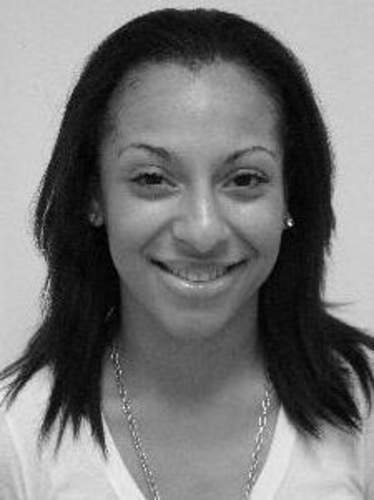
Posted By: Jehan Bunch on September 17, 2008 By Brook England -- Black College Wire Pictured: The Famuan Brook England In Miami, I never got the black experience. If you know anything about the city, you know about 60 percent of the area is of Latin descent, according to the 2000 Census Bureau report. In many parts of the city people don't speak English. In grade school, Miami-Dade students learn about black history primarily in February, learning only about Martin Luther King, Jr., Malcolm X and Rosa Parks. It was easy to miss out on the "black experience." Students who chose to become Rattlers may have immediately had a culture shock. At FAMU, all students are required to take African-American Experience or African-American History. In those classes students learn things they didn't know like Africans doing trigonometry, traveling to other continents and practicing surgery. Here, many professors place an emphasis on the black experience. After four years most [students] begin to adapt to the atmosphere. Many FAMU professors spend a lot of time lecturing about black culture. But over the years, some students have found it a bit much . Could it be possible to have too much black history at an HBCU? Recently, in a law class, a student confronted the instructor about his lectures being "pro-black." The young lady, who was black, insisted the instructor was biased for not exploring all cultures. She suggested he should "let go of the past" and "move on with the present." She said the constant emphasis on the culture was hindering her education and there was more to the world than "our" history. Although some students feel uncomfortable, some professors think it's important to teach. Jeffery Earl Mills, history professor, said blacks need to "re-understand our" story. "The African-American struggle was a beautiful struggle that brought unity, celebration, pride and faith," Mills said. So what should we expect at an HBCU? The misunderstanding may arise because our generation hasn't experienced the difficulties our elders had, so the passion may not be as intense. The black experience is a very special and unique one. It's vital that students absorb and understand the knowledge shared by professors. How else would "our" stories be passed down to generations to come? Comments on this article (2) Brook England is a student at Florida A&M University. This article was originally published in The Famuan. Posted Sep. 12, 2008 If you enjoyed this article, Join HBCU CONNECT today for similar content and opportunities via email! |
 |
Jehan Bunch
From Columbus, OH Central State University class of 2005 Member Since January 2006 |
Comments
 |
Well tell her to go to a Historically White college like i did, and she will be wishing she was in that professors class, i went to a university where the white students wore Confederate Flag T Shirts with Nathaneil Beford Forrest T Shirts
Sunday, October 26th 2008 at 12:24AM |
More From This Author
Latest News
 |
Press Freedom in Scandinavia: What Africa can learn, and what Europe must fixScandinavia is often celebrated as the global gold standard for press freedom. Denmark, Sweden, Norway, and Finland consistently rank at the top of international indexes, with strong legal protections ...more
Joel Savage • 64 Views • January 31st, 2026 |
 |
Fela Kuti makes history as the first African to receive the Grammy Lifetime Achievement AwardFela Anikulapo Kuti, the legendary Nigerian musician and creator of Afrobeat, has once again made history. The Recording Academy has honored him with the prestigious Grammy Lifetime Achievement Award, ...more
Joel Savage • 50 Views • January 31st, 2026 |


Popular News



 |
North Carolina HBCU Unity DayShaw University - Elizabeth City State University - Johnson C. Smith University - Fayetteville State University - Livingstone College - North Carolina A&T State University - North Carolina Central Uni ...more
Reginald Culpepper • 103,653 Views • August 8th, 2016 |


